Email vs. SMS Marketing: Which Converts Better for St. Louis Local Businesses?
The honest answer is that neither channel wins everywhere. Email and text do different jobs, and the better one depends on what you need a customer to do. For St. Louis local businesses, the real gains come from running email marketing automation and texting together, each where it fits best.
Book a Strategy Call
Stop Letting Follow-Up Depend on Someone Remembering
Most local businesses know they should stay in touch with customers. Few actually do it consistently. Reminders go out when someone has a free minute, review requests get forgotten, and past customers hear nothing until they've already hired someone else. Every silent week is repeat work and referrals quietly walking away.
We get it. You're running crews across the metro, answering calls, and keeping jobs on schedule. Writing emails and sending texts by hand falls to the bottom of the list every time. That's not a discipline problem. It's a system problem, and systems are much easier to fix than habits.
Use Each Channel for the Job It Does Best
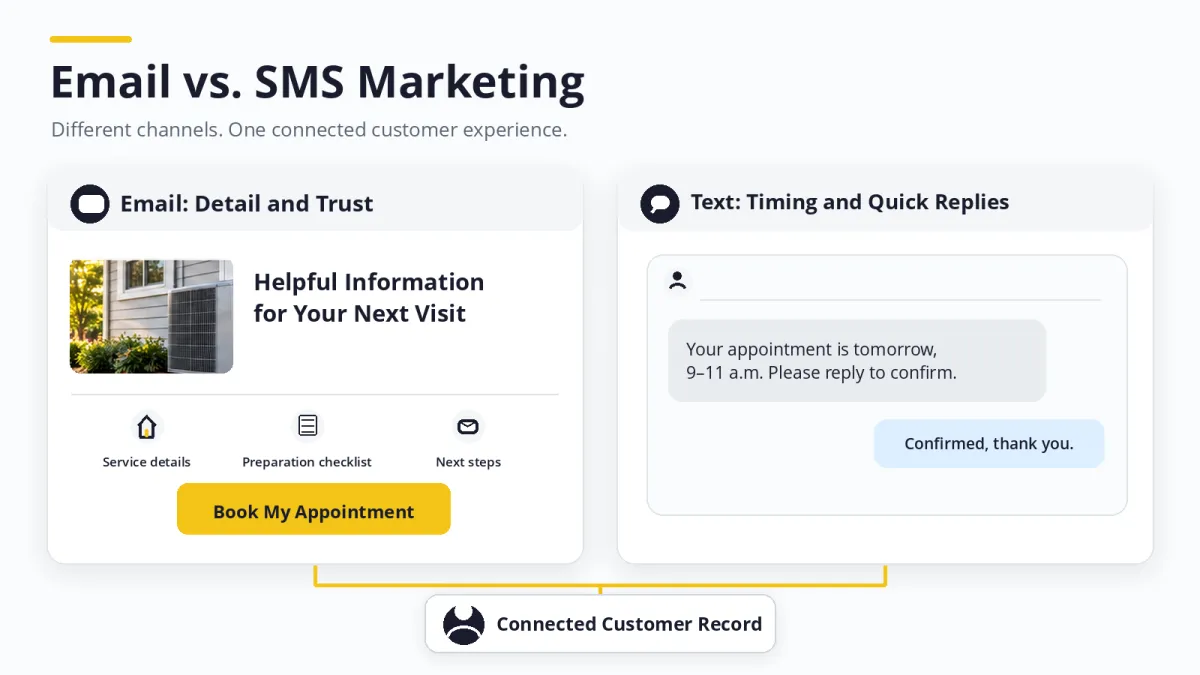
Think of email as the conversation where you explain, and text as the nudge that gets a quick response. Email has room for photos, checklists, and detail. Texts are short, personal, and usually read within minutes. Neither replaces the other, because customers want different things at different moments.
Email: best for detail, trust-building, and longer follow-up sequences
Text: best for reminders, quick questions, and time-sensitive updates
Speed: texts are often seen within minutes, emails within hours or days
Length: email can explain, while a text should get to the point in a sentence or two
Let Email Carry the Detail
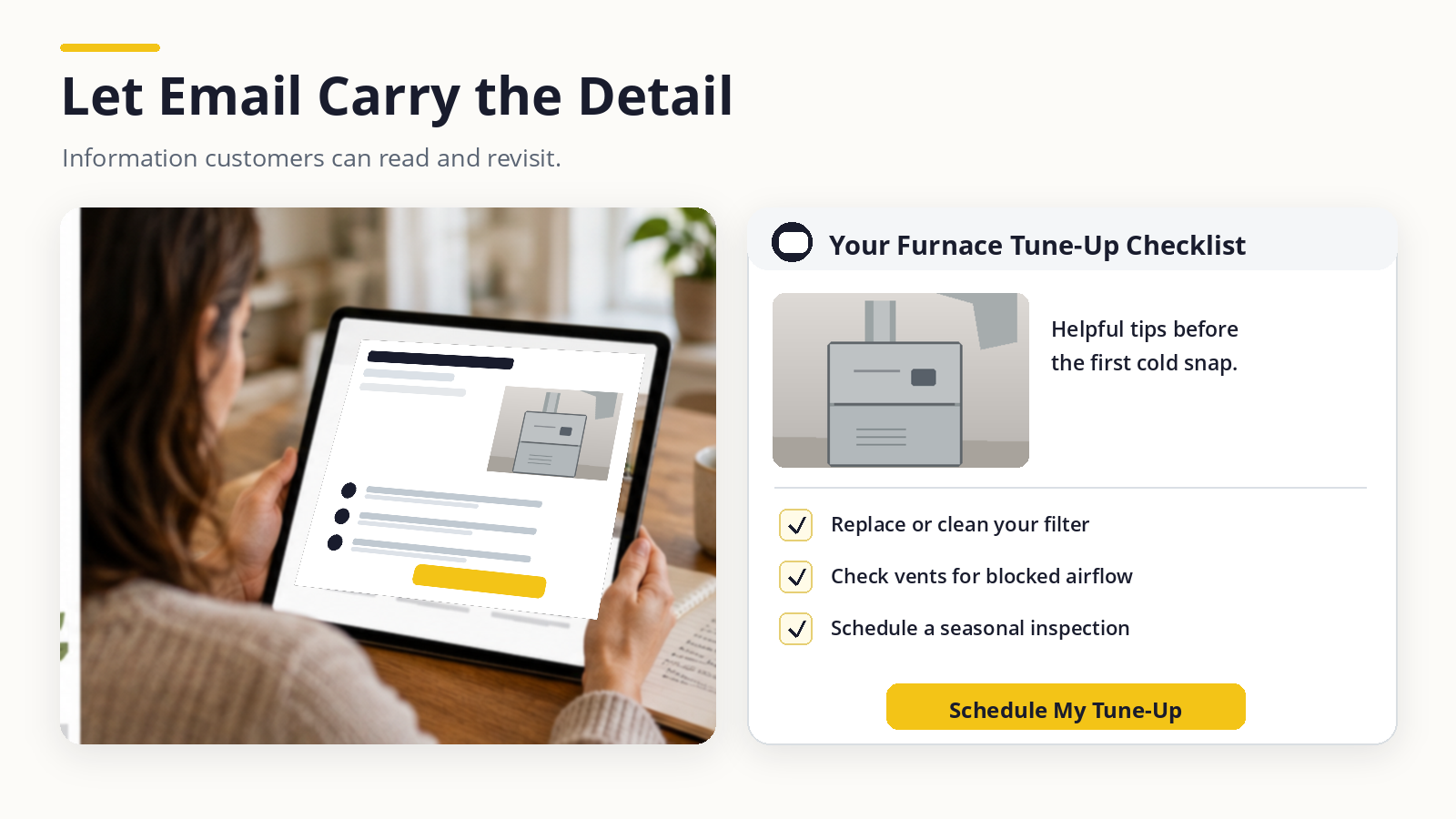
Email works best when the customer needs information to decide. Estimates, project photos, maintenance checklists, and helpful tips all fit naturally in an inbox, where people read at their own pace and come back later. It also gives your business a steady place to build trust over time.
Picture a hypothetical Chesterfield HVAC company that emails a furnace tune-up checklist to past customers before the first cold snap. The message explains what to check, shows a short photo guide, and offers an appointment link. A text couldn't carry that much detail, but email handles it comfortably.
Email marketing automation makes this far easier. Once the checklist and sequence are written, messages go out on a schedule or when a customer takes an action, like requesting a quote. Each person gets the right message at the right time, and nobody on your team has to send it by hand.
Let Text Handle the Timing
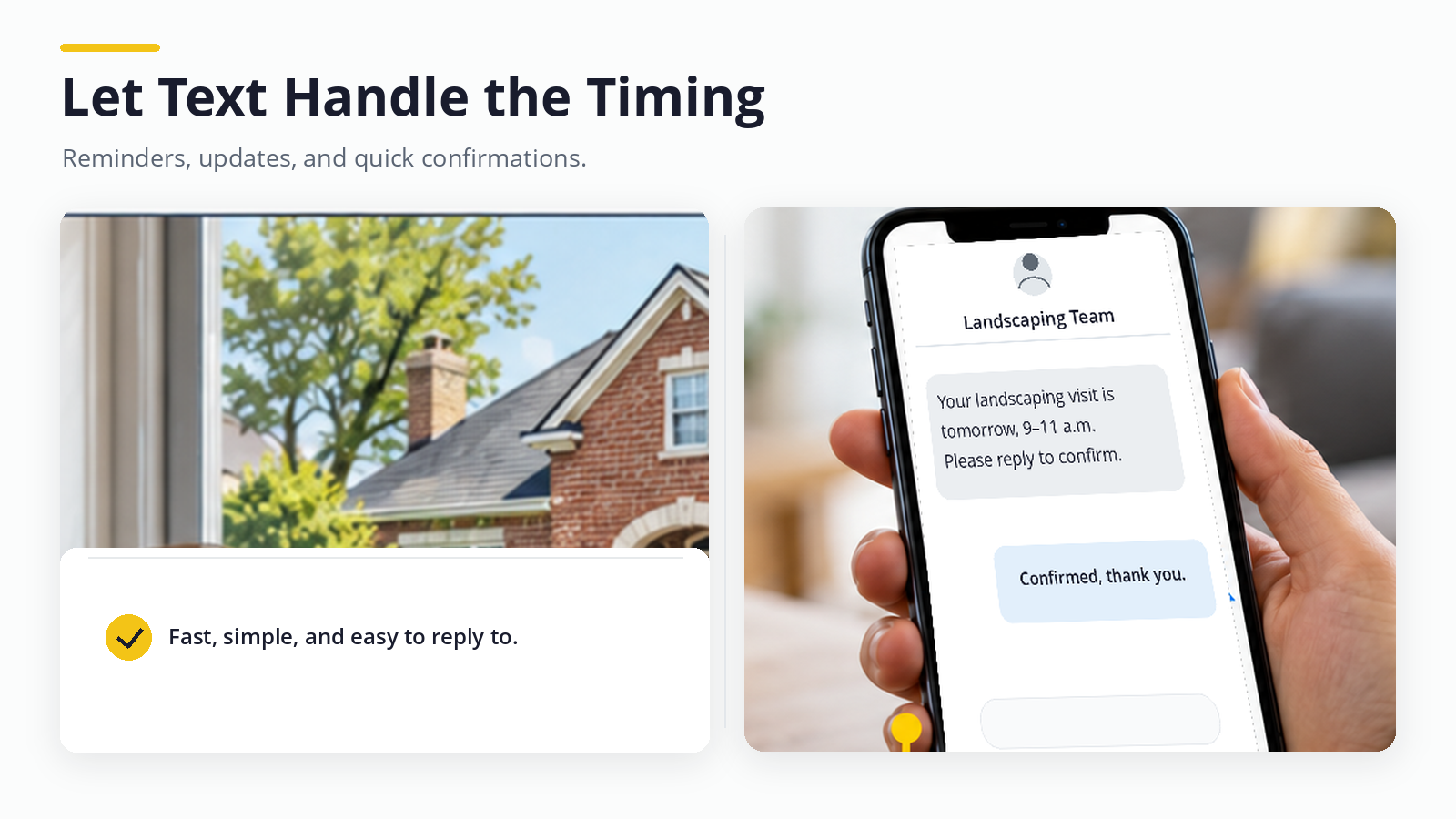
Texts shine when timing matters. Appointment reminders, arrival windows, and quick yes-or-no questions all work well by text, because people check their phones constantly. A short message that lands at the right moment often gets a reply faster than an email sent hours earlier.
Consider a hypothetical Kirkwood landscaper whose crew drives across the metro every day. A morning text with an arrival window means fewer missed appointments and fewer calls asking where the crew is. SMS marketing for small business works best when it saves customers effort like this.
Measure Each Channel by the Job It's Doing
Conversion means different things for each channel. For email, it might be an estimate request or a booked tune-up. For text, it might be a confirmed appointment or a posted review. Comparing the two on a single number misses the point, because each one is doing a different job.
Three factors usually matter more than the channel itself: the quality of your list, the timing of the message, and how relevant it feels to the person receiving it. A small list of real customers who asked to hear from you will outperform a big list of strangers almost every time.
Time Your Messages to the St. Louis Calendar
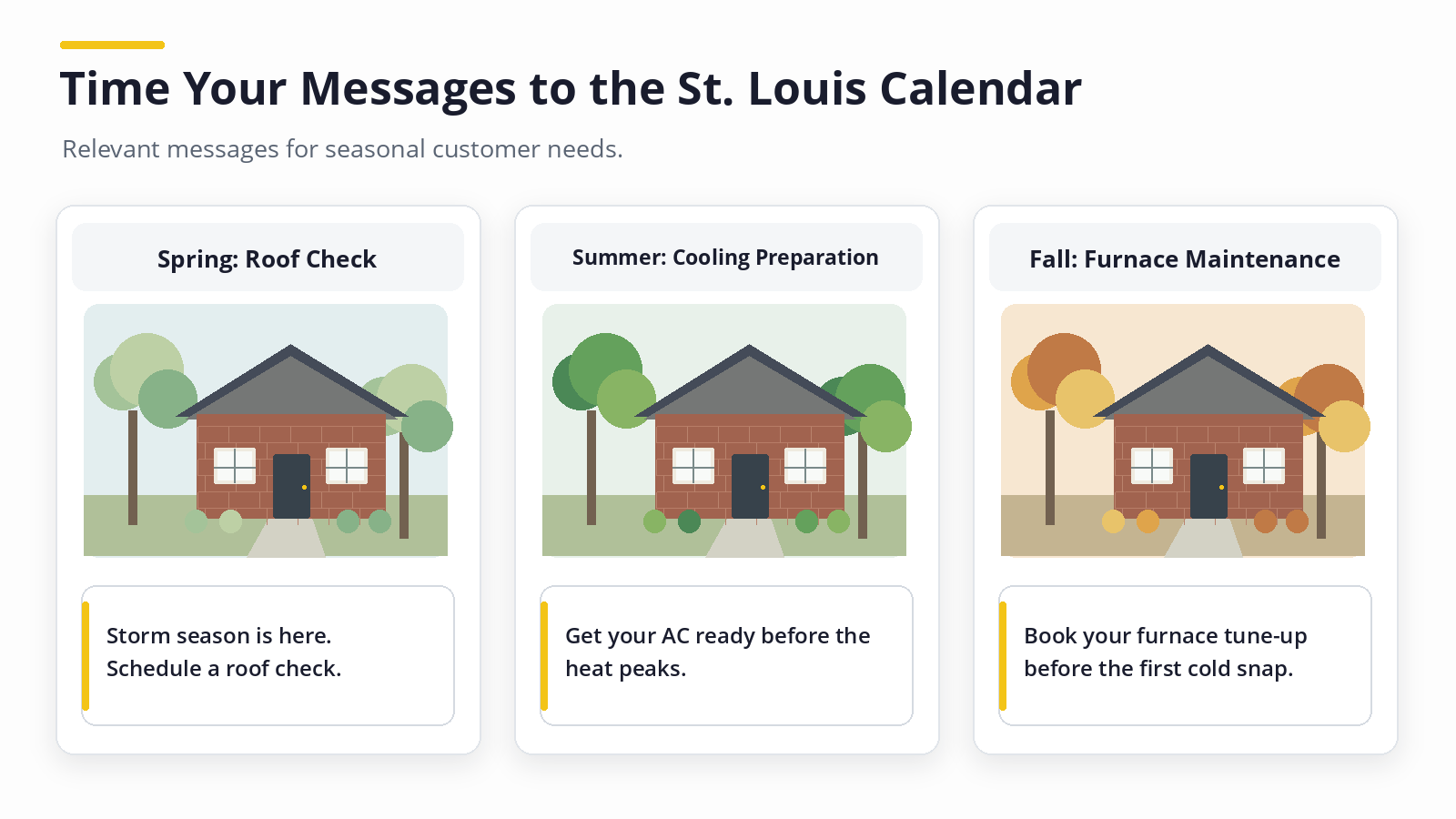
Local rhythm shapes what customers need and when. Spring storm season, humid summers, and sharp winter cold snaps create predictable moments when homeowners think about roofs, cooling, and heating. Automated messages timed to those seasons reach people when the need is already on their mind, not weeks too late.
Service areas here stretch across St. Louis County, St. Charles County, and the Metro East. When a crew covers that much ground, arrival-window texts cut down on phone tag, and a follow-up email can confirm the details and send a short checklist to help the customer prepare for the visit.
Referrals carry real weight in St. Louis neighborhoods, where people ask a friend or neighbor before hiring anyone. A timely review-request text after each job, followed by a thank-you email, helps turn happy customers into the recommendations that local reputations are built on, one finished job at a time.
Yes, You Can Run Both Without Doubling Your Work
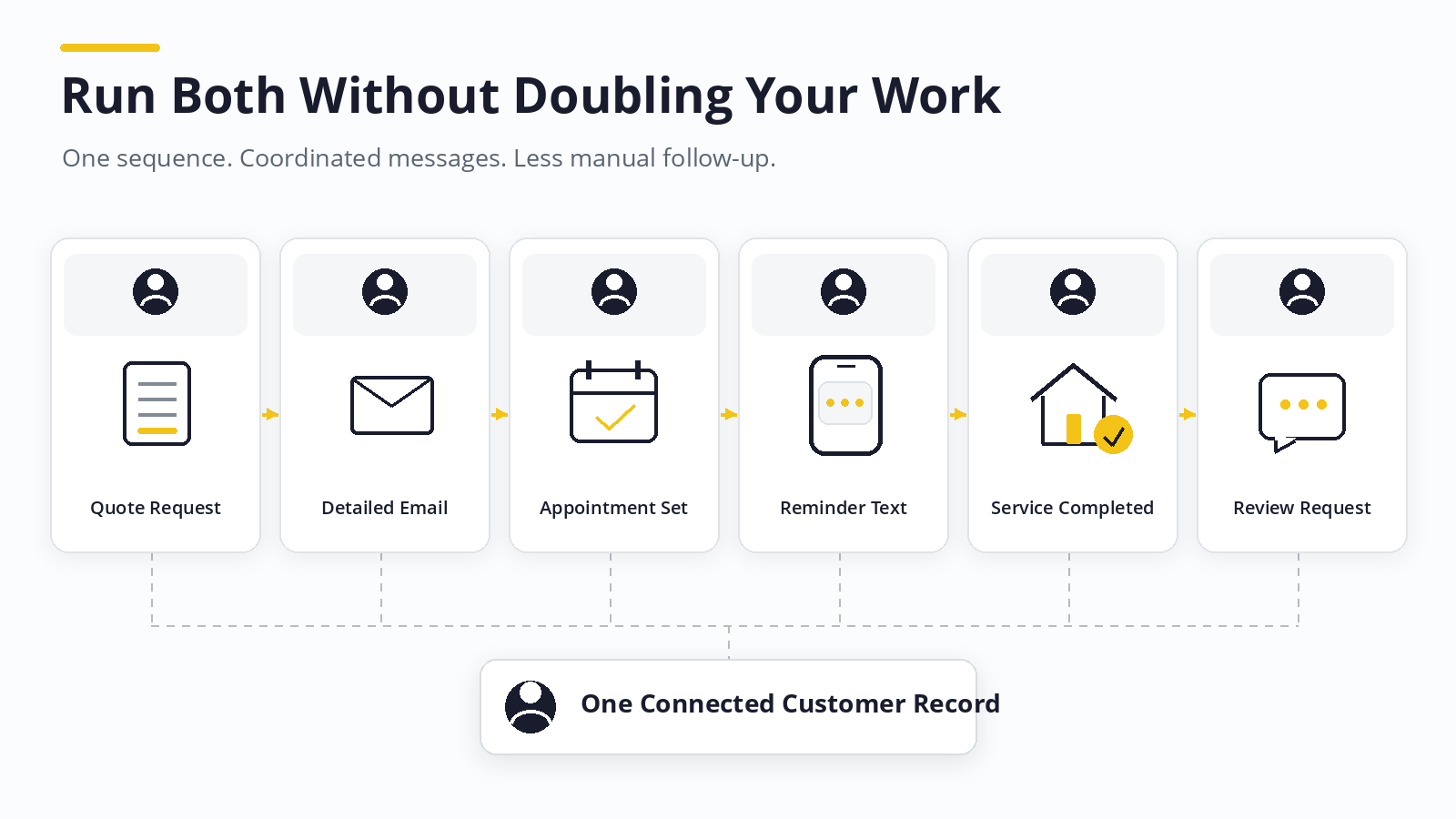
The strongest setups use each channel for its strength and let automation connect them. A customer requests a quote, gets an email with details, receives a text reminder the day before the visit, and then gets a message asking for a review. Each step sets up the next one.
When both channels run from one connected system, nothing depends on someone remembering to hit send. You write the sequence once, and it runs for every customer, every time. Your team gets back the hours they used to spend chasing follow-ups and spends them on the actual work.
Get Permission First and Keep It Simple to Opt Out
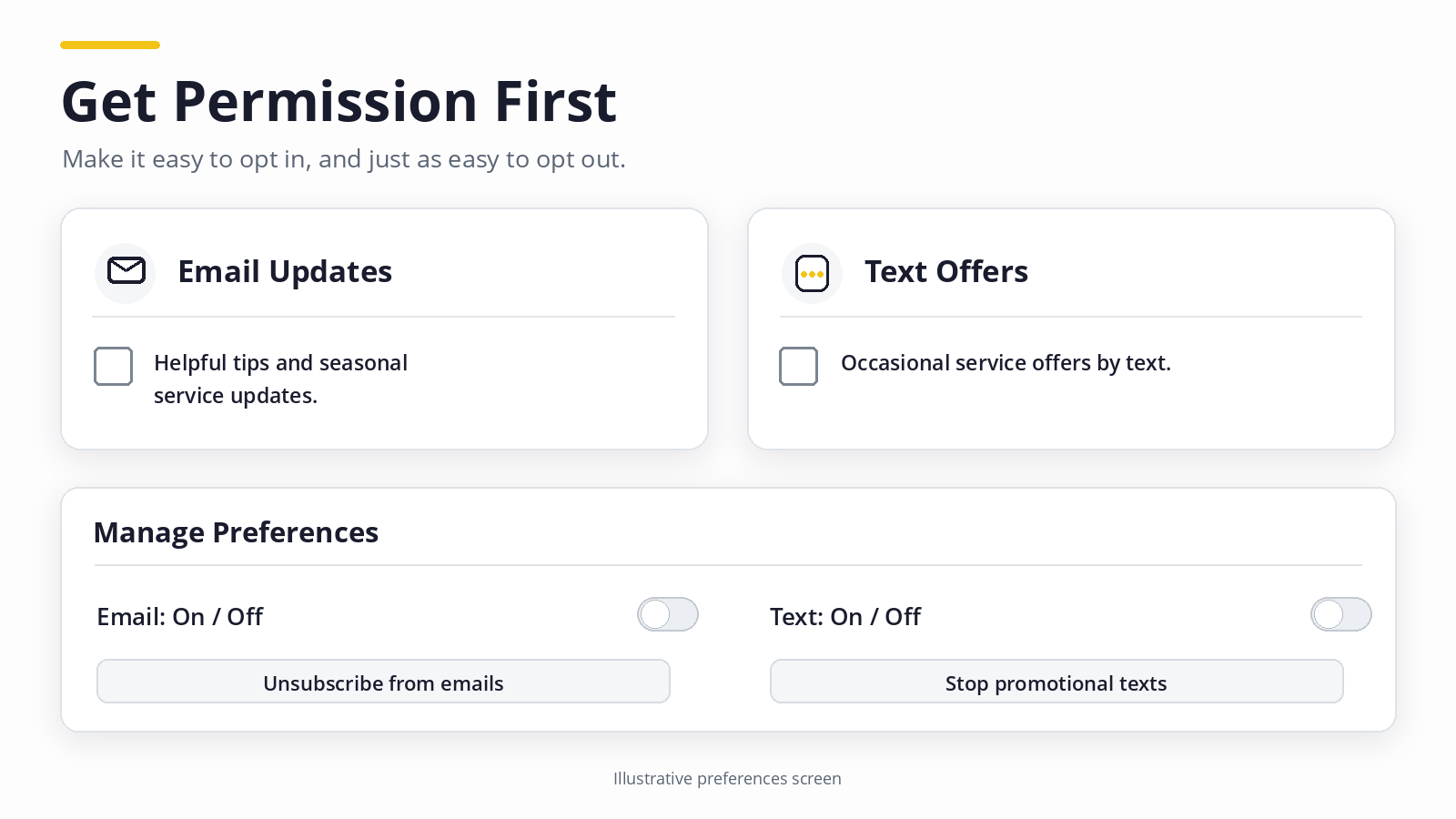
SMS marketing for small business requires permission, so collect it clearly. Customers should opt in before receiving marketing texts, and every message should make opting out easy. Be honest about who's sending the message and what customers can expect, whether that's reminders, offers, or both.
Email has its own rules, including a visible unsubscribe link and accurate sender details. Federal rules apply across the St. Louis area, and Missouri and Illinois may add requirements of their own. Rules change and vary by situation, so check with a qualified professional about what applies to your business.
Start Small With Four Simple Messages
You don't need a complicated setup to begin. A small, steady system built on permission and a few well-timed messages will beat an ambitious plan that never gets finished. Start with these four, and add more only after the basics are working smoothly for your customers and your team.
Collect permission: add a clear opt-in to your forms, estimates, and invoices
Send a welcome message: introduce your business and set expectations for what you'll send
Set up reminders: automate appointment reminders by text and details by email
Ask for reviews: send a short request after each completed job
Let GrokOn Build the Sequences and Keep Them Running
GrokOn sets up email and text follow-up for local businesses across the St. Louis area, so customers hear from you at the right moments without anyone on your team lifting a finger. Our email and SMS marketing team writes the sequences, builds the opt-in forms, and keeps everything running in the background.
It all runs on our Smart CRM, so every email, text, reply, and review request lives in one customer record. And when a customer texts back with a question, our AI and automation systems answer right away, day or night, so a reply never waits for an open moment.
Start Your First Sequence in Three Steps
Book a strategy call. We'll look at how you follow up today and where customers fall through the cracks.
We build your sequences. Opt-in forms, welcome messages, appointment reminders, and review requests, written and connected for you.
Let it run while you work. Customers hear from you at the right moments, and your team stays focused on the jobs.
Picture next season. Every quote request gets a detailed email within minutes, every appointment gets a reminder text, and every finished job gets a review request. Past customers hear from you before the first cold snap, and your schedule fills with repeat work and referrals instead of silence.
Want email and text messages that work together for your St. Louis area business? Book a strategy call and we'll map out a simple first sequence with you. From there, our email and SMS automation handles the opt-ins, reminders, and review requests, and keeps them running quietly in the background.
Book a Strategy Call
Get Straight Answers to Common Questions
Is SMS better than email for small businesses?
Neither wins in every case. Text works well for reminders and quick replies, while email suits detail and trust-building. Many small businesses do best using both. If you can only start with one, pick the channel that matches your most common customer need, like scheduling or longer follow-up.
Do I need both channels?
Not at first. Start with the one that fits your business best, build a clean list, and add the second once the first runs smoothly. Over time, pairing email marketing automation with texting gives customers detail when they want it and a quick nudge when timing matters.
How often should I message customers?
Less often than you might think. For most local businesses, a few messages a month plus transactional ones like reminders and confirmations is plenty. Watch unsubscribes and replies, because they tell you fast when you're sending too much. With both email and text, relevance matters more than volume.
What's the best time to text customers in the St. Louis area?
Mid-morning and early evening on weekdays often work well, since people are likely to see a message without being interrupted. Avoid early mornings, late evenings, and holidays, and follow any quiet-hour rules that apply. Appointment reminders should arrive the day before or the morning of the visit.