
Paid Ads Budget: How Much Should a Small Business Spend Per Month?
There's no single number that fits every business, and anyone who quotes one without knowing your market is guessing. What you can do is calculate a budget from your own goals and numbers. For St. Louis businesses, good paid ads management starts with that math, not a copied figure.
Book a Strategy Call
Stop Guessing at Your Ad Budget

Guessing gets expensive in both directions. Spend too little and campaigns stall before they learn anything, so you decide ads don't work. Spend too much and leads pile up faster than your crew can answer them, so you pay for calls that go to voicemail and customers who book elsewhere.
We get why budgeting feels like a gamble. Every rep has a different number, and nobody seems willing to explain how they got it. You deserve a budget you understand and can defend, built on your goals, your close rate, and how much work your team can actually handle.
Build a Budget From Your Own Numbers
Know Why Copied Budgets Mislead You
Ad costs vary by service, season, competition, and campaign goal. An emergency repair keyword in a crowded market behaves very differently from a seasonal maintenance offer in a quiet one. Copying another business's budget misleads you, because their margins, close rate, and capacity aren't yours.
A better question than what others spend is what you need to reach your goal. That question has an answer you can calculate, and the answer gets sharper as you collect real data from your own campaigns over the first few months of running them.
Start With the Goal, Then Work Backward
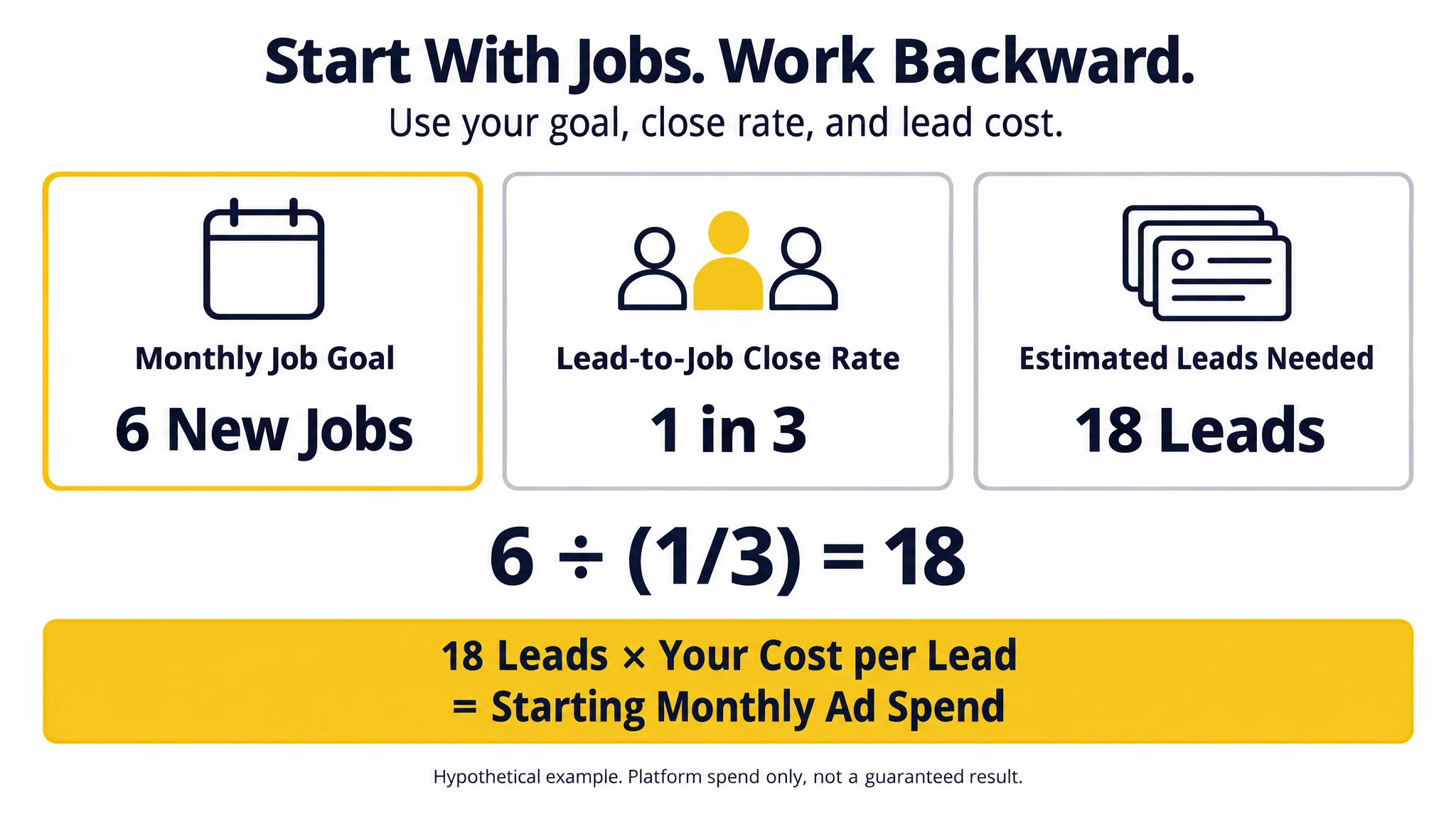
Begin with the number of new jobs you want each month. Divide by your close rate, the share of leads that become jobs, to find how many leads you need. Then multiply those leads by your cost per lead. The result is your starting ad spend.
Here's an example using counts only. Say you want six new jobs a month, and you close about one in three leads. That means you need roughly eighteen leads. Multiply eighteen by whatever your own cost per lead turns out to be, and you have a budget grounded in your goal.
Find Your Real Cost Per Lead
Cost per lead is the one input you can't know in advance. Run a short test with a modest budget, track every lead back to the ad that produced it, and let the data settle the question. Your own numbers will always beat a generic benchmark.
Count only real leads, like calls and form submissions from people who could actually become customers. Spam and wrong numbers inflate your lead count and hide your true cost. Reliable lead generation strategies depend on tracking that separates real inquiries from noise, so set that up before you scale anything.
Budget for Management and Creative, Not Just Ad Spend
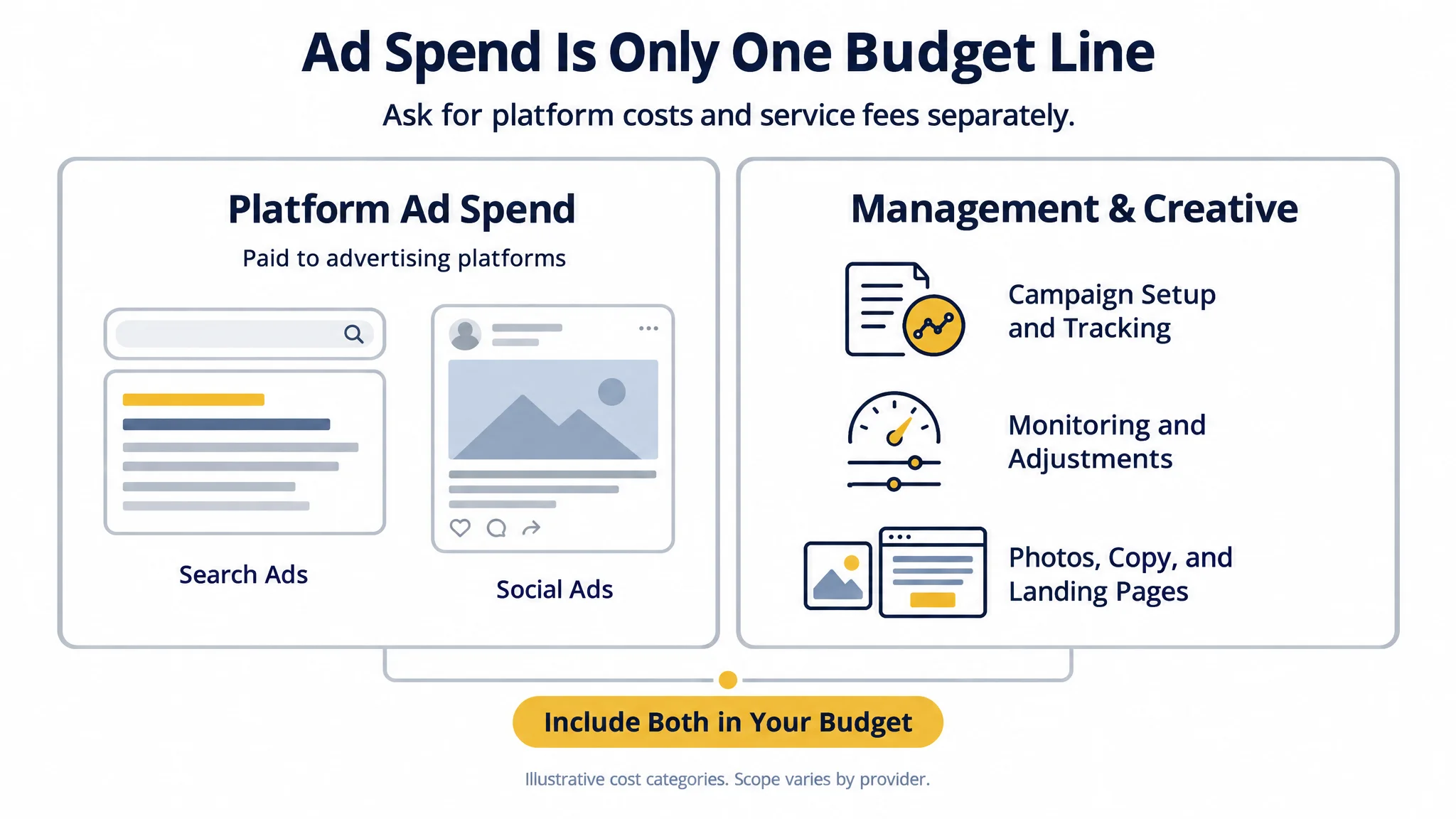
What you pay the ad platforms is only one line of the budget. Campaigns take time to set up, monitor, and adjust, and ads need photos, copy, and landing pages. Skipping those costs rarely saves money. It usually shows up later as weak results you can't explain.
Ask any provider to separate the two clearly: what goes to the ad platforms and what covers management and creative. Honest paid ads management keeps those figures distinct, so you always know how much of your spend reaches customers and how much pays for the work behind it.
Match Your Budget to What Your Crew Can Handle
More leads only help if you can serve them. A budget that produces forty calls a week is wasted if your crew can handle ten. Calls, crews, and calendars set a ceiling, so check how many new jobs you can take on before you decide what to spend.

Consider a hypothetical St. Louis area plumber with two trucks. Once both are booked for the week, every extra call becomes a disappointed customer or a missed one. Pausing or lowering ads during a full schedule protects both reputation and budget, and you can turn them back up when openings appear.
You Don't Have to Commit a Big Budget on Day One
Plan a test period of several weeks with a budget you're comfortable spending without a guaranteed return. Review results on a fixed schedule, such as every two weeks. The first stretch is about learning your real cost per lead and which campaigns deserve more of your money.
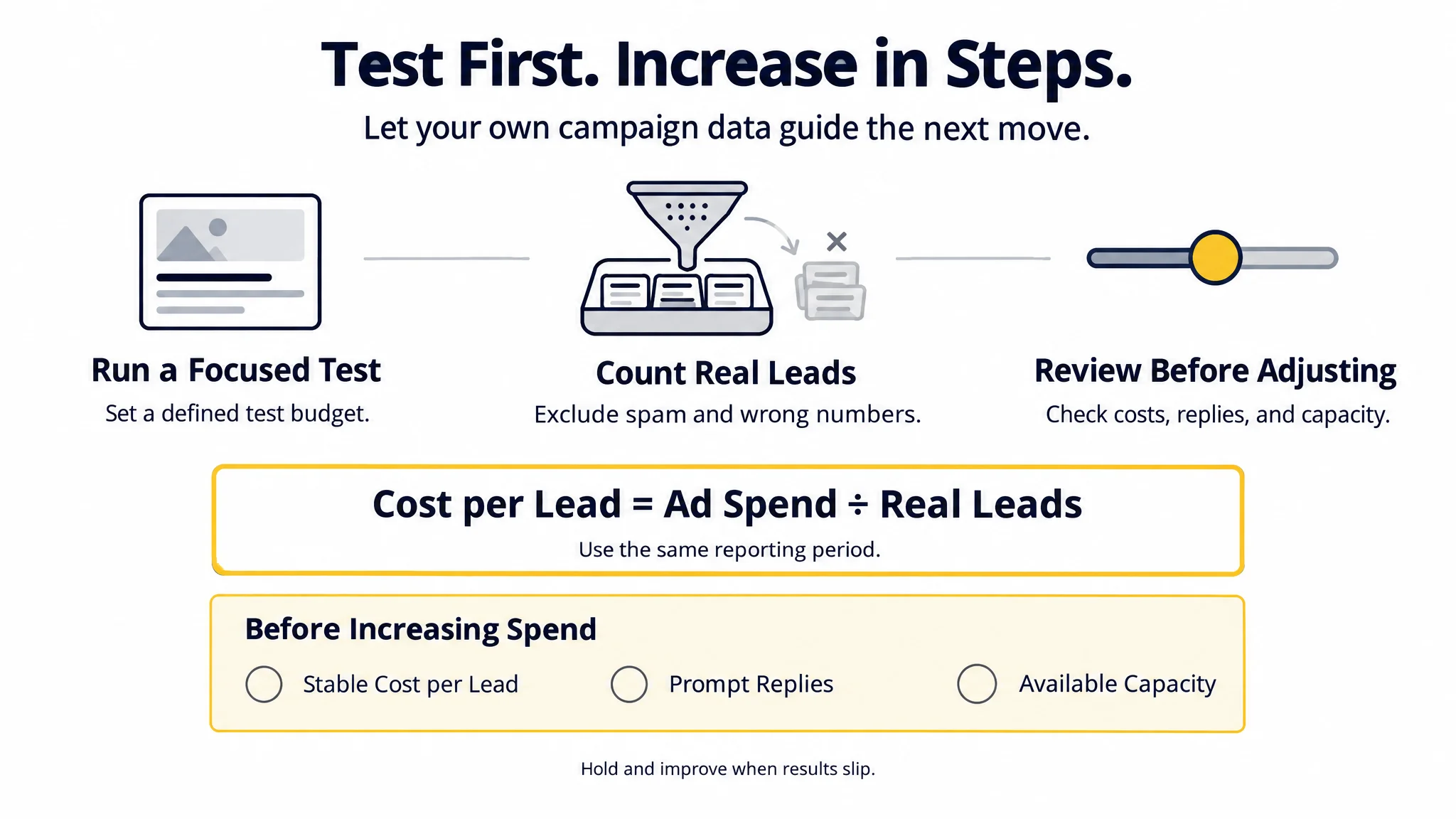
Increase spending in steps, and only while your cost per lead holds steady. If the cost climbs as you add budget, you've likely hit the point where each extra dollar buys less. Pull back a step, improve the ads or the landing page, and then try again.
Spot the Signs You're Underfunded or Overfunded
Both extremes show up in the numbers, and each calls for a different fix. Underfunded campaigns tend to stall before they gather enough data to learn from, while overfunded ones outrun your ability to respond. Watch for these signals each time you review a cycle of results.
Possibly underfunded: few leads each week, long gaps between results, and campaigns that never exit the learning phase
Possibly overfunded: leads sit unanswered, the schedule is full, and cost per lead rises as spend increases
About right: steady leads you can answer quickly, with a cost per lead that stays stable
Adjust Your Budget With the St. Louis Seasons
Demand moves through the year, and your budget should move with it. Spring storms, summer cooling calls, and winter heating problems all create spikes when people search urgently and competition rises. Planning for those peaks, and trimming during slow stretches, keeps spending tied to real demand instead of a flat monthly habit.
Don't Let Your Budget Pay for Unanswered Calls
Every budget assumes leads get answered. If calls ring out while your crew is on a job, or forms wait until tomorrow, your real cost per lead is far higher than the report shows. You paid to find that customer, and a slow reply handed them to someone else.
Let GrokOn Build Your Budget and Protect Every Lead
GrokOn builds ad budgets from your goals, not a guess. Our lead generation and paid ads team works out how many leads you need, sets up tracking for your real cost per lead, keeps platform spend and management fees clearly separate, and plans spending around your season and your crew's capacity.
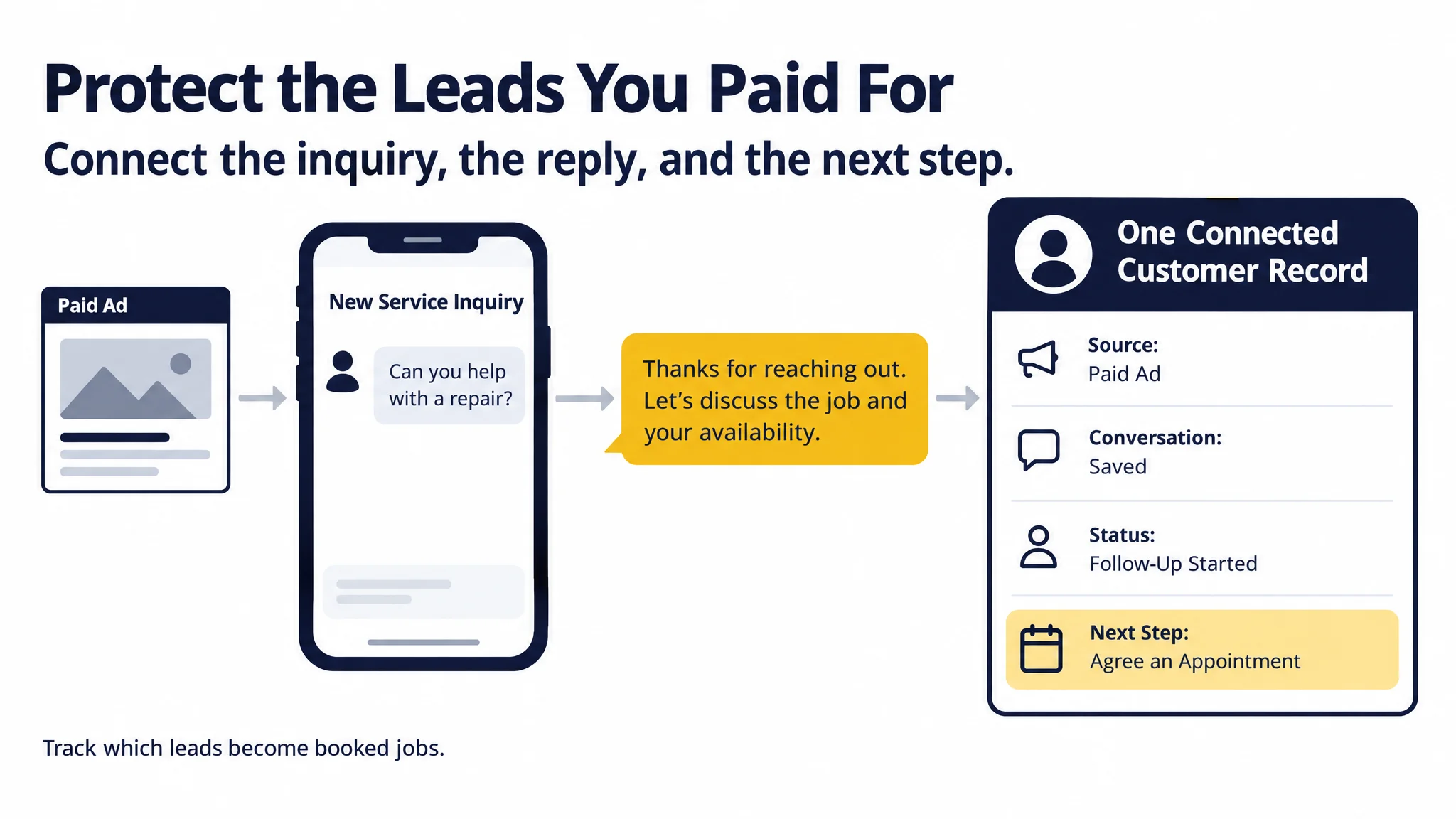
Then we protect what you spend. Our AI and automation systems answer every call, text, and form within minutes, day or night, and our Smart CRM ties each lead back to the ad that produced it. You see exactly what your budget buys, in booked jobs.
Set Your Budget in Three Steps
Book a strategy call. Bring your monthly job goal and your best guess at your close rate, and we'll do the math with you.
Run a focused test. We launch tracked campaigns on a budget you're comfortable with and find your real cost per lead.
Scale with confidence. We raise spend in steps while your cost holds and your crew has room, and every lead gets answered.
Picture your next busy season. You know exactly how many leads you need, what each one costs, and how many your crew can handle. Spending rises when demand does and eases when the schedule fills. Every lead gets a fast answer, and every dollar traces back to booked work.
Want a budget built around your goals instead of a guess? Book a strategy call and we'll estimate the leads you need, set up tracking for your real cost per lead, and plan spending around your St. Louis area calendar. It all starts with a conversation about paid advertising for your business.
Book a Strategy Call
Get Straight Answers to Common Questions
Should I run ads if I already get referrals?
Often, yes. Referrals are valuable but hard to control. Ads add a steady stream of new inquiries you can turn up or down, and they reach people outside your network. Think of ads as a way to smooth out slow weeks, and keep nurturing referrals right alongside them.
What if my cost per lead keeps rising?
Check the basics first: whether the ad still matches the landing page, whether tracking is counting real leads, and whether competition or season has shifted. Fresh creative and tighter targeting often help. If the cost stays high, revisit your lead generation strategies and test a different offer or channel before adding budget.
How do I know when to increase my budget?
Increase it when your cost per lead is stable, you can answer every lead quickly, and your schedule has room. Add in small steps and review after each one. If results hold, keep going. If they slip, hold steady until you understand why, rather than adding spend to cover a problem.