Retargeting Ads 101: How to Bring Back Lost Website Visitors
Most people who visit your website leave without doing anything. They compare options, get distracted, or just aren't ready yet. Good retargeting strategies give you a second chance to reach them with the right reminder, so one quick visit doesn't have to be your only shot at earning their business.
Book a Strategy Call
Stop Letting Visitors Walk Away for Good
Every visitor who leaves without a trace is someone you worked or paid to attract. Without retargeting, they're gone the moment they close the tab, and they'll likely hire whichever business reminds them first. That's a revenue leak hiding in plain sight, and it grows every time your traffic does.
If retargeting sounds technical, you're not alone. Pixels, audiences, frequency caps: it's a lot of new vocabulary for someone who'd rather be running jobs. This guide skips the jargon and covers what matters for a local service business, so you understand the basics before you spend a single dollar on it.
Understand How Retargeting Brings Visitors Back
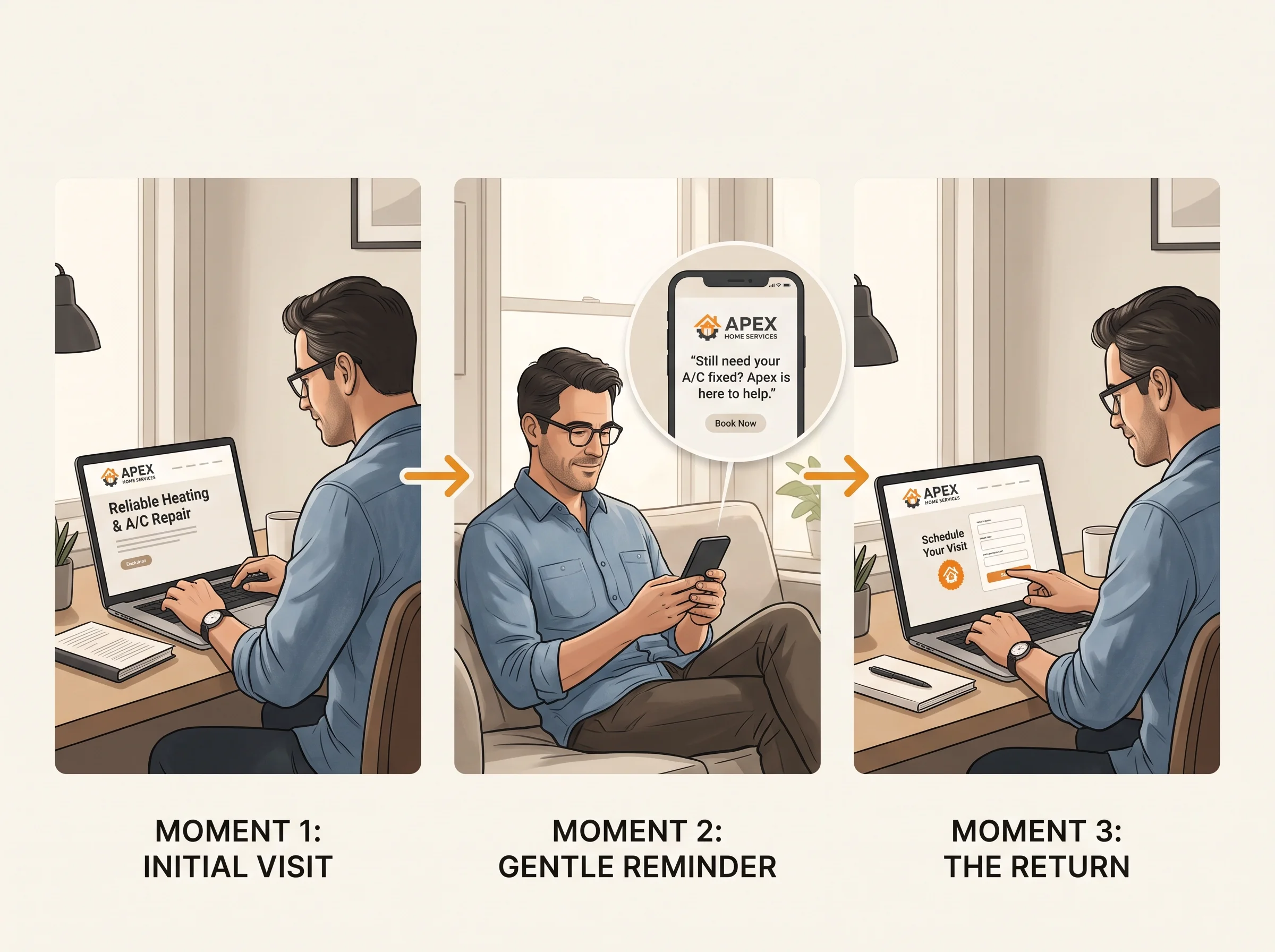
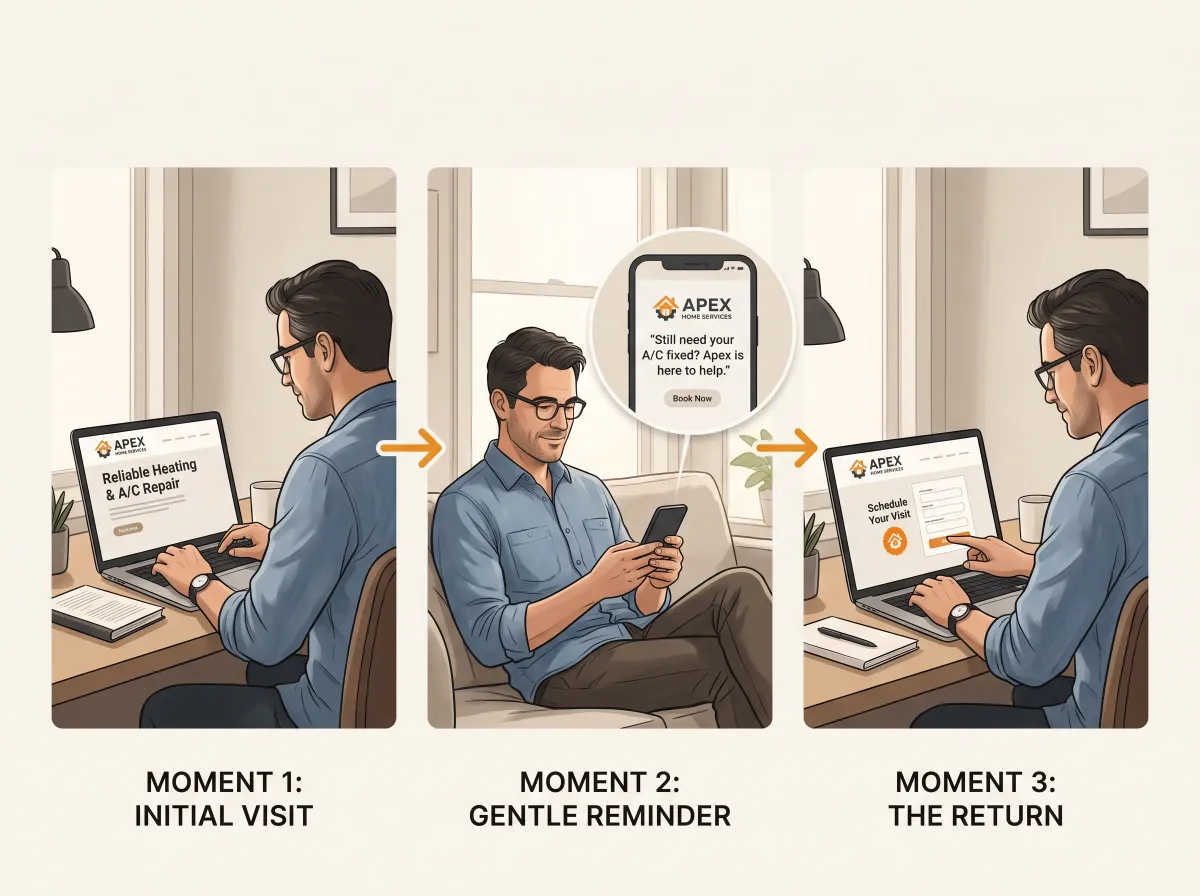
Retargeting shows ads to people who already visited your website. A small piece of tracking code on your site adds each visitor to an audience. Later, when that person scrolls a social feed or browses another site, the platform can show them your ad as a timely reminder.
Because these people already know your name, they respond differently than strangers. They've shown interest, so the reminder lands with context. That's why retargeting often costs less per lead than ads aimed at cold audiences, though results still depend on how well the audience and message are set up.
Win the Decision Window Local Customers Take
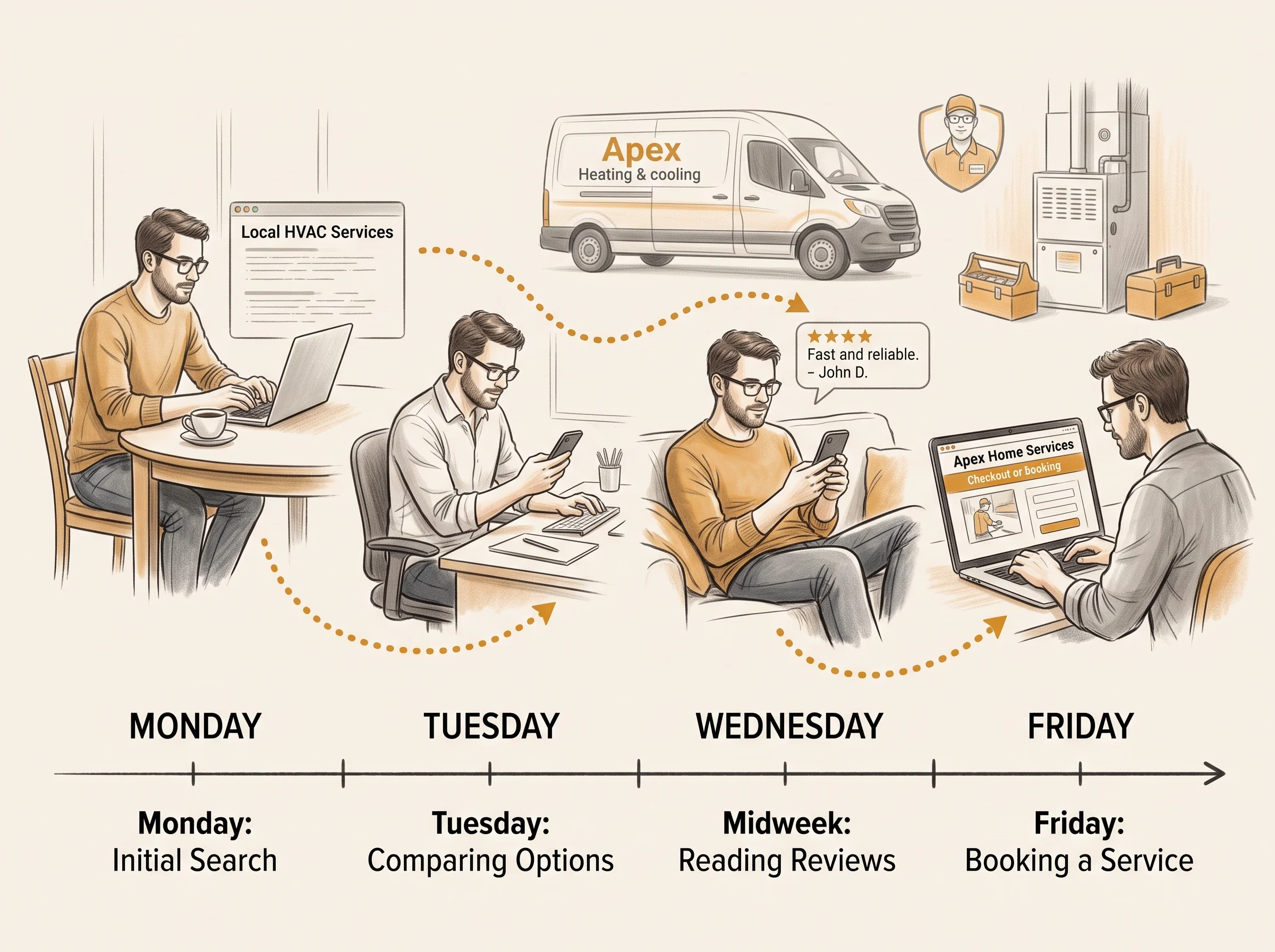
Hiring a contractor is rarely an instant decision. People visit a site, compare a few businesses, ask a friend, and come back days later. Retargeting keeps your name in front of them during that whole window, so you're still familiar when they're finally ready to choose.
It also builds trust. A homeowner who read about your service on Monday might see a customer review or project photo on Wednesday. That second touch answers the doubts the first visit raised, and it's often what moves someone from interested to ready to pick up the phone.
Sort Visitors by What They Did on Your Site
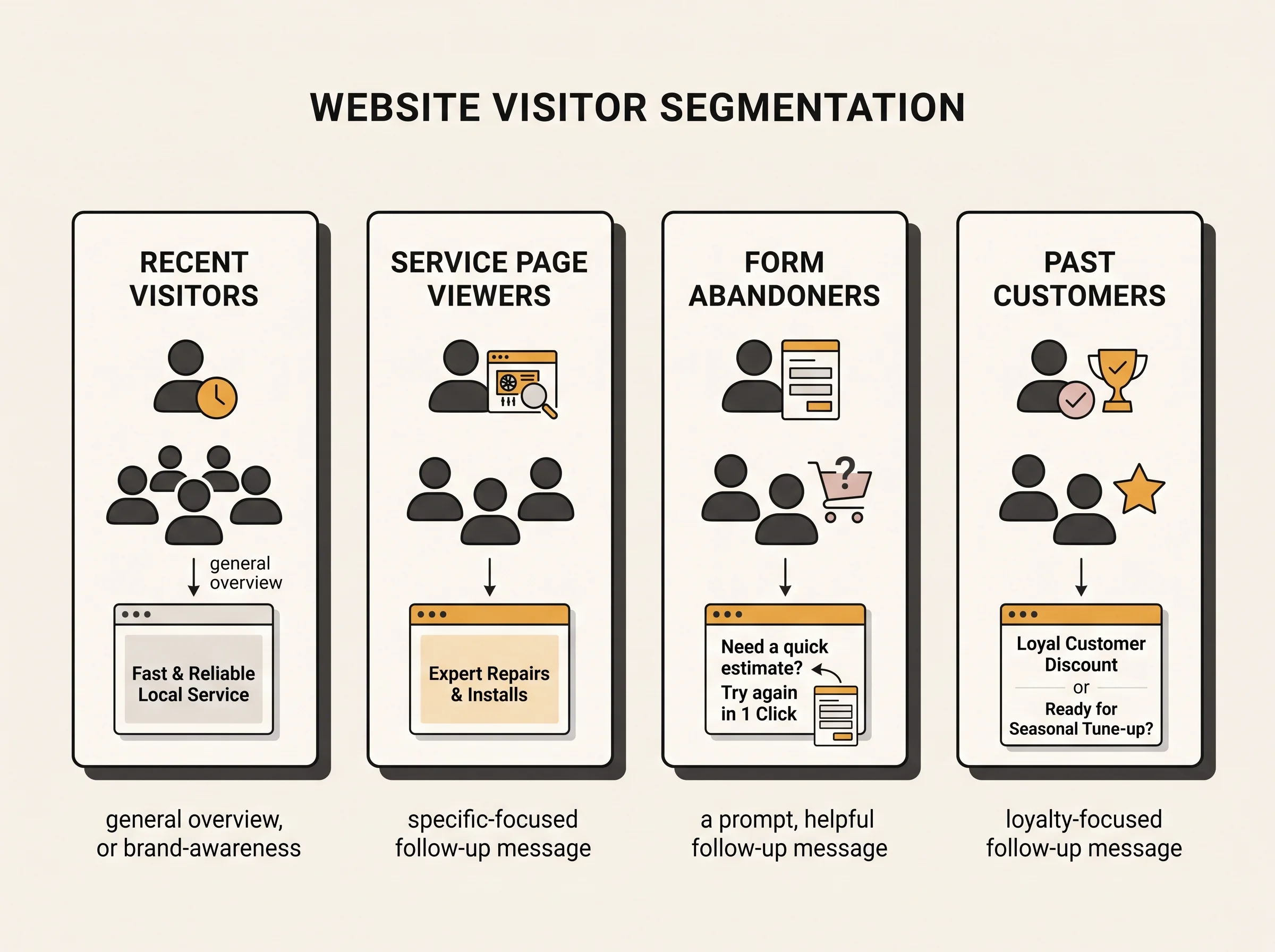
Not every visitor needs the same follow-up. Split your audience by what people did on your site. Someone who read a blog post sits at a different stage than someone who viewed your contact page. Matching the ad to the stage is the core of strong retargeting strategies.
Send Each Group the Message It Needs
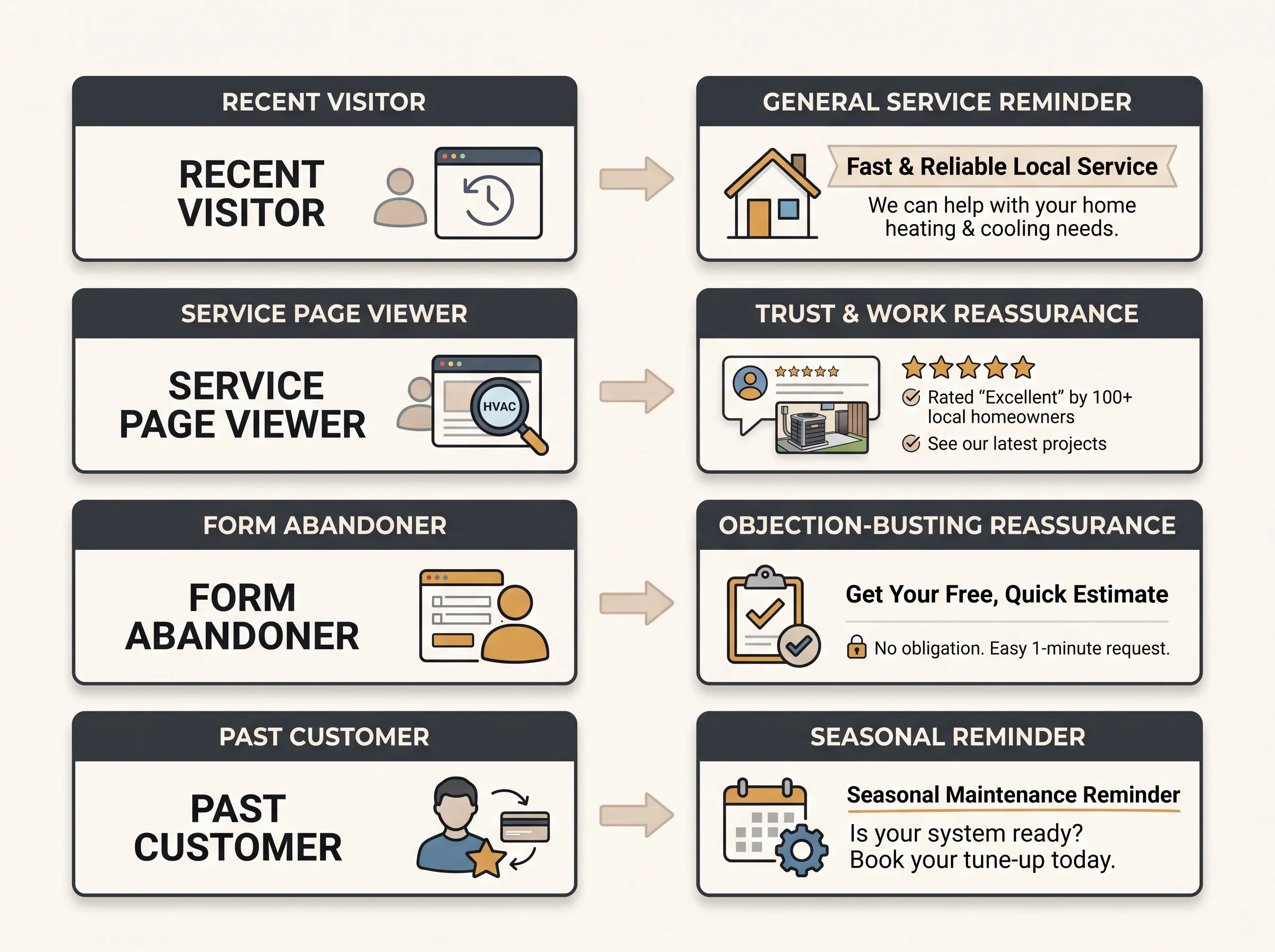
Each audience needs a different message. Instead of repeating one ad to everyone, give every group the next piece of information it's missing. This simple pairing of audience and message works for most local service businesses and gives you a clean starting point to test and improve over time.
Recent visitors: a friendly reminder of what you do and where you work
Service page viewers: a customer review or project photo for that exact service
Form abandoners: a short note that the quote is free and takes a minute
Past customers: a seasonal check-up offer or a simple referral request
Leave Out the People Who Already Said Yes
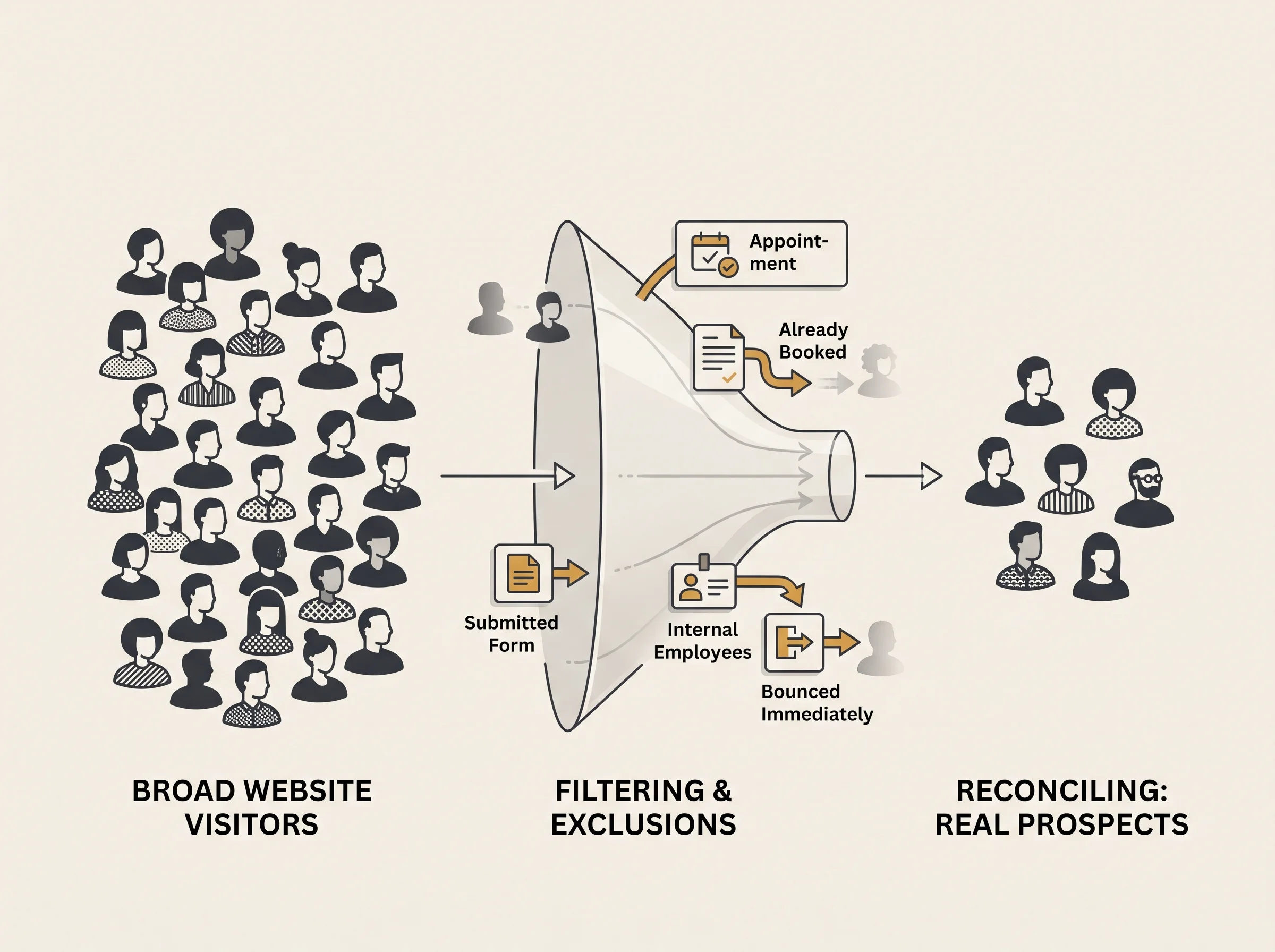
Who you exclude matters just as much. Remove anyone who already booked or filled out your form, because showing them the same offer wastes budget and feels pushy. Leave out your own team and obvious bounces too, so the audience reflects real prospects instead of noise that drags results down.
Write Ads That Pick Up Where the Visit Left Off
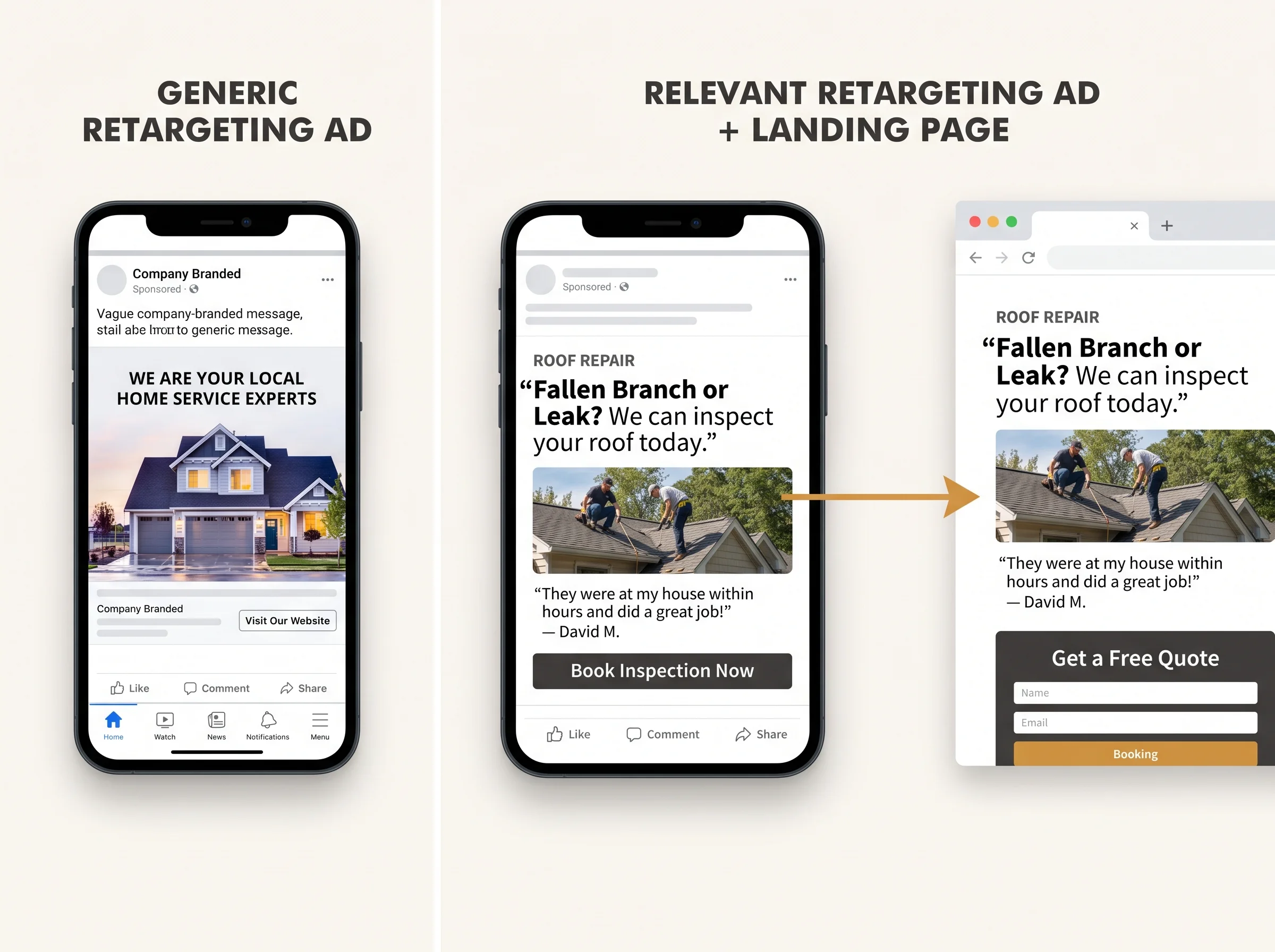
Match the ad to what the person looked at. Someone who viewed your roof repair page should see roof repair, not a generic brand message. Specific ads feel relevant, and relevance is what earns a click from someone who already saw your site once and walked away.
Keep each ad simple: one image, one short line, and one clear action. Add proof where you can, like a real review or a before-and-after photo. Then send the click to a page that continues the same message, not your homepage, where the visitor has to start over.
Remind People Without Following Them Around
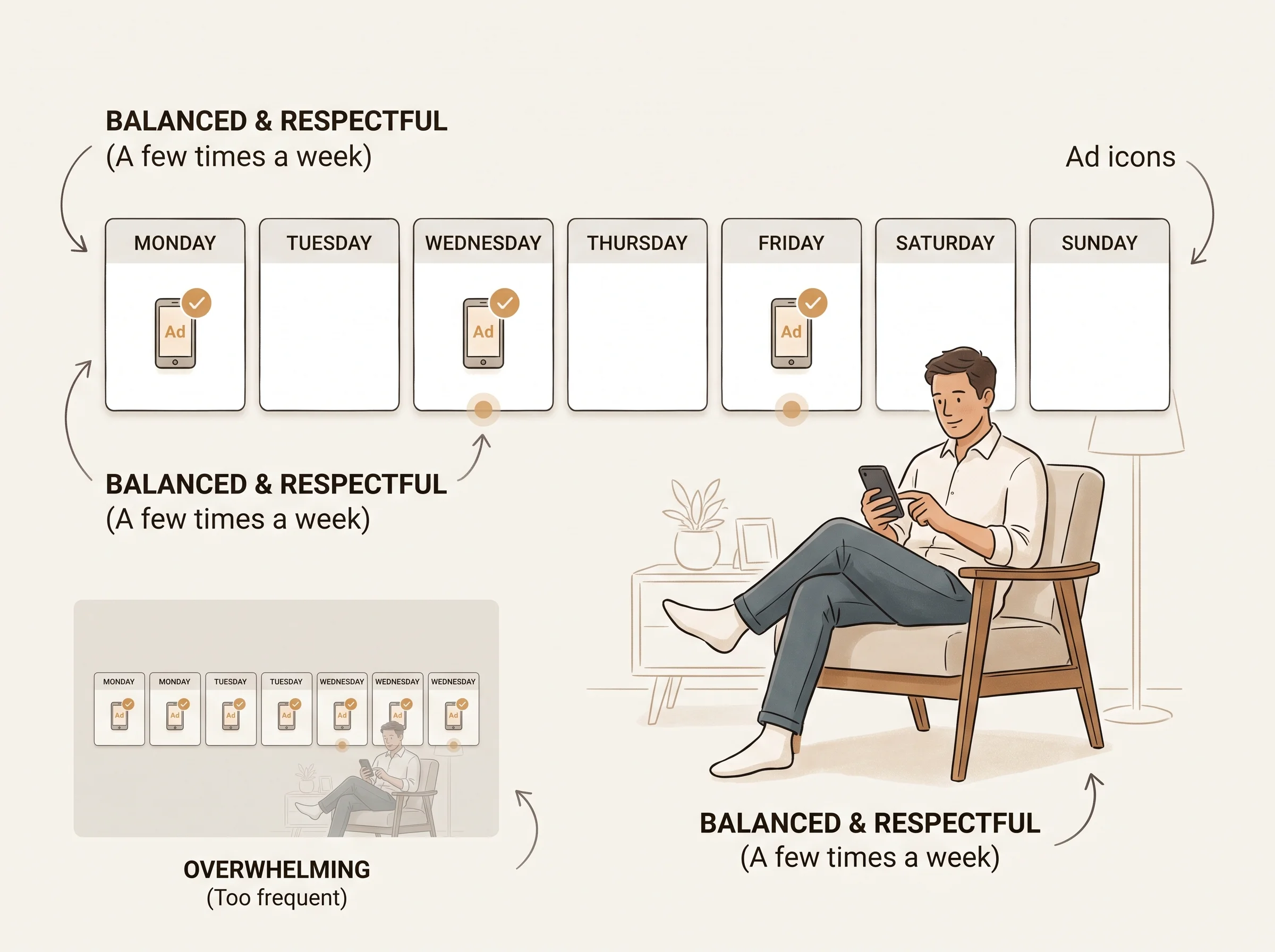
Seeing the same ad ten times a day feels like being followed, and it makes people dislike your business. Set a frequency limit so each person sees your ad only a few times a week. If the platform shows frequency climbing while clicks fall, it's time to refresh the creative.
Audience windows matter too. For a considered purchase, a few weeks usually fits how long people take to decide. Older visitors are less likely to respond, so let them age out of the audience on their own, and remove anyone the moment they become a lead.
Avoid the Mistakes That Drain Your Budget
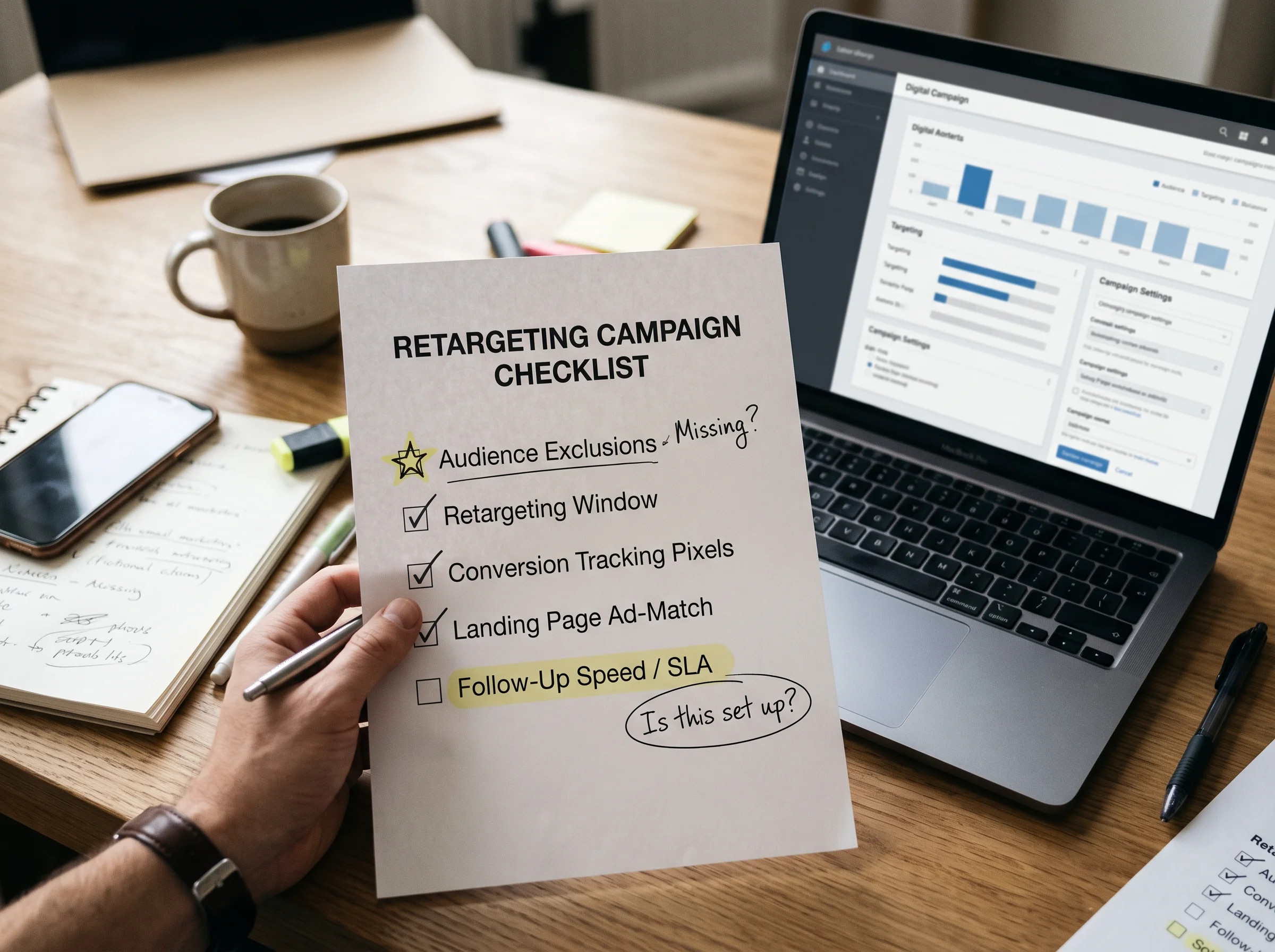
The most common mistake is skipping exclusions, so customers who already converted keep seeing ads. Another is building one giant audience of every visitor ever, regardless of interest. Both water down results, and both are easy to fix once someone actually looks at how the audiences are built.
Missing conversion tracking is the costliest gap, because without it you can't tell which ads create real leads. Sending every click to the homepage is another leak. Careful paid ads management ties each audience to a tracked goal and a matching page, so you can see exactly what's working.
And none of it pays off if the leads it brings back go unanswered. A visitor who returns and fills out your form expects a fast reply. If they wait a day, the retargeting did its job and the follow-up didn't, which means you paid twice for the same lost customer.
Keep Retargeting Honest and Compliant
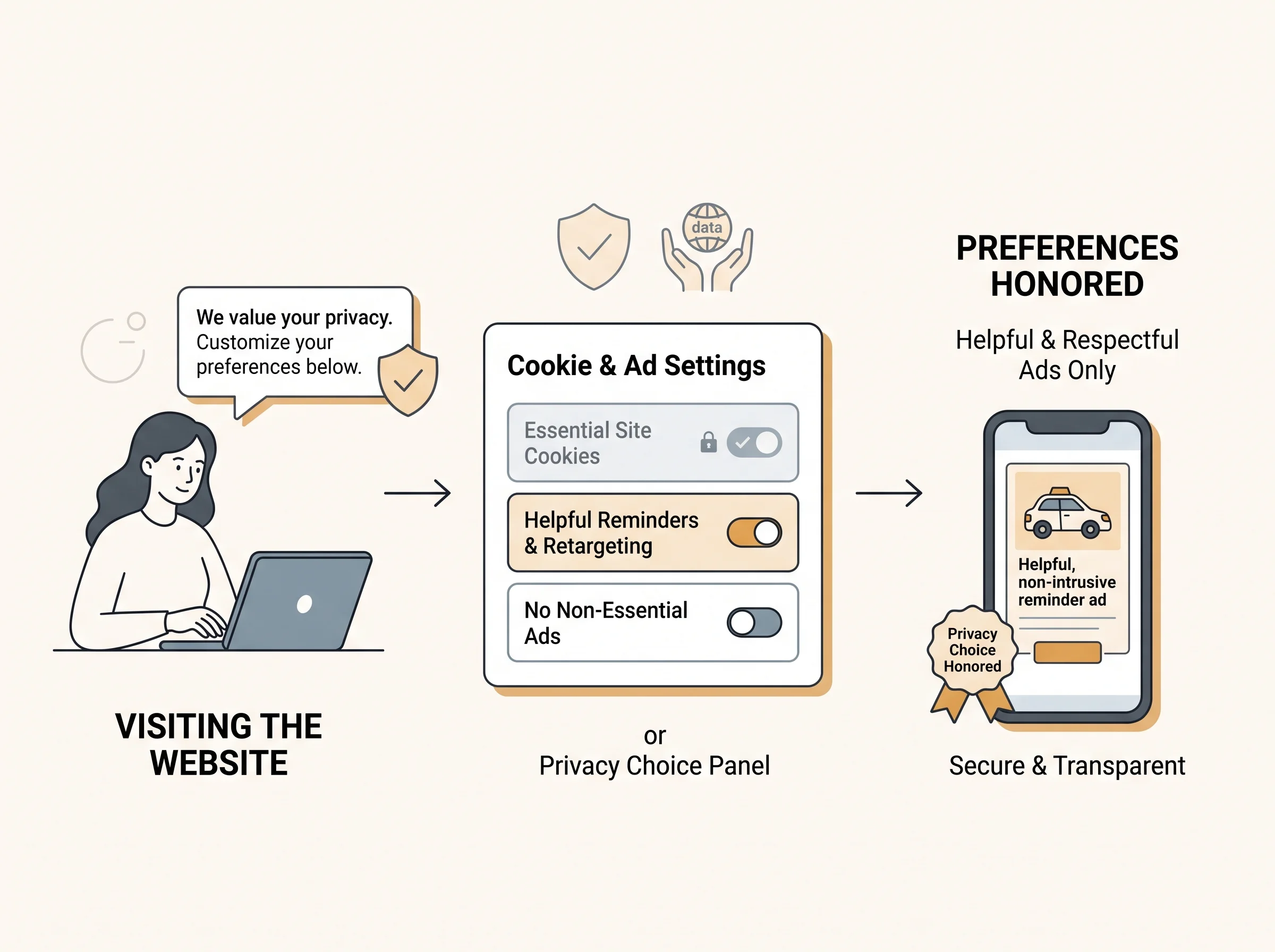
Retargeting relies on tracking code, so be open about it. Mention your use of tracking and advertising tools in your privacy policy, and honor opt-out choices wherever the law or platform requires it. Rules vary by location, so check with a qualified professional about what applies to your business.
Let GrokOn Build Your Retargeting and the Follow-Up Behind It
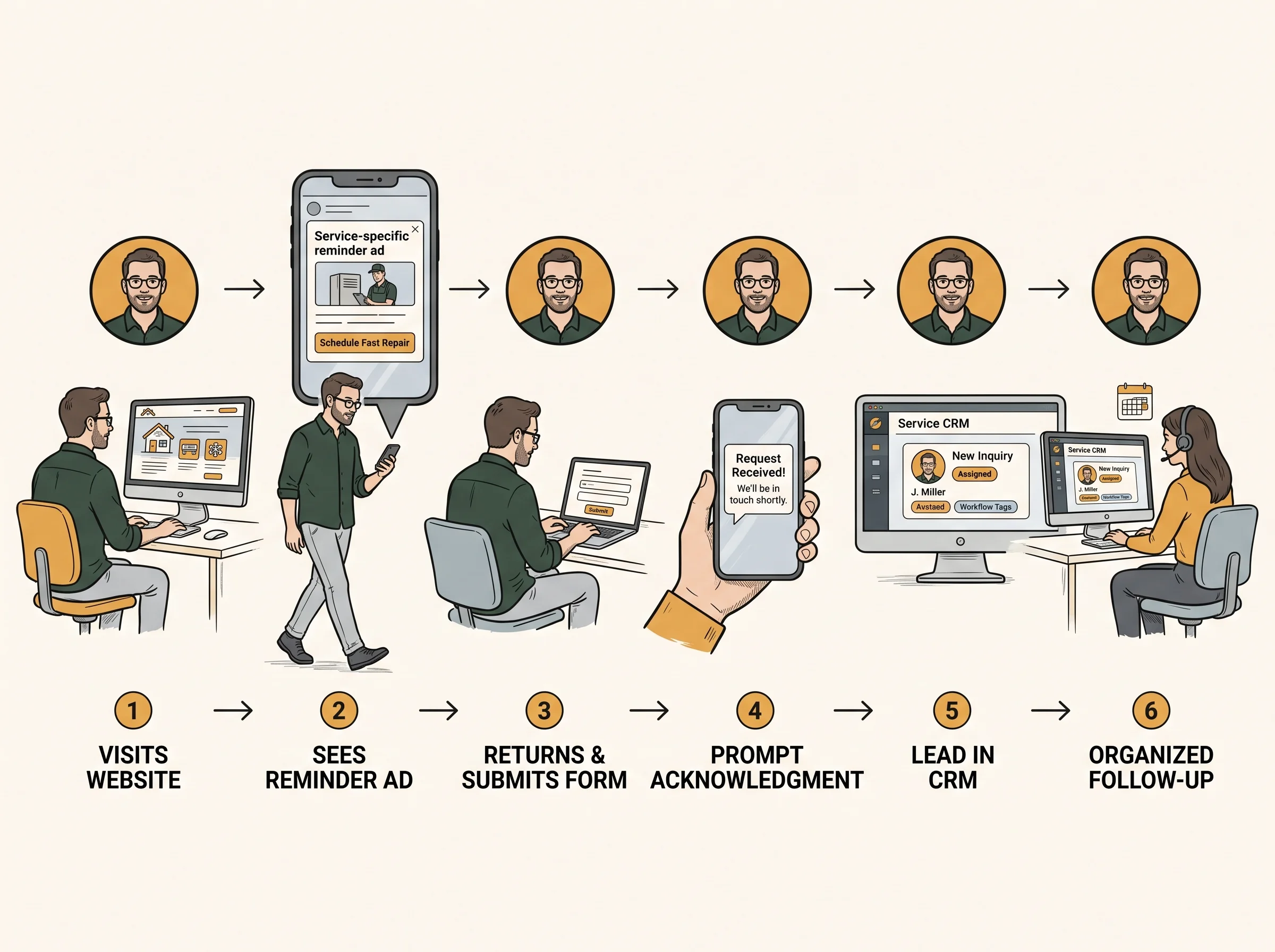
GrokOn sets up retargeting the way local customers actually decide. Our lead generation and paid ads team builds the audiences, sets the exclusions and frequency limits, installs the tracking, and writes ads matched to each stage. You get reminders that feel helpful, not pushy, and reporting tied to real leads.
When a returning visitor reaches out, our AI and automation systems reply within minutes, day or night, and every lead lands in our Smart CRM with its full history. The visitor you paid to bring back finally gets the fast answer that turns interest into a booked job.
Start Bringing Visitors Back in Three Steps
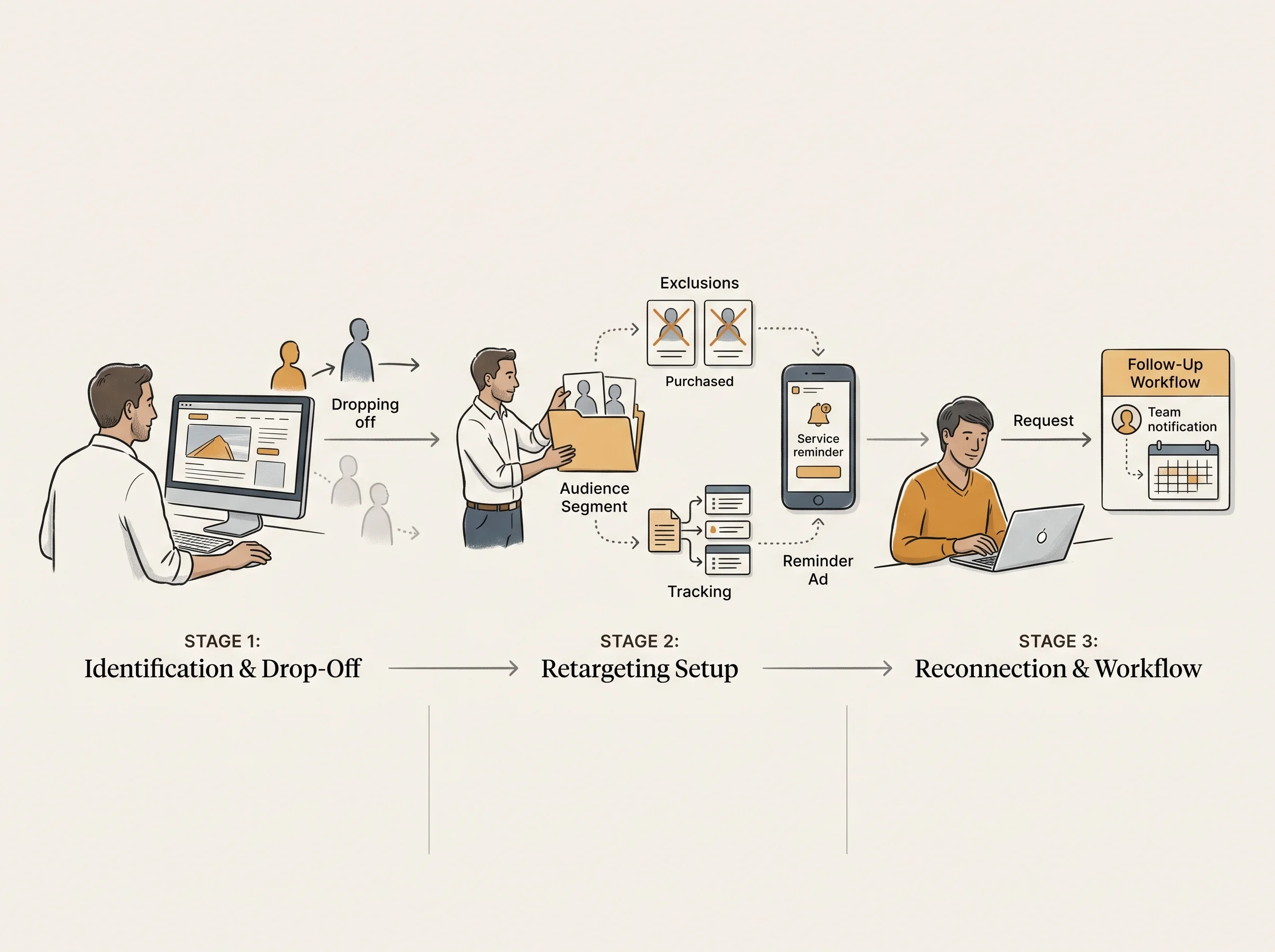
Book a strategy call. We'll look at your traffic, your site, and where visitors drop off today.
We build your retargeting. Audiences, exclusions, tracking, and stage-matched ads, all set up and tested for you.
Watch lost visitors come back. We keep refining the ads while fast follow-up turns returning visitors into booked jobs.
Picture the visitor who left your site last Tuesday. This time, a helpful reminder catches them at the right moment, a real review answers their doubts, and when they reach out, they hear back in minutes. They book with you, not the company that happened to remind them first.
Want retargeting strategies built around how your customers actually decide? Book a strategy call, and we'll show you where your lost visitors are slipping away. From there, our retargeting and paid ads support handles the audiences, ads, and tracking, so every second chance you pay for actually counts.
Book a Strategy Call
Get Straight Answers to Common Questions
Does retargeting really work?
It often does, because the audience already knows your business and has shown interest. Results depend on audience quality, message fit, and how quickly you follow up on the leads it produces. Retargeting works best as a supporting layer within broader paid ads management, not a replacement for attracting new visitors.
How long should people stay in a retargeting audience?
For most local service businesses, a few weeks fits the decision cycle. Shorter windows keep messages fresh, while longer ones suit bigger, slower purchases like remodeling. Test a couple of windows and compare lead quality, and remove people as soon as they convert so they stop seeing ads for something already booked.
Do I need a large budget for retargeting?
No. Retargeting audiences are small compared with cold audiences, so even a modest budget can reach most of them. The bigger requirement is steady website traffic to fill the audience in the first place. If few people visit your site yet, focus on bringing in visitors first, then add retargeting.