
What Does "Grok" Actually Mean? (And Why We Built an Agency Around It)
If you searched grok marketing to land here, you might just be trying to figure out where our name came from. Fair question. It's not a made-up word, and it's not an acronym. It comes from somewhere specific, and once you know what it means, the rest of how we work makes a lot more sense.
Where the Word "Grok" Actually Comes From
The word was coined by science fiction writer Robert Heinlein in his 1961 novel Stranger in a Strange Land. In the book, it describes a kind of understanding so complete that the person doing the understanding almost merges with what they're trying to understand. Not surface-level knowledge. Not "I read about it once." Full, deep comprehension.
Over the decades, the word slipped into everyday use, especially in tech and business circles, to describe genuinely getting something rather than just being familiar with it. There's a real difference between knowing a customer exists and actually grokking why they buy.
Why "Understanding Deeply" Is the Whole Point of Marketing
Here's the uncomfortable truth about most marketing that underperforms: it's rarely a lack of effort. Ads get built, budgets get spent, content gets published on schedule. What's usually missing is a real understanding of the customer underneath all of it.
A campaign built on assumptions might guess right some of the time. A campaign built on actually understanding what a customer needs, what's stopping them from buying, and what they actually care about tends to perform very differently over the long run. That gap, between guessing and understanding, is where most wasted marketing budget quietly disappears.
This is why searching grok marketing and finding an actual philosophy behind the name, rather than just a clever pun, tends to matter more than it seems at first. A name is easy to pick. Building an entire process around what that name means is a different commitment.
How "Grok" Became "GrokOn Marketing"
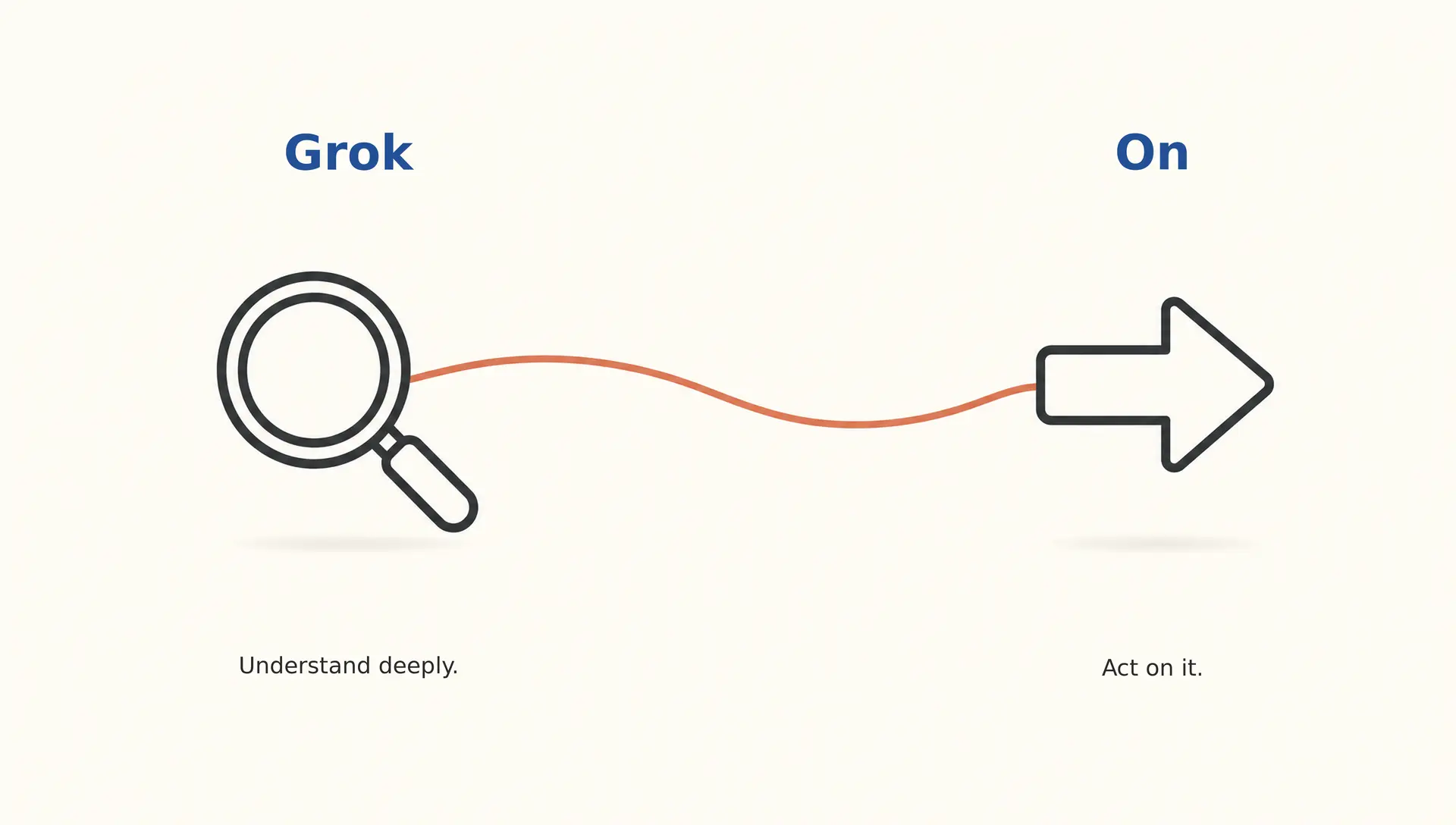
Grok plus On. Understand deeply, then act on it.
That's the literal idea behind the name. Most agencies lead with execution: here's the ad, here's the post, here's the campaign. We start with the understanding part first, because building anything before you actually get the business, the customer, and the specific thing holding growth back tends to produce marketing that looks fine and does very little.
If you've spent any time on our homepage, this is the same idea behind the difference between guessing your way through marketing and building it on actual understanding.
The GRO Process Starts With "Grok" for a Reason
This isn't just a naming choice we made once and forgot about. It's the literal first step of how every engagement works.
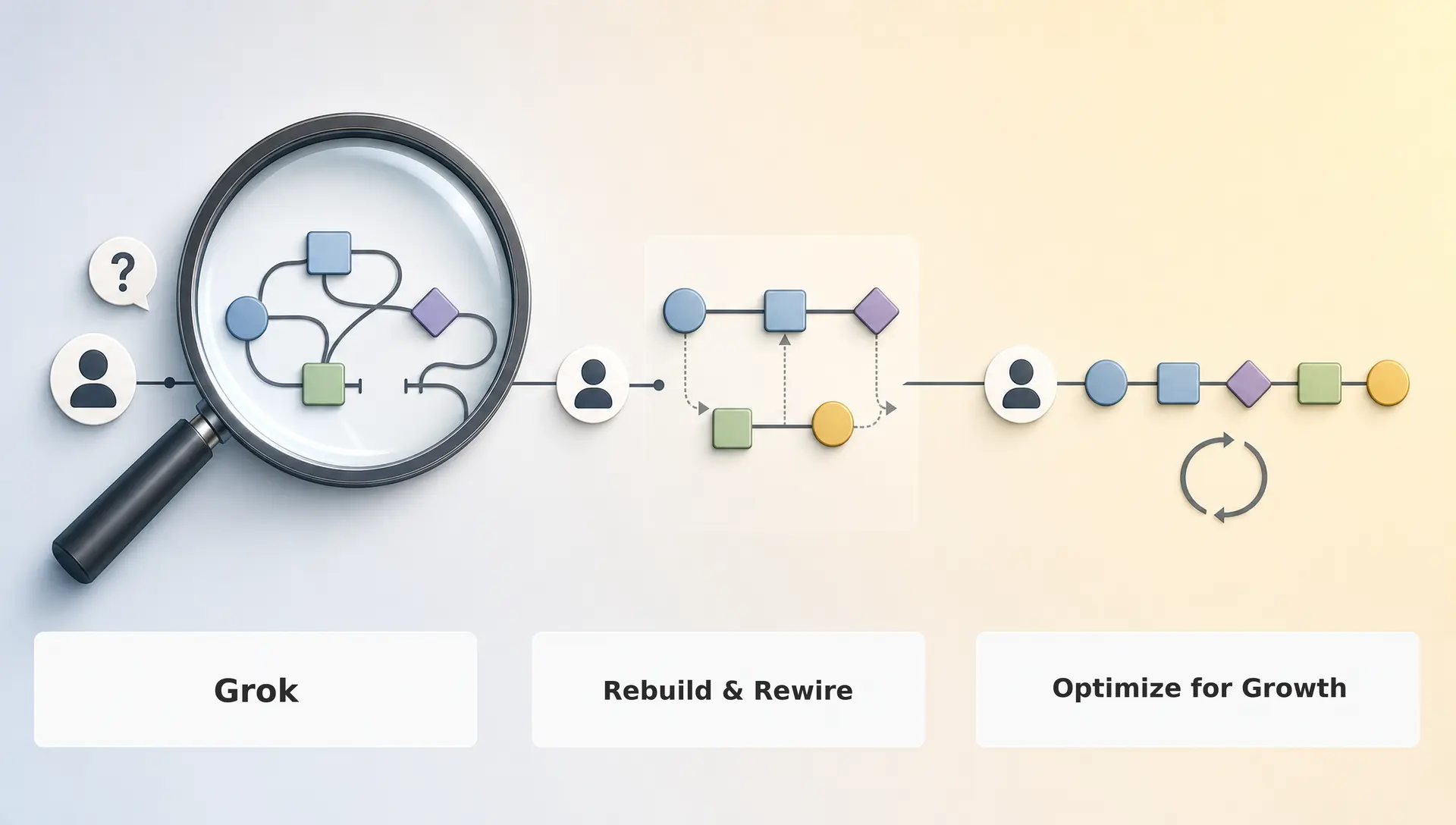
Grok comes first: digging into the business, the customers, and specifically what's currently blocking growth. Not a generic questionnaire, an actual attempt to understand what's true about this specific business before touching anything else.
Only after that comes Rebuild & Rewire, where messaging, marketing, and automation get realigned to work as one connected system instead of a pile of disconnected tools. Then Optimize for Growth, where everything gets tracked and refined based on real results instead of guesses about what's probably working.
Skip the first step, and the other two are just building on assumptions dressed up as strategy. That's why it's step one, not an afterthought squeezed in after the campaign is already live.
What This Actually Means for You as a Client
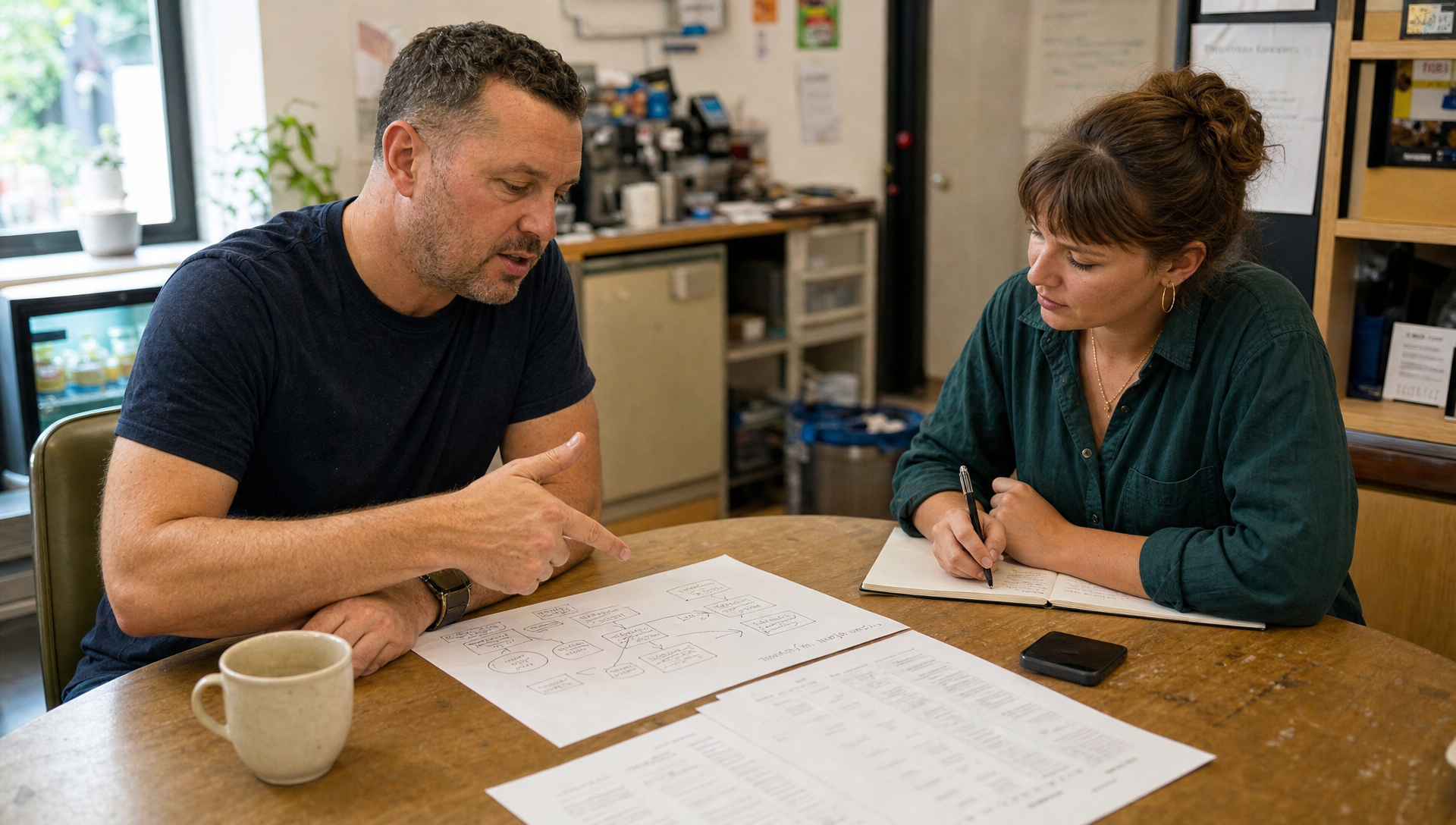
In practice, it changes what the first few weeks of working together look like. Instead of jumping straight into ad creative or a content calendar, the early conversations are about your business specifically. What's actually happening with your leads right now. Where they're getting lost between the first click and a booked appointment. What your customers actually respond to versus what you assume they respond to based on gut feeling.
It takes a little longer up front than an agency that starts building on day one. It also means what gets built afterward is based on your actual business, not a template with your logo swapped in and a few keywords changed.
Plenty of businesses find us the same way you might have, by searching grok marketing or grokon marketing after hearing the name somewhere and wanting to know more before reaching out. That's a reasonable way to vet any company, and it's part of why this page exists.
If you're curious about how GrokOn Marketing works with different types of businesses, our FAQ page covers the industries we typically work with and how engagements usually start.
Frequently Asked Questions
Is "grok" related to any AI chatbot with a similar name?
No. The word predates any AI product by more than six decades. It comes from a 1961 science fiction novel, long before it showed up anywhere else. Our name reflects that original meaning: understanding something deeply before acting on it.
What does "GrokOn" mean as a company name?
Grok (to understand something deeply) plus On (to act on that understanding). It's meant to describe the actual order of operations we follow: understand first, then build.
Does the name affect how you actually work with clients?
Yes, directly. It's the reason the first step of every engagement is understanding the business and its customers before any campaign, ad, or automation gets built. It's a working method, not just branding.
Curious how this plays out for a business like yours? Head back to the GrokOn Marketing homepage to see the full picture, or check the FAQ page for specifics on how we work.