blogs
Insights, Strategies & Systems to Grow Your Business
AI Lead Nurturing 101: How to Follow Up With Every Lead Without Lifting a Finger
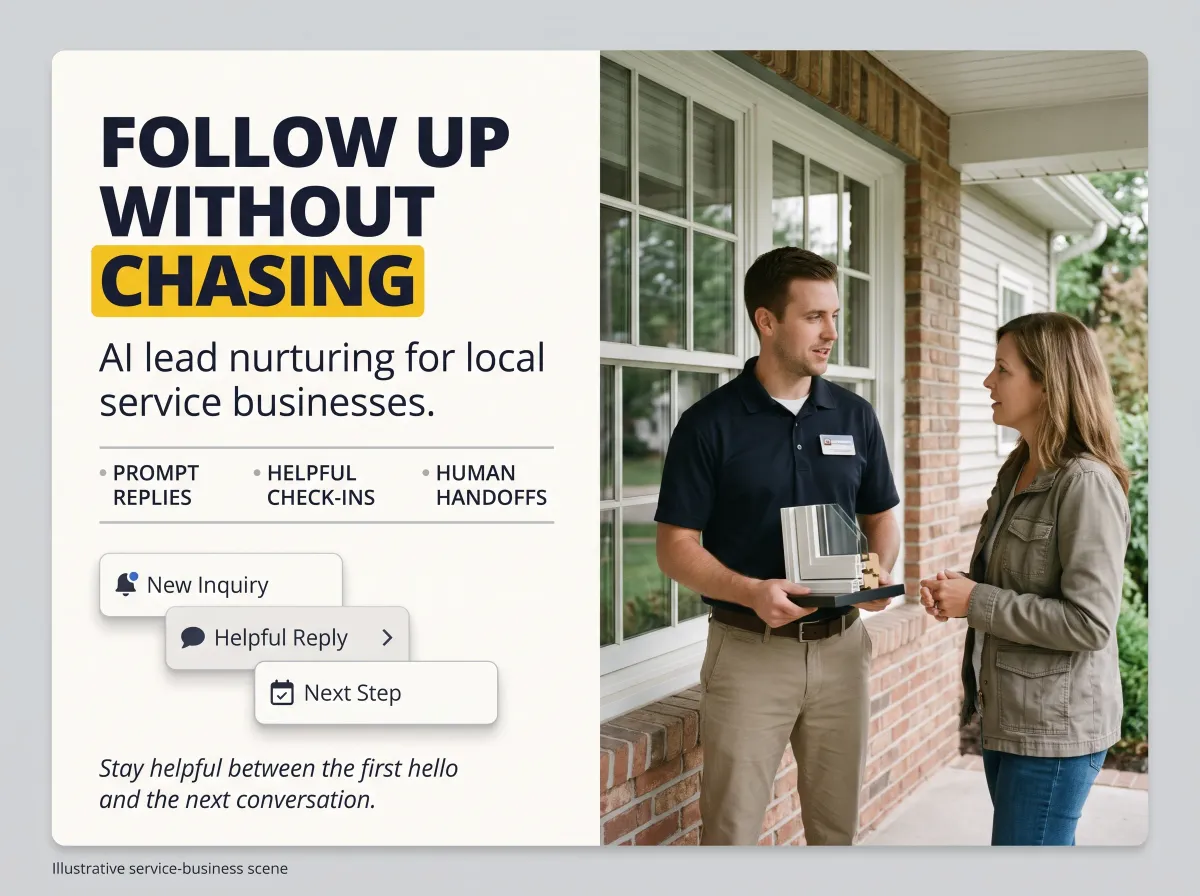
Many leads aren't ready to buy the moment they reach out. They're comparing options, checking budgets, and waiting to see who responds with real help. For St. Louis businesses, AI-powered lead nurturing keeps every one of those people warm until they're ready, without anyone on your team chasing them by hand.
Stop Losing Leads in the Gap Between Hello and Yes
Almost every business means to follow up. In practice, the busiest weeks are exactly when follow-up disappears. The crew is on a job, the office is short-handed, and a lead from Tuesday gets a reply on Friday, if at all. By then, someone else already answered their questions.
The intention was real. The system to support it wasn't. That's not a character flaw, and working longer nights won't fix it. Every lead that goes cold is a job you paid to find and handed to a competitor, and the only lasting fix is follow-up that runs on its own.
Stay Helpful Until Every Lead Is Ready to Decide
Lead nurturing means staying helpful and in touch between someone's first inquiry and their final decision. It isn't constant selling. It's answering questions before they're asked, sending useful reminders, and being easy to reach, so you're the business they think of when it's finally time to choose.
See What AI Adds to Lead Nurturing
Basic automation can send a message on a schedule. AI-powered lead nurturing adds the ability to respond to what each person does. It can reply within a minute, match the message to the service someone asked about, and answer common questions without waiting for anyone to be free.
A fast first reply: a friendly response within minutes, day or night
Messages matched to behavior: different follow-up for someone who viewed a service page than for someone who requested an estimate
Answers to common questions: hours, service areas, and what happens next
Automatic stops: follow-up pauses the moment a lead replies or books
Hot-lead alerts: a notification to your team when someone shows strong interest
Together, these pieces make up an AI lead follow-up system. The goal isn't to replace real conversations with customers. It's to make sure every lead gets a prompt, relevant first touch, and that your team's time goes to the people most ready to talk instead of chasing everyone equally.
Copy This Follow-Up Timeline
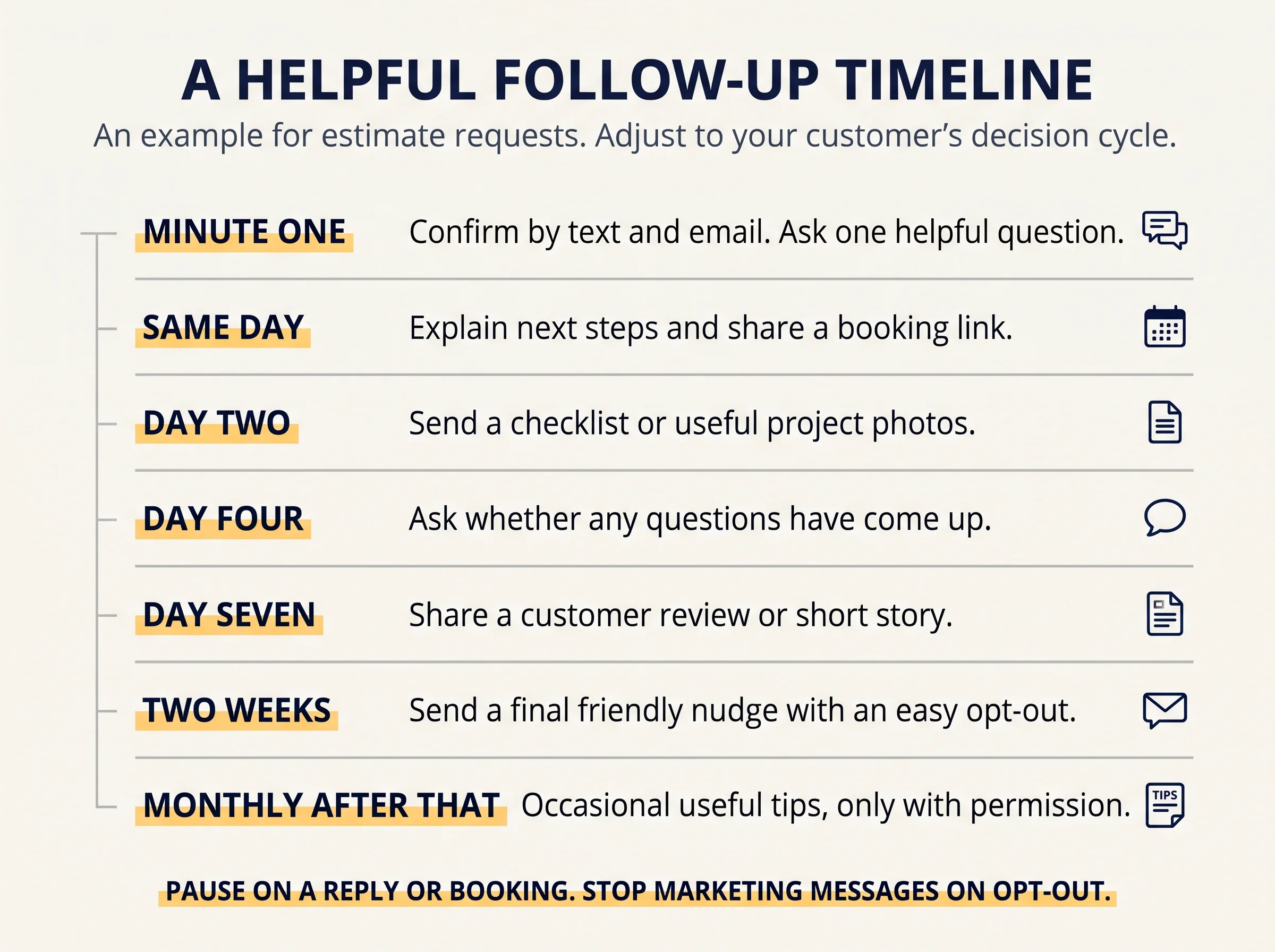
Timing matters as much as wording. Here's a starting timeline for a lead who requests an estimate. Treat it as a template, not a rule, and stretch the gaps if your customers take longer to decide, as they often do for bigger projects like roofing or remodeling.
Minute one: a friendly text and email confirming the request and asking one helpful question
Same day: a short note with what happens next and a link to book a visit
Day two: a helpful resource, such as a checklist or a few project photos
Day four: a gentle check-in asking whether any questions have come up
Day seven: a customer review or short story that builds confidence
Two weeks: a final friendly nudge that makes it easy to reply or opt out
Monthly after that: an occasional useful tip, only for people who haven't opted out
See It Working for a Local Service Business
Picture a hypothetical St. Louis area window replacement company. A homeowner requests an estimate on Monday, gets a prompt text with a few questions about the home, and books a visit for Thursday. After the visit, the estimate goes out, and then the homeowner goes quiet, as people often do with big decisions.
Over the next two weeks, short messages share a guide to comparing window options and a recent local project. On day nine, the homeowner replies with a question about installation timing. The sequence pauses, the owner gets an alert, a real person answers within the hour, and the job is booked that week.
Keep It Personal, Not Robotic
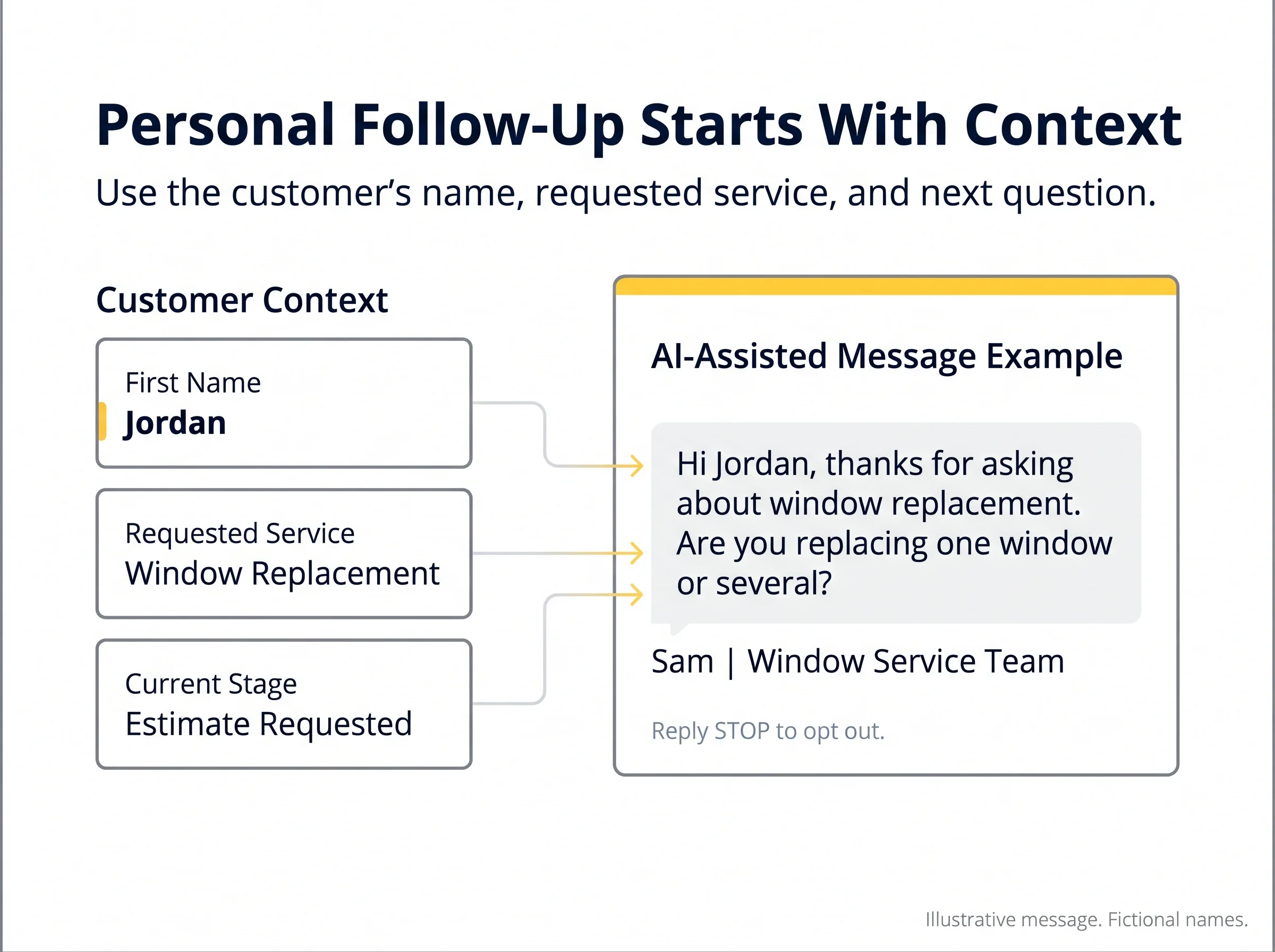
Automated doesn't have to feel robotic. Use the person's first name and the specific service they asked about. Keep messages short, write the way you'd talk, and sign with a real name from your team. A message that sounds like a neighbor beats one that sounds like a form letter.
Hand Off to a Person at the Right Moment
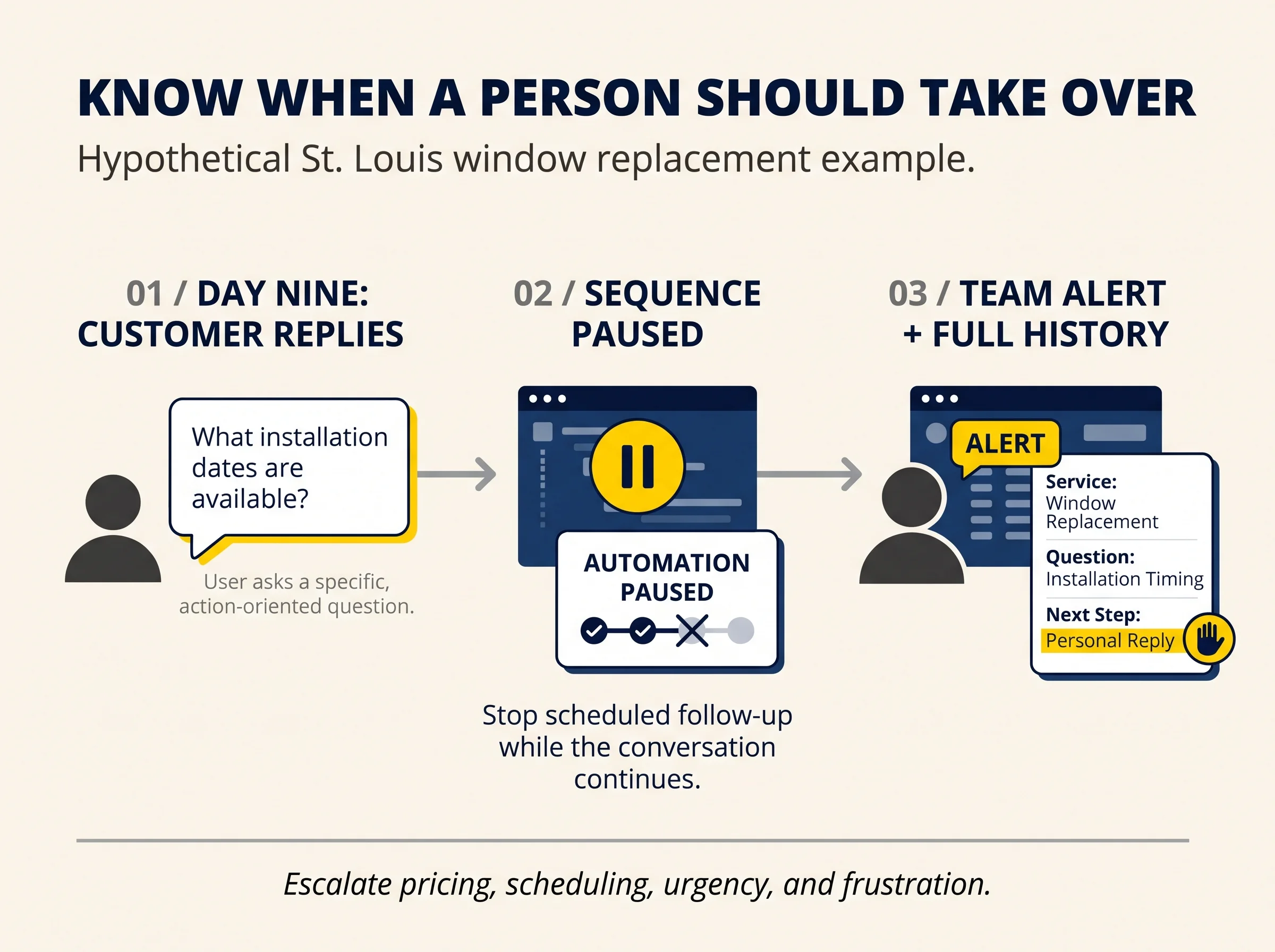
Some moments need a human. A direct question about pricing or scheduling, a sign of urgency, or any hint of frustration should reach a real person fast. Set those triggers up front, so the system alerts your team and stops sending automated messages the moment someone steps in.
Measure Four Numbers That Tell the Truth
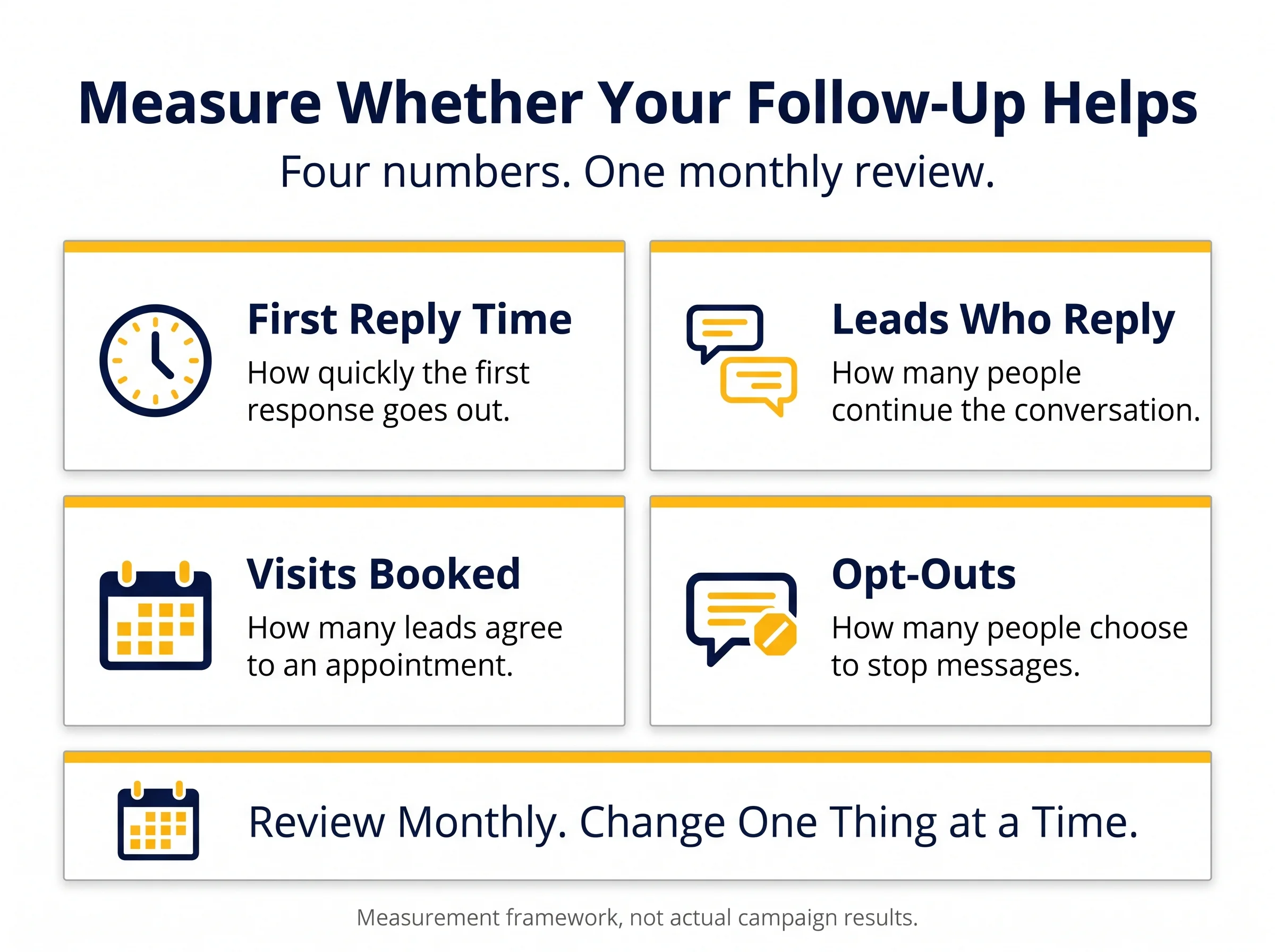
Track four numbers: how fast the first reply goes out, how many leads reply, how many book a visit, and how many opt out. Together they show whether the system is helping people or annoying them. Review them monthly, and change one thing at a time to see what made the difference.
Don't Nurture Leads Into Unsubscribing
The biggest mistake is sending too many messages. A sequence that feels like pressure drives opt-outs and dents your reputation. Space messages out, keep each one useful, and stop after a reasonable number of tries. A lead who never replies isn't a failure, and they may answer a gentle monthly note later.
Build Your Own System in Four Steps
If you'd like to try this yourself, start small. One lead source and one well-written sequence will teach you more than an elaborate setup that takes months to finish. Here's the simplest path to a working AI lead follow-up system you can test and improve over time.
Choose the lead source: start with the one that brings in the most inquiries, such as your website form
Write the sequence: draft four to six short messages using the timeline above
Set the stop and handoff rules: pause on a reply or booking, and alert a person for hot leads
Test and review: send the full sequence to yourself, then check the results monthly
Get Permission Before You Follow Up
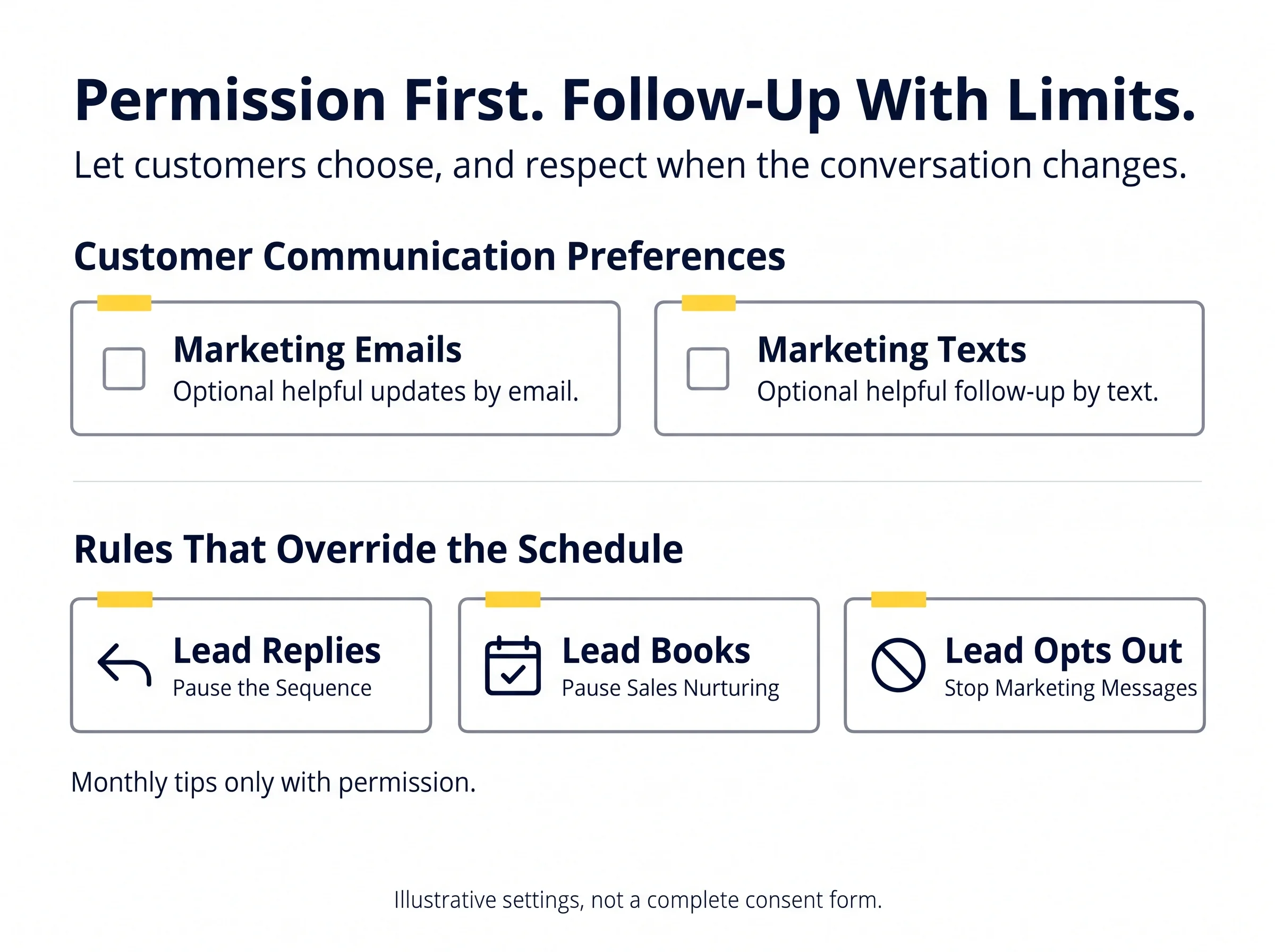
Follow-up messages still need permission. Get a clear opt-in before sending marketing texts or emails, include an easy way to opt out in every message, and honor those requests right away. Rules vary by location and message type, so check with a qualified professional about what applies to your business.
Let GrokOn Build the Sequences and Handle the Handoffs
If you'd rather skip the setup, GrokOn builds it for you. Our AI-powered lead nurturing team writes the sequences, sets the stop and handoff rules, and installs the tracking, then reviews every message with you, so your follow-up runs on time and still sounds like your business.
Every lead lands in our Smart CRM with its full history, and our AI and automation systems send the first reply within a minute, day or night. When a hot lead raises a hand, your team gets the alert and the whole conversation, even when you're out on a job.
Start Nurturing Every Lead in Three Steps
Book a strategy call. We'll map how you follow up today and find where leads go quiet.
We build your first sequence. Messages, timing, stop rules, and handoff alerts, written in your voice and tested with you.
Let it run while you work. Every lead gets a fast, helpful touch, and your team talks to the ones ready to buy.
Picture a Monday morning a few months from now. Every lead from the weekend already got a friendly reply. Quiet estimates are getting gentle check-ins, two homeowners have questions waiting for your team, and one booked a visit overnight. Nobody chased anyone, and nothing slipped through the cracks.
Want follow-up that reaches every lead on time without adding to your workload? Book a strategy call and our team will map your current process, build the first sequence, and set up the handoff to your team. It starts with a conversation about an AI lead follow-up system for your St. Louis area business.
Get Straight Answers to Common Questions
How many follow-up messages should I send?
There's no perfect number, but four to six messages over two weeks, followed by a light monthly note, is a common starting point. Use fewer for quick, low-cost services and more for bigger decisions. Watch opt-outs and replies, because they'll tell you fast whether your pace feels helpful or pushy.
Will automated follow-up feel pushy?
It can if it's careless, but it doesn't have to. Pushy follow-up usually comes from too many messages, vague wording, and no stop rule. Short, useful messages that pause when someone replies feel more like good service than pressure. Many customers appreciate a quick, polite reply far more than silence.
What if a lead never replies?
That's normal, and it isn't always a lost cause. Some people aren't ready for weeks or months. After the main sequence ends, move them to a light monthly note with something useful, and honor any opt-out right away. If they reach out later, your business may be the one they remember.

Find Out What This Looks Like for Your Industry
We help businesses simplify marketing, automation, and AI so they can grow with clarity — not chaos.


© 2026 GrokOn Marketing. All Rights Reserved.