blogs
Insights, Strategies & Systems to Grow Your Business
The Anatomy of a High-Converting Marketing Funnel
Every business already has a marketing funnel, whether anyone designed it or not. Customers find you, look around, decide, and either act or leave. For St. Louis businesses that depend on local customers, funnel optimization means understanding each step of that path and clearing whatever slows people down.
Book a Strategy Call
Stop Guessing Where Your Customers Disappear
When the phone goes quiet, most owners guess at the cause. Maybe the ads stopped working. Maybe the market slowed. So they spend more on traffic and hope. But if people are dropping off somewhere between the first click and the booked job, more traffic just means paying for more people to leave.
Funnel talk can sound like something only big companies with data teams need. It isn't. A funnel is just the path your customers already take, and seeing it clearly is how you stop guessing. This guide breaks it into five simple stages, with what to measure at each one.
See the Path From Stranger to Customer
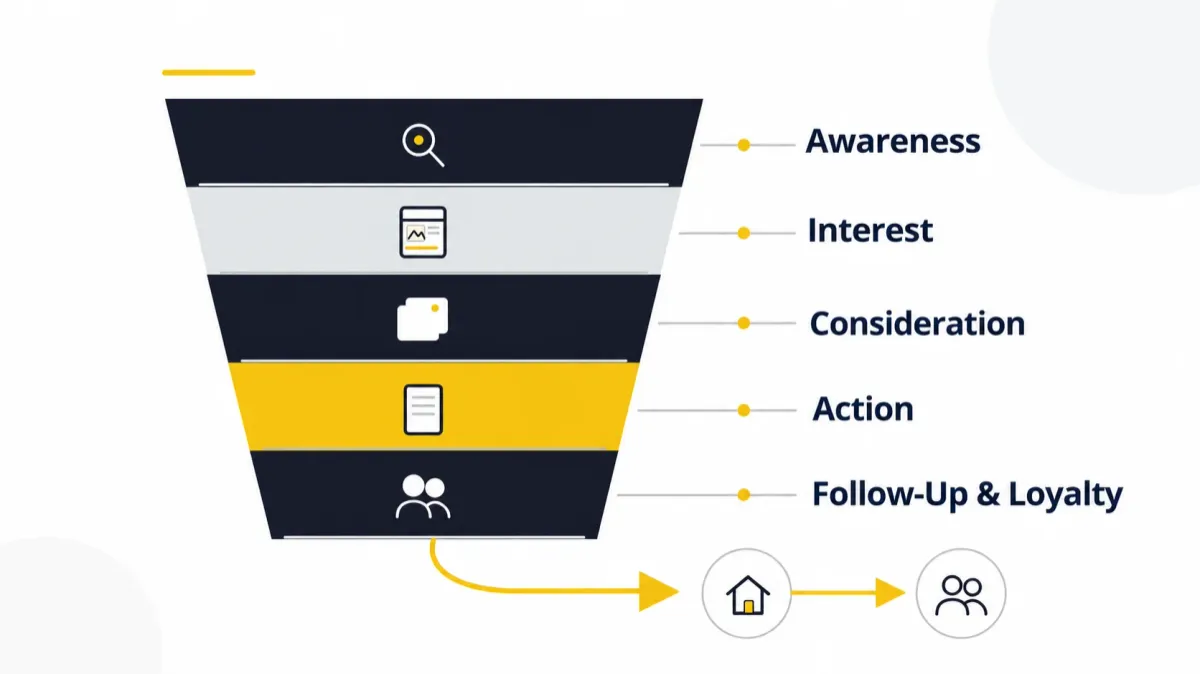
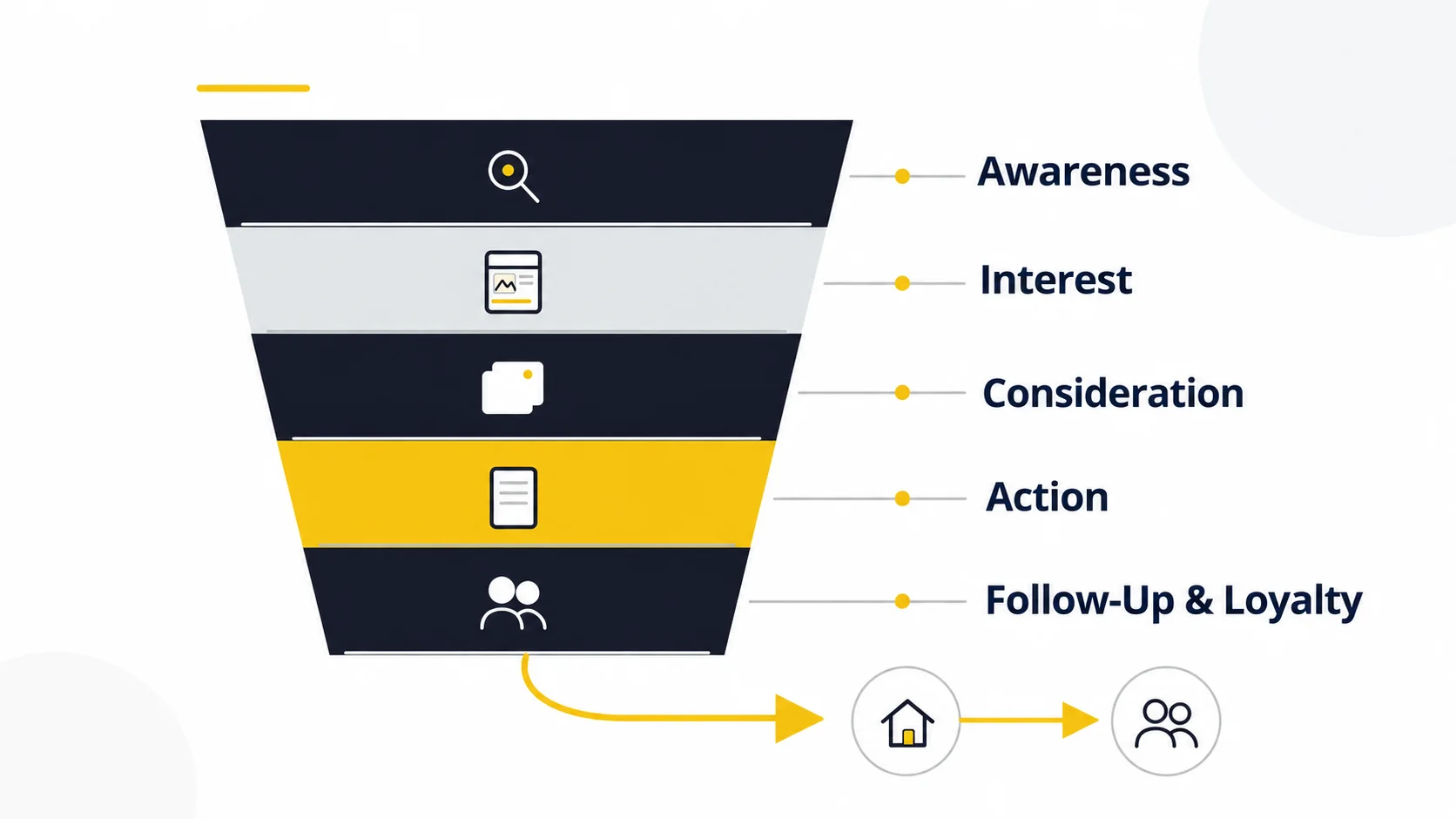
A marketing funnel maps the path from stranger to customer. It's called a funnel because many people enter at the top and fewer reach the bottom. It isn't a trick or a hack. It's a way of seeing where people drop off, so more of them reach a decision.
Awareness: be found by people who have a problem you solve
Interest: give visitors a reason to stay and keep reading
Consideration: help people compare options and feel confident
Action: make the next step simple, clear, and easy to take
Follow-up and loyalty: reply quickly, nurture, and earn repeat work and referrals
Stage 1 (Awareness): Get Found by the Right People
Awareness is about being found by people who already have a problem you solve. For local businesses, that usually means search results, map listings, referrals, and social posts. The goal isn't the biggest audience. It's the right people, at the moment they start looking for help.
Measure visits, and more importantly, where they come from. A hundred visitors searching for your exact service can be worth more than a thousand from a post that went viral. Source quality tells you which channels deserve more attention and which are just noise.
Stage 2 (Interest): Give Visitors a Reason to Stay
Once someone lands on your site, they decide in seconds whether to stay. Interest comes from clarity: a headline that names their problem, a service page that explains what you do, and a few proof points showing real work. Confusing pages lose people before they ever reach the details.
Measure what people do after they arrive: how long they stay, how many pages they view, and whether they come back. A visitor who returns is showing interest. A visitor who leaves in seconds is telling you the page didn't match what they expected to find.
Stage 3 (Consideration): Help People Choose You With Confidence
Consideration is the comparison phase. People are weighing you against other businesses, so they look for reviews, project examples, and honest answers to common questions. This is where a solid FAQ section, a gallery of finished work, and visible customer feedback earn their place on your site.
Measure which key pages people view before they act, like service pages, reviews, and your contact page. If many visitors reach a service page but few move on, the page may be missing the reassurance people need before they feel confident choosing you over the next option.
Stage 4 (Action): Make the Next Step Easy
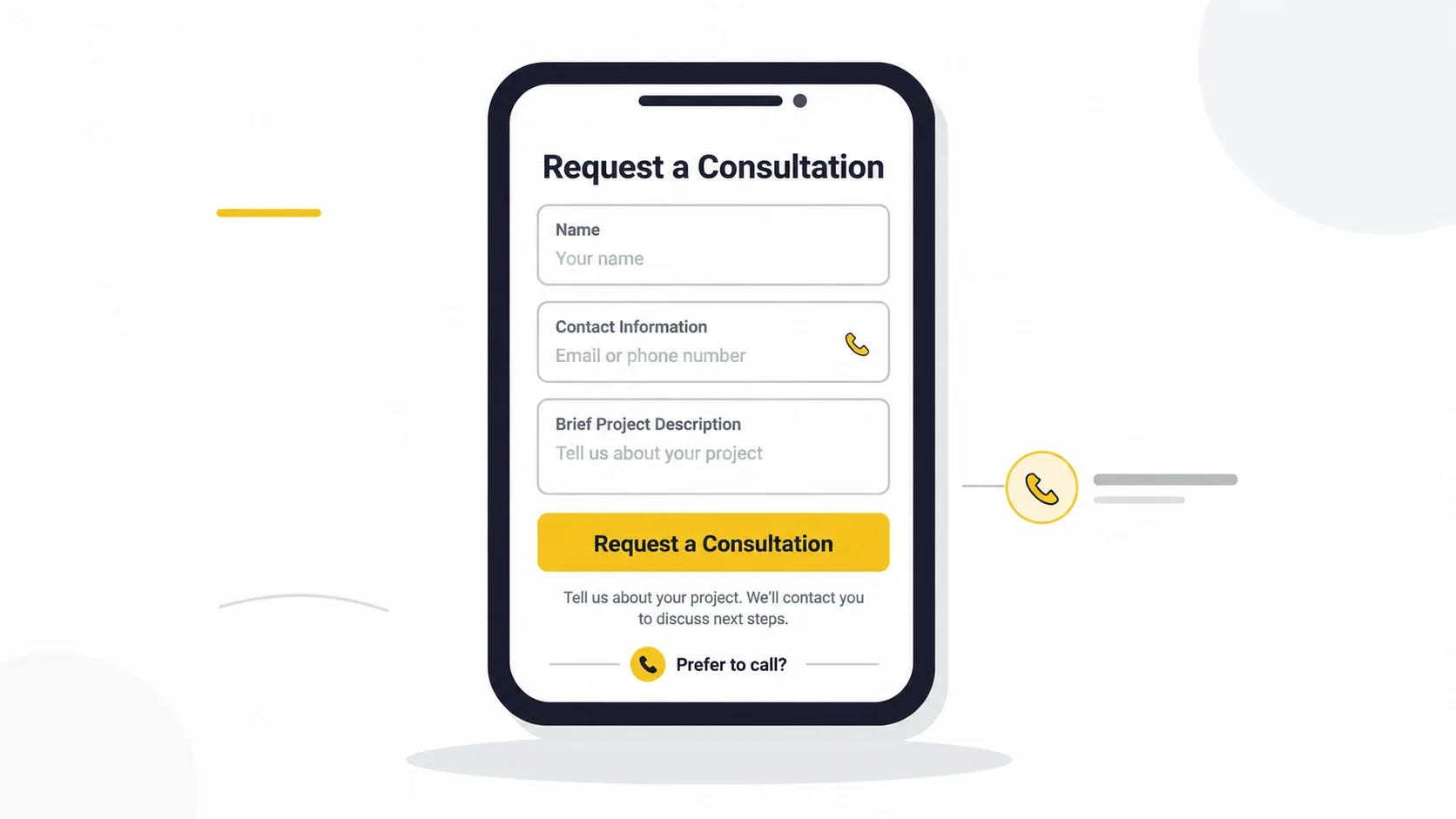
Action is the moment someone calls, fills out a form, or books an appointment. This stage's job is to make that step feel easy and safe. Focused pages, short forms, and a visible click-to-call button clear away the small obstacles that stop ready people from reaching out.
Measure conversion rate and form completion. If plenty of people reach your form but few finish, something in it creates doubt or effort. This is often where conversion optimization pays off fastest, because small changes to wording, layout, or form length can lift results without any new traffic.
Stage 5 (Follow-Up and Loyalty): Turn Leads Into Repeat Customers
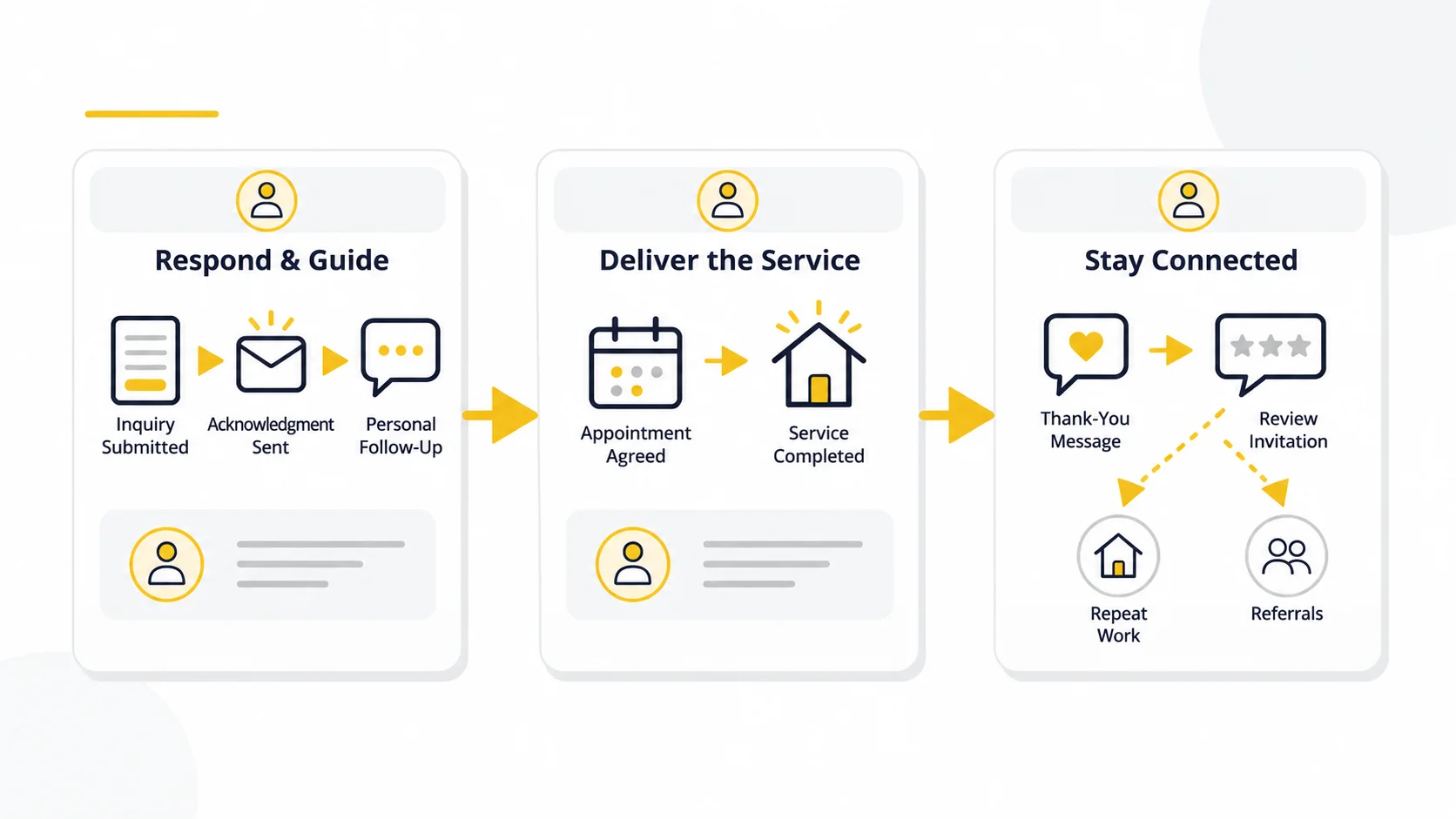
Many funnels stop at the form, but the real funnel keeps going. Fast replies, clear next steps, and friendly reminders turn leads into booked jobs. Once the work is done, a thank-you, a review request, and a seasonal check-in turn customers into repeat clients and referrals.
Measure response time, the share of leads that become booked calls, and the number of new reviews. These numbers show whether the effort you put in earlier is actually being rewarded. A strong top of the funnel can't make up for slow replies at the bottom.
Watch the Handoffs, Where Most Leads Leak
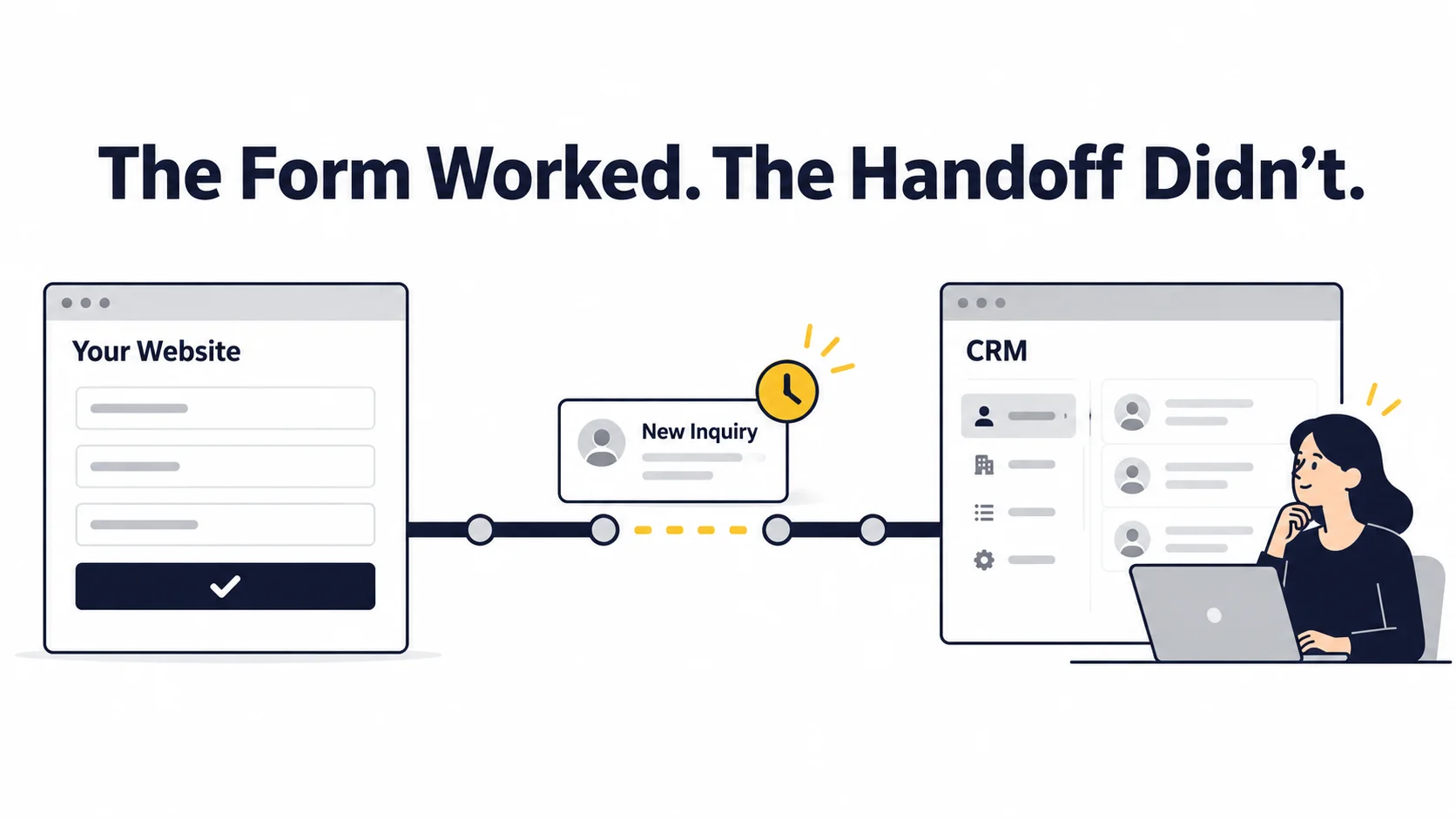
Most leaks happen at the handoffs between stages, not inside them. An ad promises one thing and the page says another. A form gets submitted, but the reply takes days. Keeping the message consistent and tracking every stage in one view makes those gaps much easier to spot and close.
See How a Local Funnel Comes Together
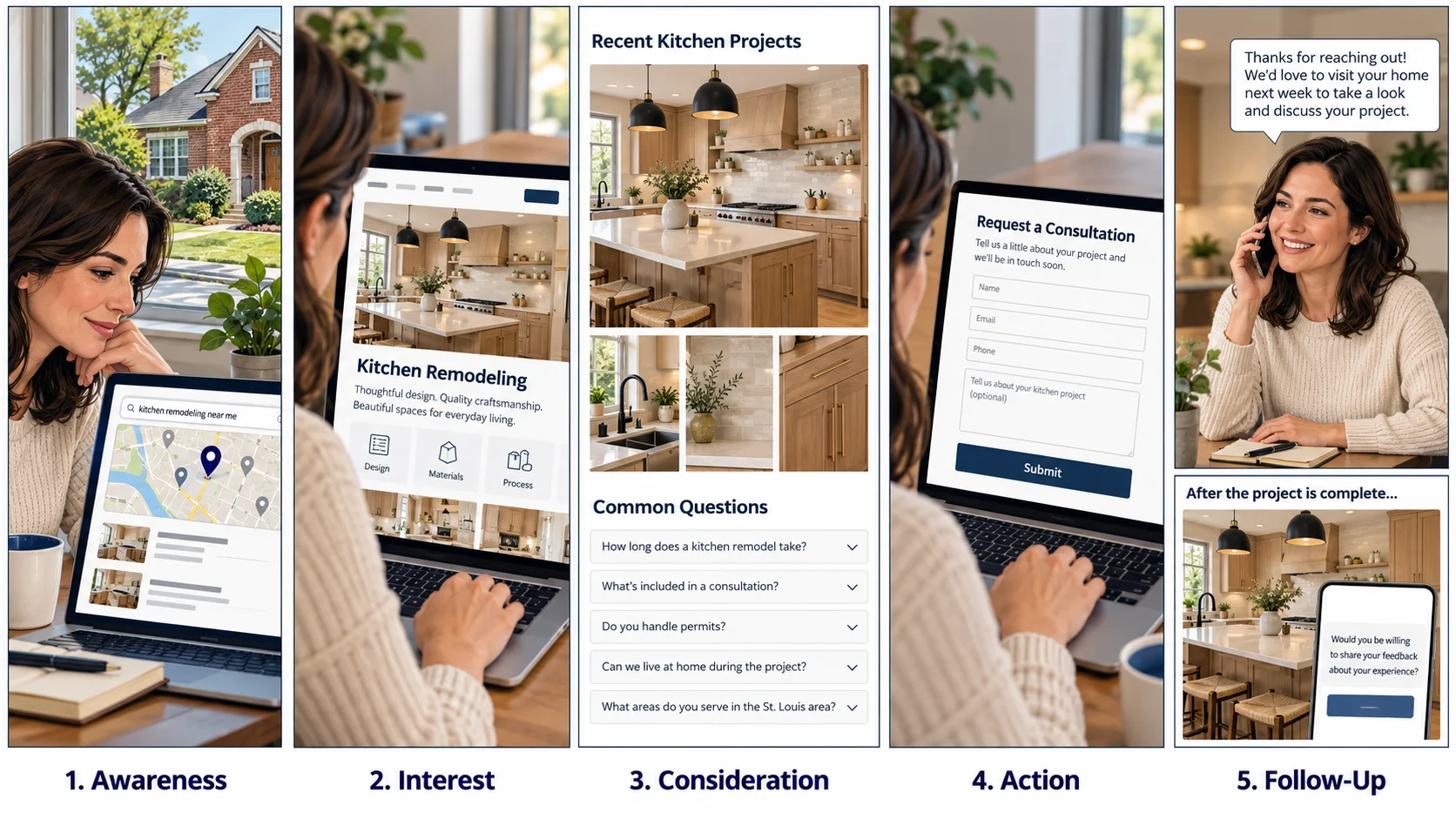
Picture a hypothetical St. Louis area remodeler. A homeowner searches for kitchen remodeling nearby and finds the business on the map listing. The service page shows finished kitchens and reviews, and a short form promises a reply the same day. That's awareness, interest, consideration, and action in one visit.
Then follow-up begins. A text confirms the visit, an email sends a short preparation guide, and after the project, a review request goes out automatically. A year later, a seasonal reminder brings the customer back. Each stage hands off cleanly to the next, and that's what a high-converting funnel looks like.
You Don't Have to Fix Everything at Once
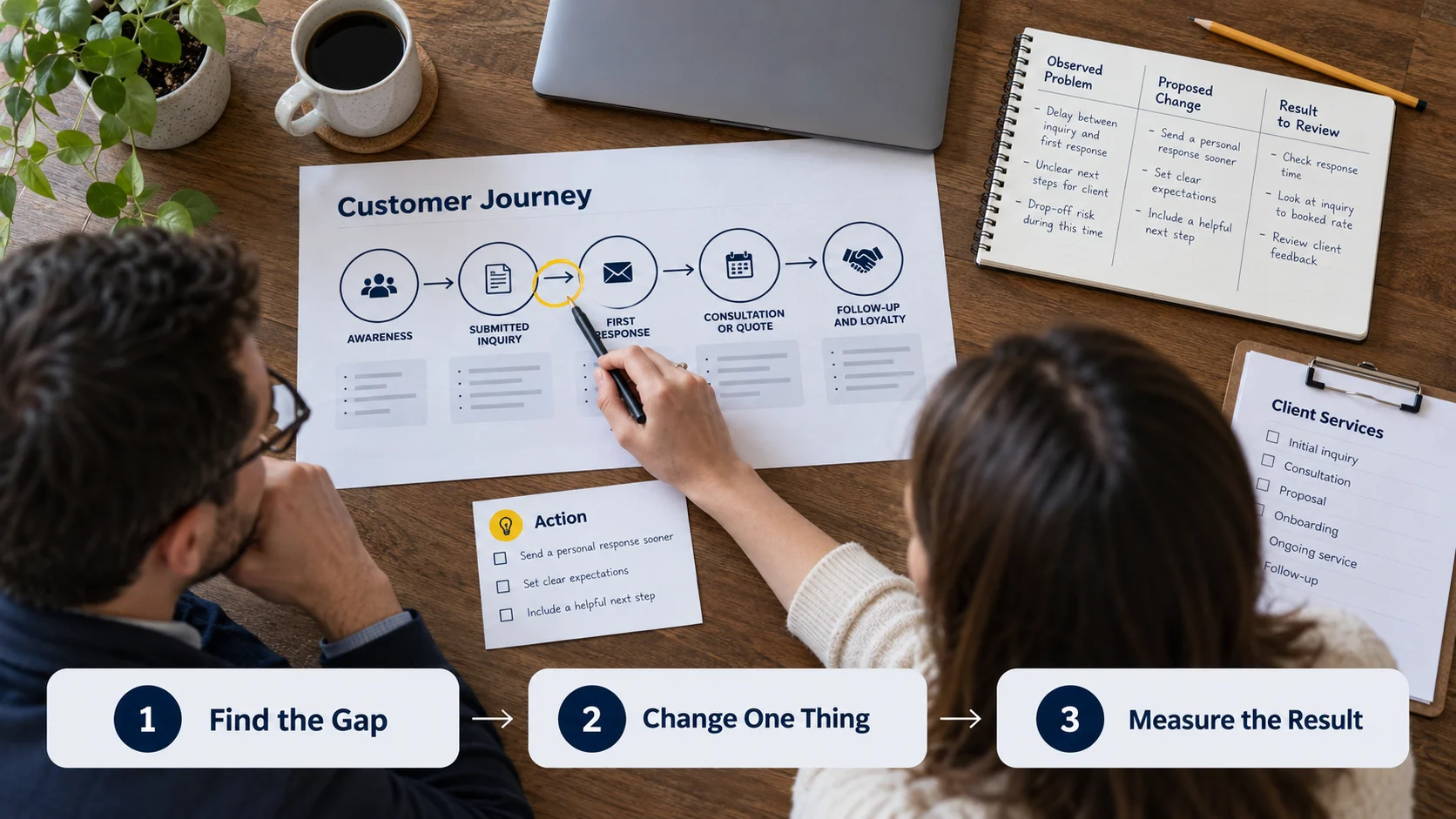
Funnel optimization follows a simple loop. Find the weakest stage, change one thing there, and measure the result before touching anything else. Treat conversion optimization as a series of small fixes, because several changes at once make it impossible to tell which one made the difference.
Start with the biggest drop closest to the sale, since that's where fixes recover value fastest. A slow reply or a clunky form wastes leads you already paid to earn. Once those are solid, work backward to your service pages, then to how people find you.
Let GrokOn Map Your Funnel and Close the Gaps
Nobody started a business to build conversion reports. GrokOn does that for you. Our funnel and landing page optimization team maps every stage of your funnel, finds where people drop off, and works through the fixes in order, so each change is measured and the next priority comes from real numbers.
We also handle the stage most funnels skip. Our AI and automation systems reply to every lead within minutes, send reminders, and request reviews on their own, while our Smart CRM tracks every stage in one view. You finally see the whole path, from first click to repeat customer.
Map and Fix Your Funnel in Three Steps
Book a strategy call. We'll walk through how customers find you, decide, and reach out today.
Get your funnel map. We show you where people drop off and fix the biggest leak closest to the sale first.
Grow from the same traffic. We keep measuring and improving each stage while automated follow-up turns leads into repeat customers.
Picture your funnel a year from now. The right people find you, your pages answer their questions, the form takes a minute, and every lead hears back fast. Finished jobs turn into reviews and referrals, and you know exactly which stage to improve next instead of guessing.
Want a clearer picture of your funnel? Book a strategy call and our team will map each stage for your St. Louis area business, find where people drop off, and recommend the first fixes. It starts with a conversation about funnel optimization and where your next customers are slipping away.
Book a Strategy Call
Get Straight Answers to Common Questions
What's the difference between a marketing funnel and a sales pipeline?
A marketing funnel covers how strangers become leads, from first awareness to the moment they reach out. A sales pipeline tracks what happens next, as a lead moves toward a signed job. The two connect at the handoff, and gaps there are common, so it helps to measure both together.
How many stages should a funnel have?
There's no fixed number. Three, five, and seven-stage models all exist, and they describe the same journey in different detail. Five works well for most local businesses because it separates the moments where people usually hesitate. Use the number that helps you spot problems, not the one that looks neatest.
Which stage should I fix first?
Start closest to the sale. Check whether leads get fast replies and whether your form is easy to finish, because those fixes help every visitor you've already earned. Once those are solid, work backward to your service pages, and then to how people find you in the first place.

Find Out What This Looks Like for Your Industry
We help businesses simplify marketing, automation, and AI so they can grow with clarity — not chaos.


© 2026 GrokOn Marketing. All Rights Reserved.