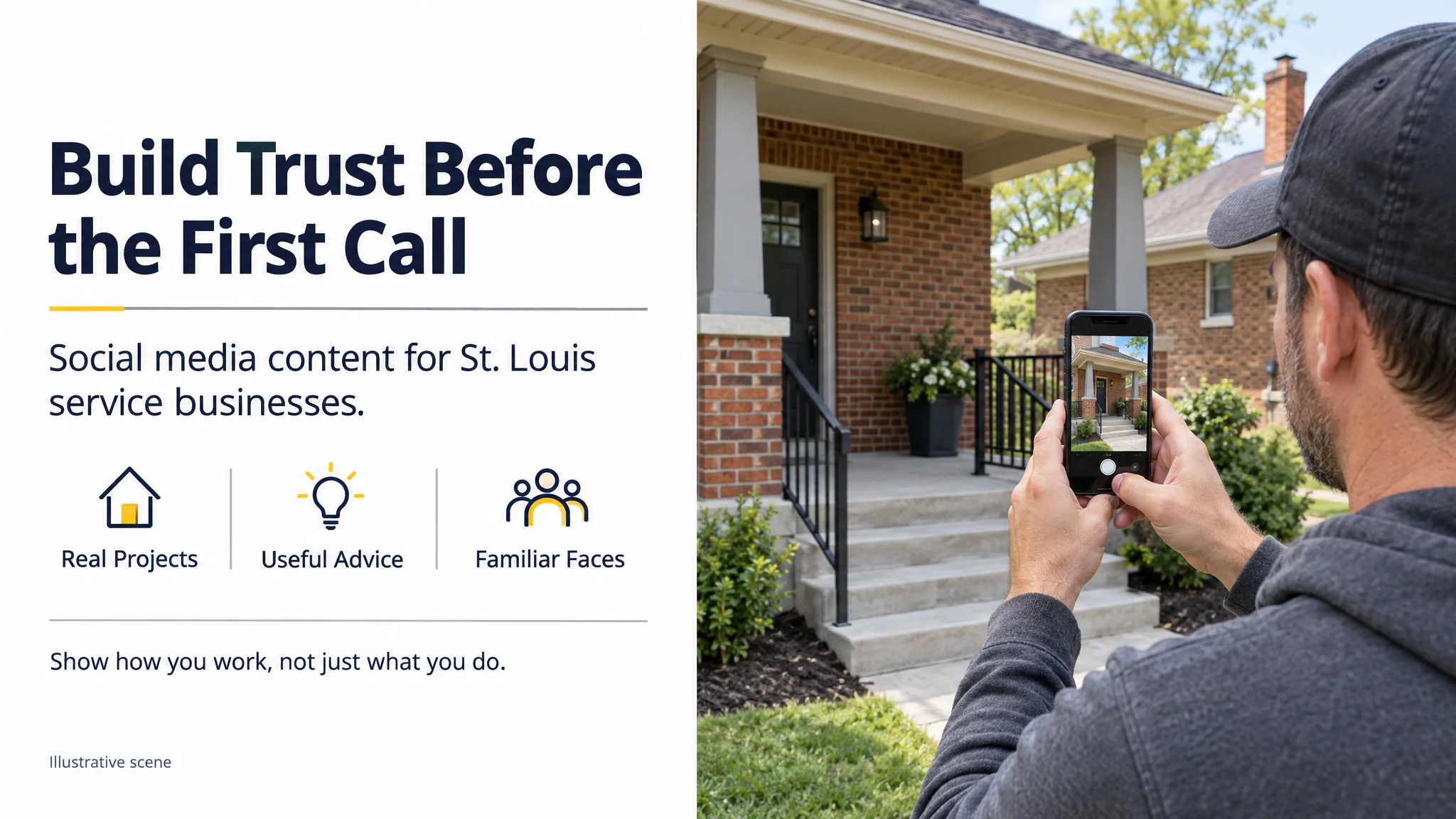
Service businesses sell trust, not products. A customer can't hold a repair or a remodel in their hands, so they judge you by what they see before they call. For St. Louis businesses, social media marketing services work best when every post helps a neighbor feel confident choosing you.
Posting randomly rarely builds that confidence. A short, repeatable strategy does. This guide covers how to choose one goal, build content around four simple pillars, keep a weekly rhythm you can maintain, and measure what matters, so social media works alongside your other digital marketing services.
Why Service Businesses Need a Different Approach
A retail brand can photograph a product and let it speak for itself. A service business has nothing to photograph until the work is done. That means proof, people, and reliability have to carry the message, and your content should show how you work as much as what you do.
Start With One Goal and One Audience
Pick one outcome for the next few months, such as booked estimates, new reviews, or more calls from a specific neighborhood. Then pick one customer type to speak to. A post written for homeowners who need a repair this week will do better than one written for everyone.
A clear goal also makes decisions easier. When you're unsure whether to post something, ask whether it moves a customer closer to that goal. If it doesn't, save it for later. Focus is what keeps a small business from burning out on social media within a few weeks.
Build Your Content Around Four Pillars
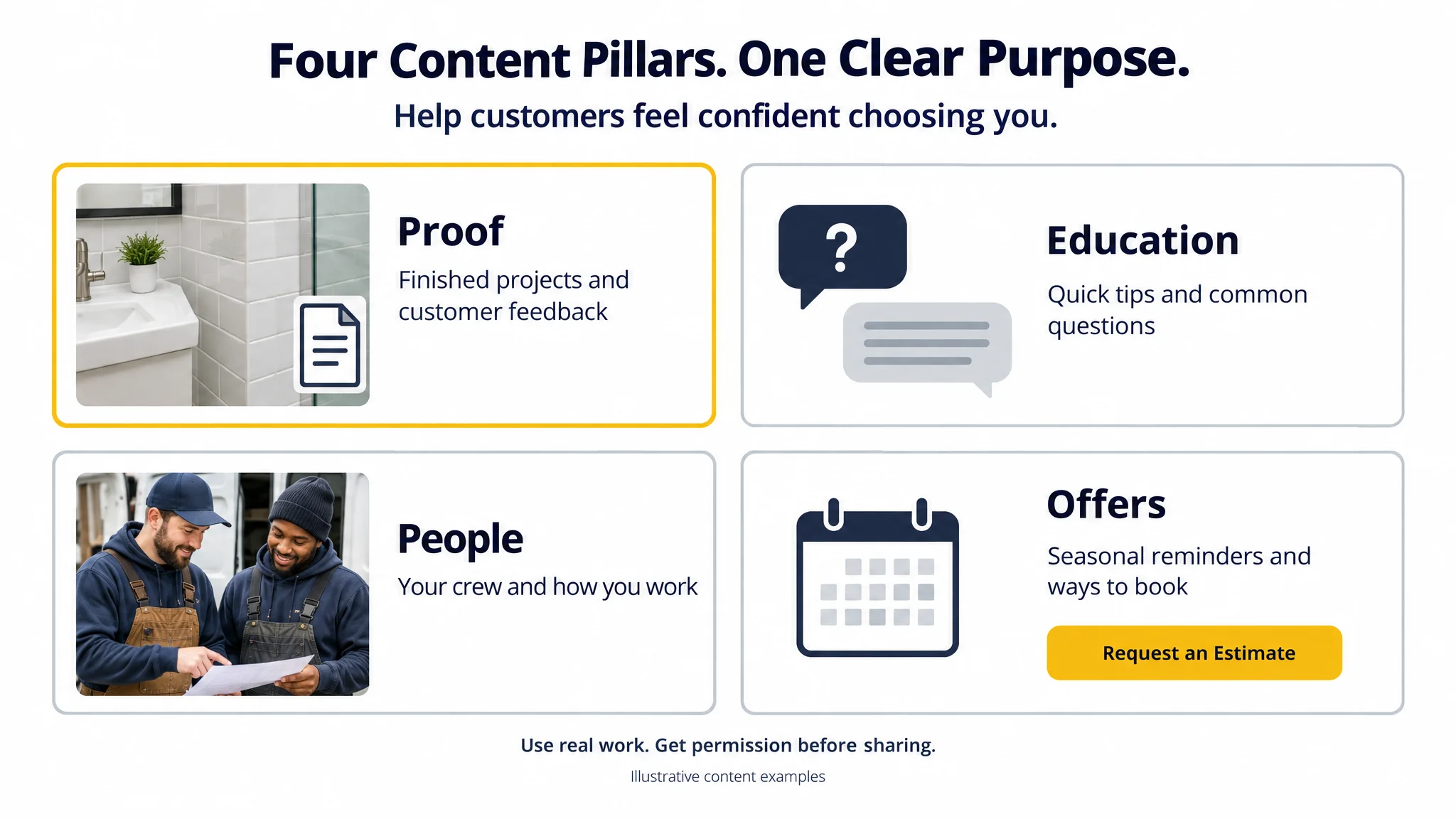
Four pillars cover almost everything a service business needs to say: proof, education, people, and offers. Rotating through them keeps the feed varied without requiring new ideas every day, and each pillar builds a different kind of confidence in the person watching.
Proof: before-and-after photos, finished projects, and short customer reviews
Education: quick tips, seasonal checklists, and answers to questions customers ask often
People: your crew, behind-the-scenes moments, and the story behind the business
Offers: seasonal reminders, openings in the schedule, and a clear way to book
Proof deserves the most space, because it does the heaviest lifting for a service business. A single finished project with a short customer comment can persuade more than a dozen general posts about quality. Ask permission before sharing customer names or home details, and keep private information out of photos.
A Simple Weekly Rhythm
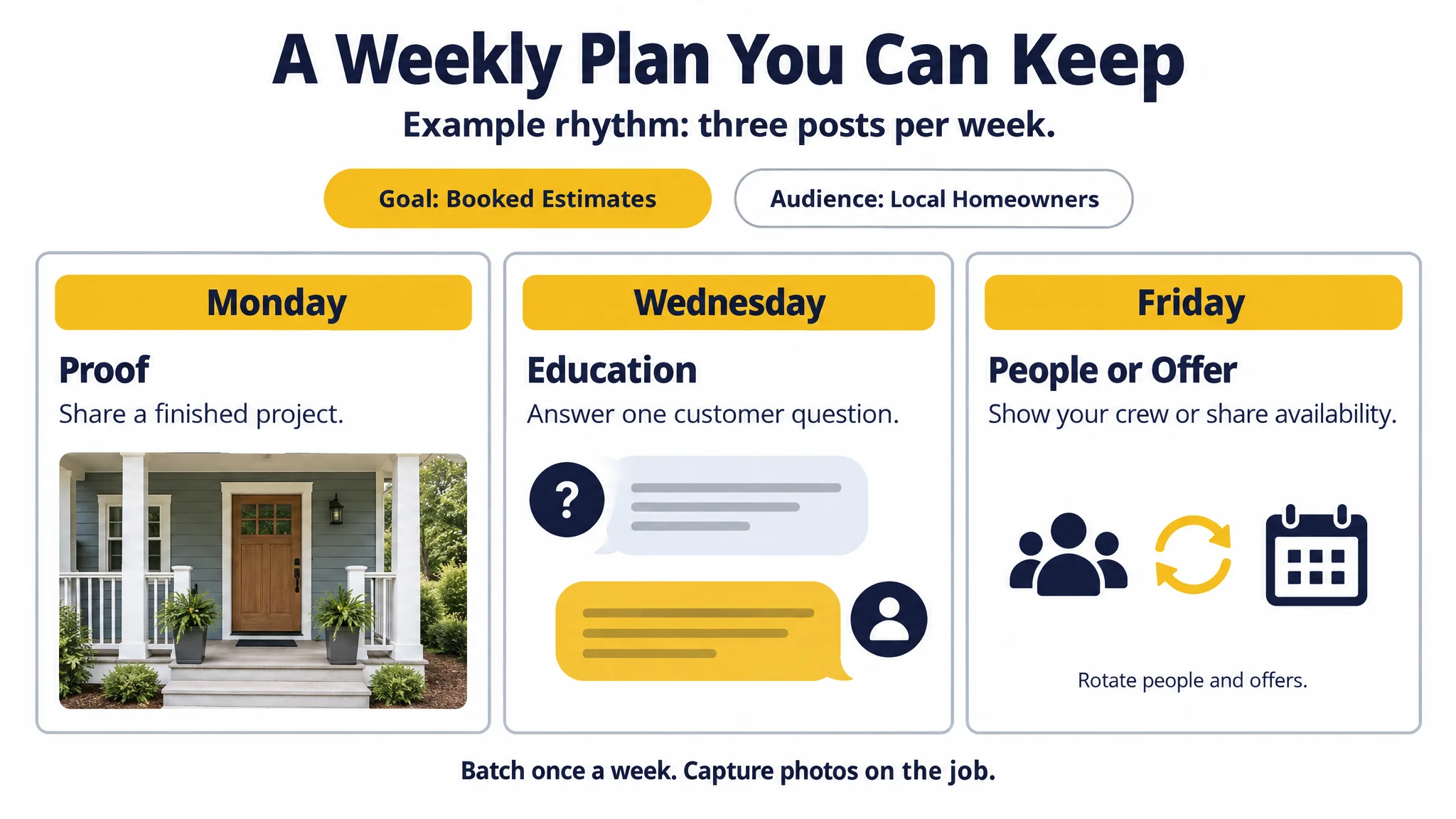
Consistency matters more than volume. A rhythm of three posts a week is enough for most small teams: one proof post, one education post, and one people or offer post. A schedule you can keep for a year beats an ambitious one that fades after a month.
Batch the work to make it sustainable. Set aside an hour once a week to collect photos from recent jobs, write short captions, and schedule the week's posts. Capturing a few photos on every job is much easier than trying to remember details later.
Make Video Easy
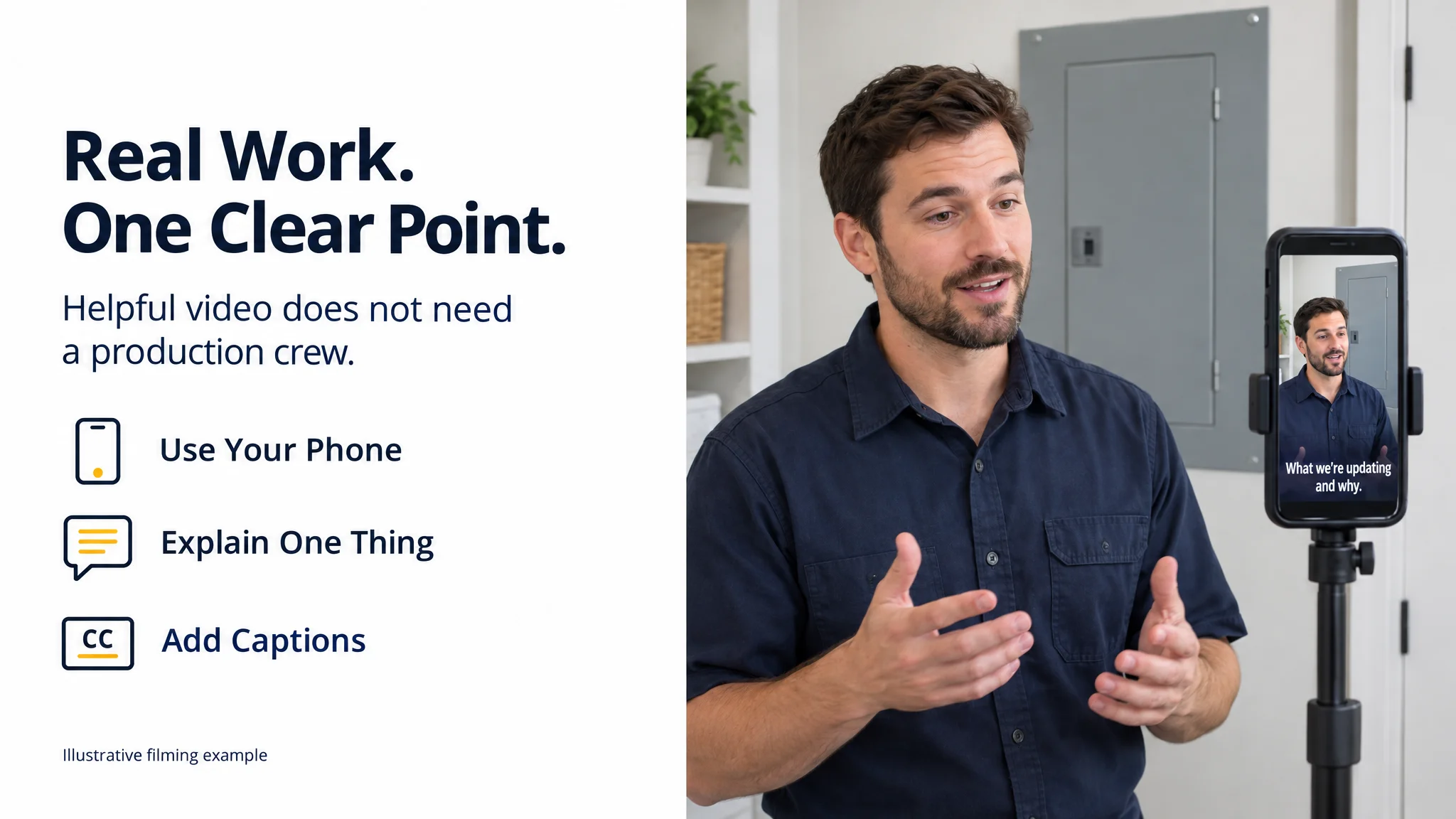
Short video is often the fastest way to build trust, and it doesn't need professional equipment. A phone, decent light, and a clear point are enough. Show a real task, explain what you're doing in a sentence or two, and add captions, since many people watch with the sound off.
Imagine a hypothetical St. Louis area electrician who films a thirty-second clip while replacing an outdated panel, explaining why the old one was a risk. That single clip shows skill, honesty, and care at once. It also answers a question homeowners are already wondering about.
Turn Posts Into Leads
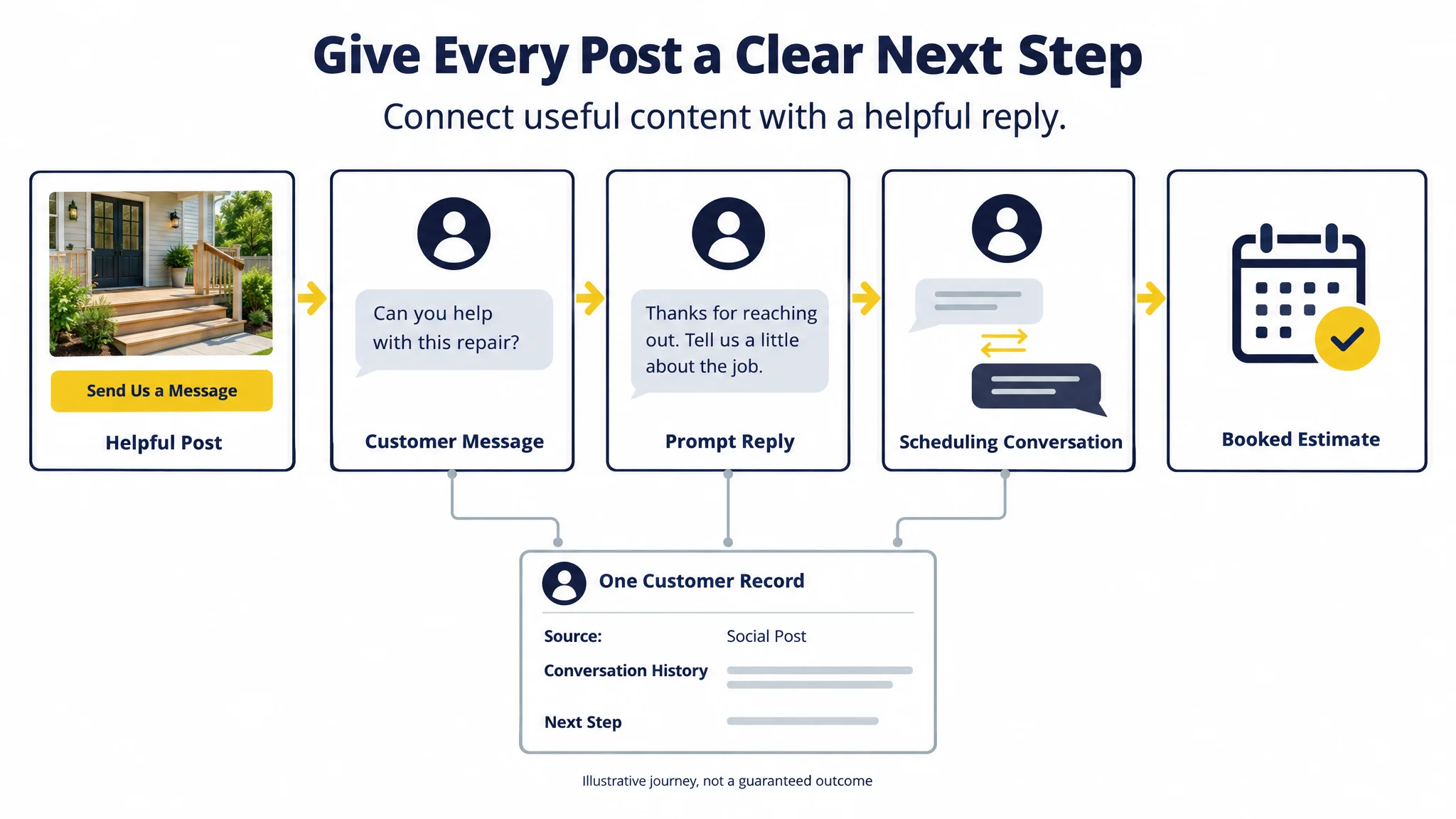
Attention only helps if people know what to do next. End each post with one clear action, such as booking an estimate, sending a message, or calling. Keep it low pressure and specific, like asking for a photo of the problem so you can suggest a first step.
Reply to comments and messages quickly, because speed signals reliability. Behind each post, send people to a focused page that continues the same message instead of a generic homepage. Our content and social media marketing service builds that full path, from the post to the page to the follow-up.
What to Measure
Reach and likes are easy to see, but they rarely predict booked work. Watch the numbers closer to the sale instead: messages received, saves, shares, profile visits, and, most importantly, jobs that started with a social post. A small, engaged audience beats a large, silent one.
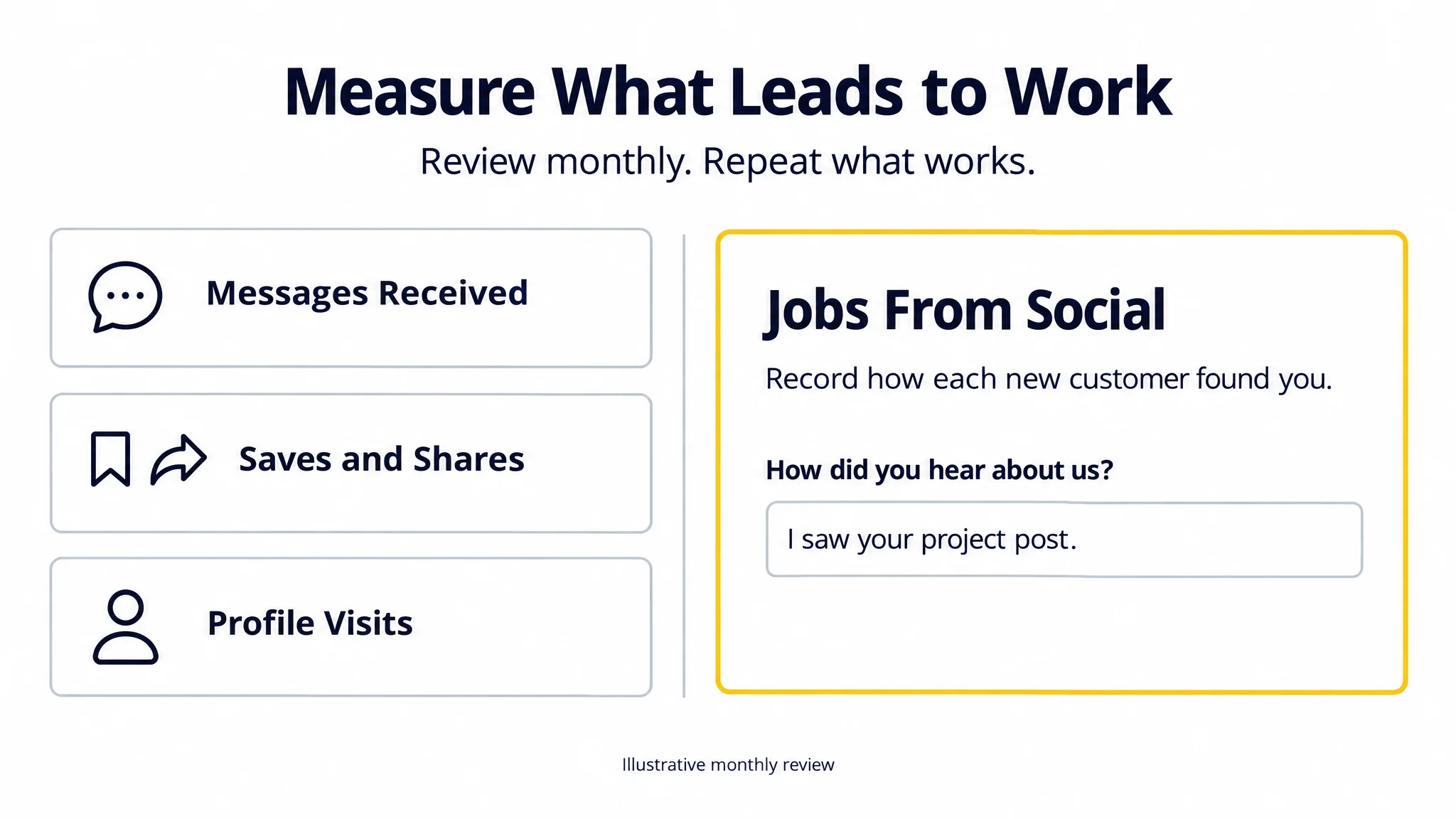
Add a simple question to your intake process: how did you hear about us? Customers often mention a post or a friend's recommendation, and that answer reveals what social media is really contributing. Review the results monthly, double down on what works, and quietly drop what doesn't.
When to Bring in Help
Many owners start on their own and bring in help once the weekly rhythm becomes hard to keep. Social media marketing services take over the planning, filming guidance, and scheduling, so the feed stays consistent while you stay focused on the work itself.
Social works best alongside the rest of your marketing. Digital marketing services such as search, paid ads, and follow-up systems turn the trust built on social media into actual inquiries. A strong feed makes everything else work harder, and everything else gives the feed a place to send people.
Frequently Asked Questions
How often should a service business post?
Three times a week is a strong target for most small teams, and even twice a week works if it's steady. Consistency matters more than volume, because a feed that goes quiet for a month loses trust. Choose a pace you can keep during your busiest season.
Which platform should I focus on first?
Start where your customers already spend time. Many local service businesses begin with one platform where neighbors share recommendations, then add a short-video channel once the rhythm is steady. Ask a few recent customers where they look for local businesses, and let their answers guide your first choice.
Do I need to pay for ads to get results?
Not necessarily. Organic posts build trust and keep you visible to people who already follow you. Paid promotion, like other digital marketing services, reaches more of the right people faster, which helps when you want leads on a schedule. Many businesses start organically, learn what resonates, and then put budget behind their best content.
Want a social media plan that fits your schedule and your St. Louis area customers? Our team can set up the pillars, a simple weekly rhythm, and the follow-up behind each post. Start a conversation about social media marketing services and we'll map out your first month of content.



Social Media Content Strategy for Service-Based Businesses
Service businesses sell trust, not products. A customer can't hold a repair or a remodel in their hands, so they judge you by what they see before they call. For St. Louis businesses, social media marketing services work best when every post helps a neighbor feel confident choosing you.
Posting randomly rarely builds that confidence. A short, repeatable strategy does. This guide covers how to choose one goal, build content around four simple pillars, keep a weekly rhythm you can maintain, and measure what matters, so social media works alongside your other digital marketing services.
Why Service Businesses Need a Different Approach
A retail brand can photograph a product and let it speak for itself. A service business has nothing to photograph until the work is done. That means proof, people, and reliability have to carry the message, and your content should show how you work as much as what you do.
Start With One Goal and One Audience
Pick one outcome for the next few months, such as booked estimates, new reviews, or more calls from a specific neighborhood. Then pick one customer type to speak to. A post written for homeowners who need a repair this week will do better than one written for everyone.
A clear goal also makes decisions easier. When you're unsure whether to post something, ask whether it moves a customer closer to that goal. If it doesn't, save it for later. Focus is what keeps a small business from burning out on social media within a few weeks.
Build Your Content Around Four Pillars
Four pillars cover almost everything a service business needs to say: proof, education, people, and offers. Rotating through them keeps the feed varied without requiring new ideas every day, and each pillar builds a different kind of confidence in the person watching.
Proof: before-and-after photos, finished projects, and short customer reviews
Education: quick tips, seasonal checklists, and answers to questions customers ask often
People: your crew, behind-the-scenes moments, and the story behind the business
Offers: seasonal reminders, openings in the schedule, and a clear way to book
Proof deserves the most space, because it does the heaviest lifting for a service business. A single finished project with a short customer comment can persuade more than a dozen general posts about quality. Ask permission before sharing customer names or home details, and keep private information out of photos.
A Simple Weekly Rhythm
Consistency matters more than volume. A rhythm of three posts a week is enough for most small teams: one proof post, one education post, and one people or offer post. A schedule you can keep for a year beats an ambitious one that fades after a month.
Batch the work to make it sustainable. Set aside an hour once a week to collect photos from recent jobs, write short captions, and schedule the week's posts. Capturing a few photos on every job is much easier than trying to remember details later.
Make Video Easy
Short video is often the fastest way to build trust, and it doesn't need professional equipment. A phone, decent light, and a clear point are enough. Show a real task, explain what you're doing in a sentence or two, and add captions, since many people watch with the sound off.
Imagine a hypothetical St. Louis area electrician who films a thirty-second clip while replacing an outdated panel, explaining why the old one was a risk. That single clip shows skill, honesty, and care at once. It also answers a question homeowners are already wondering about.
Turn Posts Into Leads
Attention only helps if people know what to do next. End each post with one clear action, such as booking an estimate, sending a message, or calling. Keep it low pressure and specific, like asking for a photo of the problem so you can suggest a first step.
Reply to comments and messages quickly, because speed signals reliability. Behind each post, send people to a focused page that continues the same message instead of a generic homepage. Our content and social media marketing service builds that full path, from the post to the page to the follow-up.
What to Measure
Reach and likes are easy to see, but they rarely predict booked work. Watch the numbers closer to the sale instead: messages received, saves, shares, profile visits, and, most importantly, jobs that started with a social post. A small, engaged audience beats a large, silent one.
Add a simple question to your intake process: how did you hear about us? Customers often mention a post or a friend's recommendation, and that answer reveals what social media is really contributing. Review the results monthly, double down on what works, and quietly drop what doesn't.
When to Bring in Help
Many owners start on their own and bring in help once the weekly rhythm becomes hard to keep. Social media marketing services take over the planning, filming guidance, and scheduling, so the feed stays consistent while you stay focused on the work itself.
Social works best alongside the rest of your marketing. Digital marketing services such as search, paid ads, and follow-up systems turn the trust built on social media into actual inquiries. A strong feed makes everything else work harder, and everything else gives the feed a place to send people.
Frequently Asked Questions
How often should a service business post?
Three times a week is a strong target for most small teams, and even twice a week works if it's steady. Consistency matters more than volume, because a feed that goes quiet for a month loses trust. Choose a pace you can keep during your busiest season.
Which platform should I focus on first?
Start where your customers already spend time. Many local service businesses begin with one platform where neighbors share recommendations, then add a short-video channel once the rhythm is steady. Ask a few recent customers where they look for local businesses, and let their answers guide your first choice.
Do I need to pay for ads to get results?
Not necessarily. Organic posts build trust and keep you visible to people who already follow you. Paid promotion, like other digital marketing services, reaches more of the right people faster, which helps when you want leads on a schedule. Many businesses start organically, learn what resonates, and then put budget behind their best content.
Want a social media plan that fits your schedule and your St. Louis area customers? Our team can set up the pillars, a simple weekly rhythm, and the follow-up behind each post. Start a conversation about social media marketing services and we'll map out your first month of content.
Rawnsley Chege
Rawnsley Chege works on the marketing team at GrokOn, where he's spent the last six years knee-deep in digital marketing, four of them living and breathing SEO. These days that means less "how do I rank on Google" and more "how do I show up when someone asks ChatGPT instead." He's Google Analytics and SEMRush certified, but mostly he just likes figuring out what's actually working in search before everyone else catches on.