blogs
Insights, Strategies & Systems to Grow Your Business
Why Your Business Has a Systems Problem, Not a Lead Problem
When growth stalls, the first instinct is almost always the same: we need more leads. So the ad budget goes up. A new campaign launches. Maybe a freelancer gets hired to post more on social media.
A few weeks later, the lead count is higher and the revenue looks about the same as before.
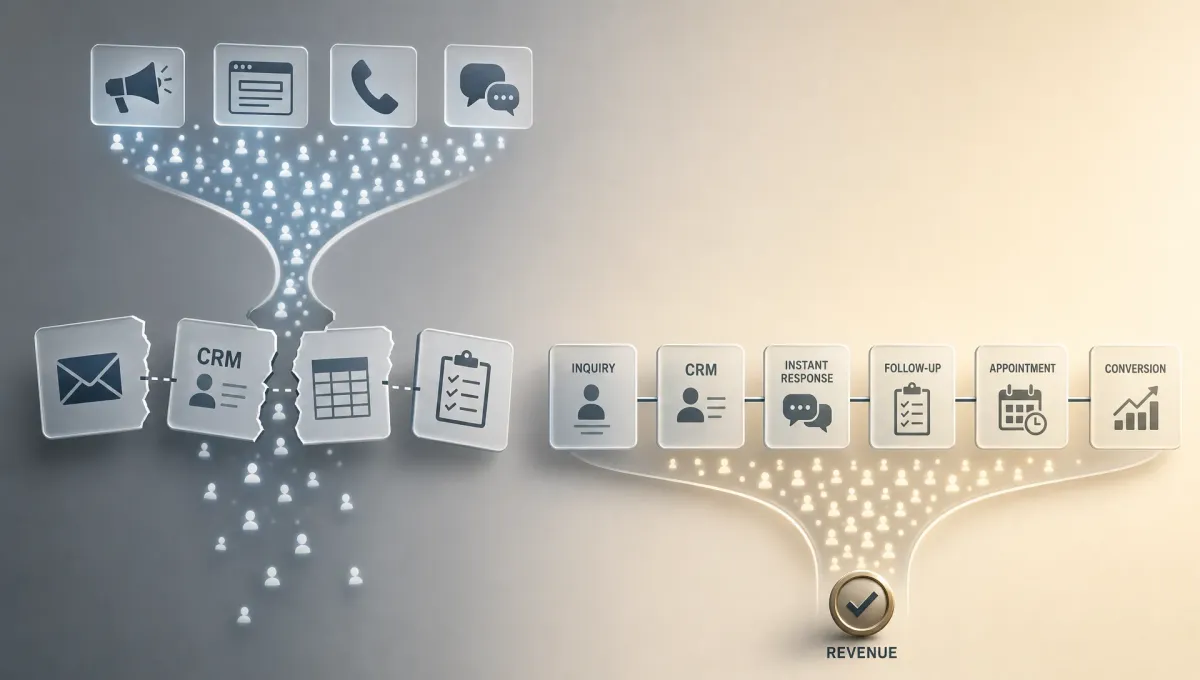
That's usually not a lead problem. It's a problem with your business automation systems, or the lack of them. If nothing is catching, sorting, and following up on the leads you already have, more leads just means more people falling through the same cracks, faster.
The Symptom vs. the Cause

Here's the pattern we see most often. A business increases ad spend, and leads do go up. But the conversion rate barely moves, sometimes it even drops, because the team wasn't built to handle the extra volume in the first place.
More traffic into a broken funnel doesn't fix the funnel. It just makes the leak more expensive.
The real question isn't "how do we get more leads." It's "what happens to a lead after it comes in, and does anything actually happen at all."
What It Looks Like When You're Guessing Instead of Building
Most businesses stuck in this pattern aren't doing anything wrong on purpose. They're just running on guesswork instead of a real system, and it tends to show up in three specific ways.
Measuring the wrong things
Likes, comments, and impressions feel like progress because they're easy to see. But they rarely connect to what actually pays the bills. A post can get plenty of engagement and generate zero booked calls. If the only numbers you're tracking are the ones a social platform shows you by default, you're measuring activity, not results.
Tools that don't talk to each other
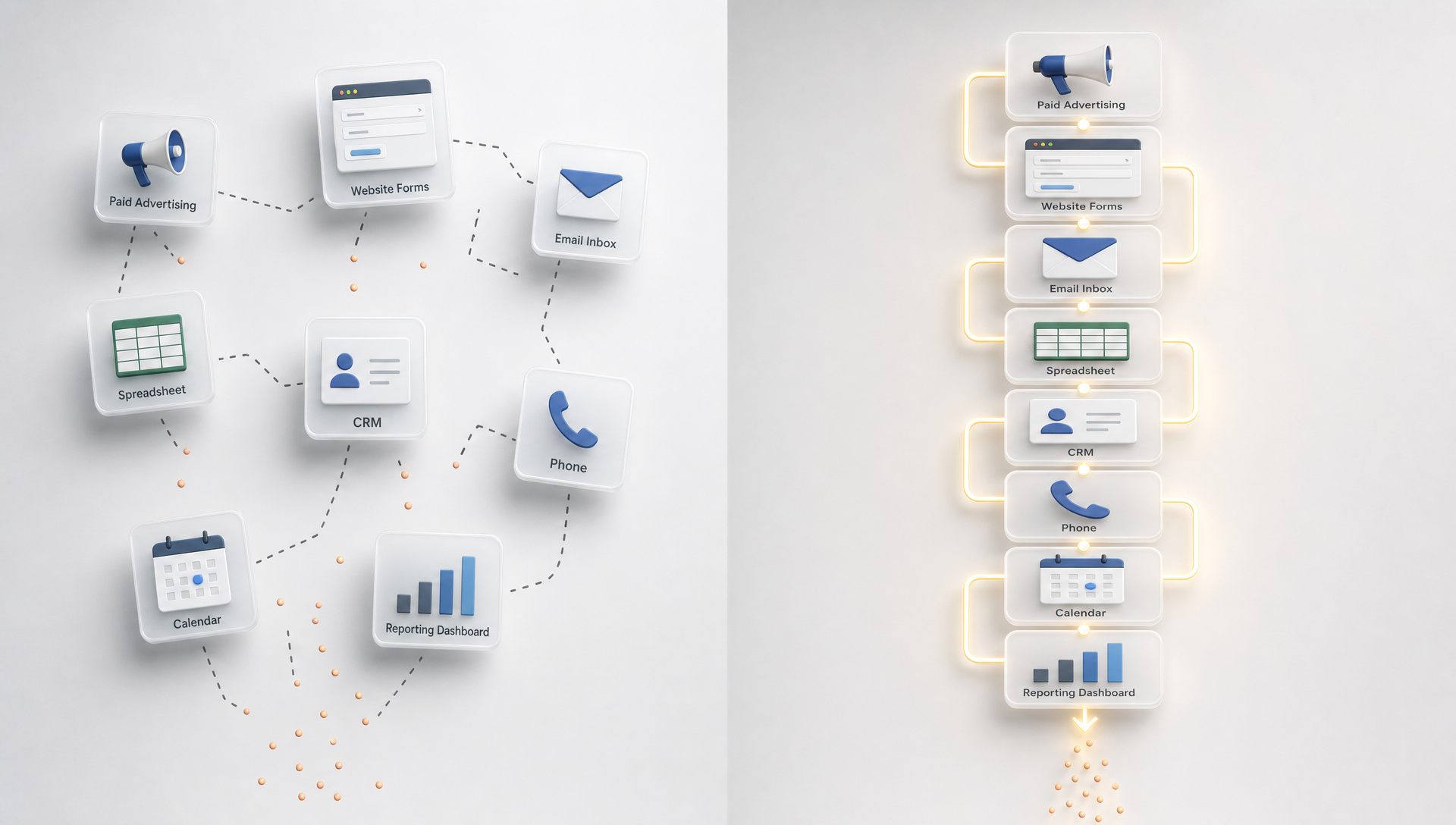
This is one of the clearest signs of a business relying on business automation systems that were never actually connected. Ads live in one platform. Leads land in an inbox or a spreadsheet. Follow-up happens through a personal phone or a separate email tool. Nothing passes information to anything else automatically, so every handoff between tools is a place a lead can quietly disappear.
Decisions made on gut feeling
Without a working system, most decisions come down to instinct. Something feels like it's working, so the budget goes toward more of it. Something feels slow, so it gets cut. That might be right sometimes. It's also a coin flip, because there's no actual data showing what's driving results and what's just noise.
The Real Cost of Disconnected Tools
Picture a fairly typical scenario. Someone fills out a contact form on a Friday afternoon. That form sends an email notification. The person who checks that inbox is out for the weekend. By Monday, the lead has already called two competitors and booked with whichever one answered first.
Nothing about that story involves a lack of leads. The lead showed up, ready to buy. What was missing was a system that could respond in minutes instead of days, regardless of who was checking an inbox that weekend.
That's the real cost of disconnected tools. It's not visible in a monthly report. It shows up as leads that technically "came in" but never actually converted, and most businesses never trace the loss back to where it actually happened.
What a Connected System Looks Like Instead
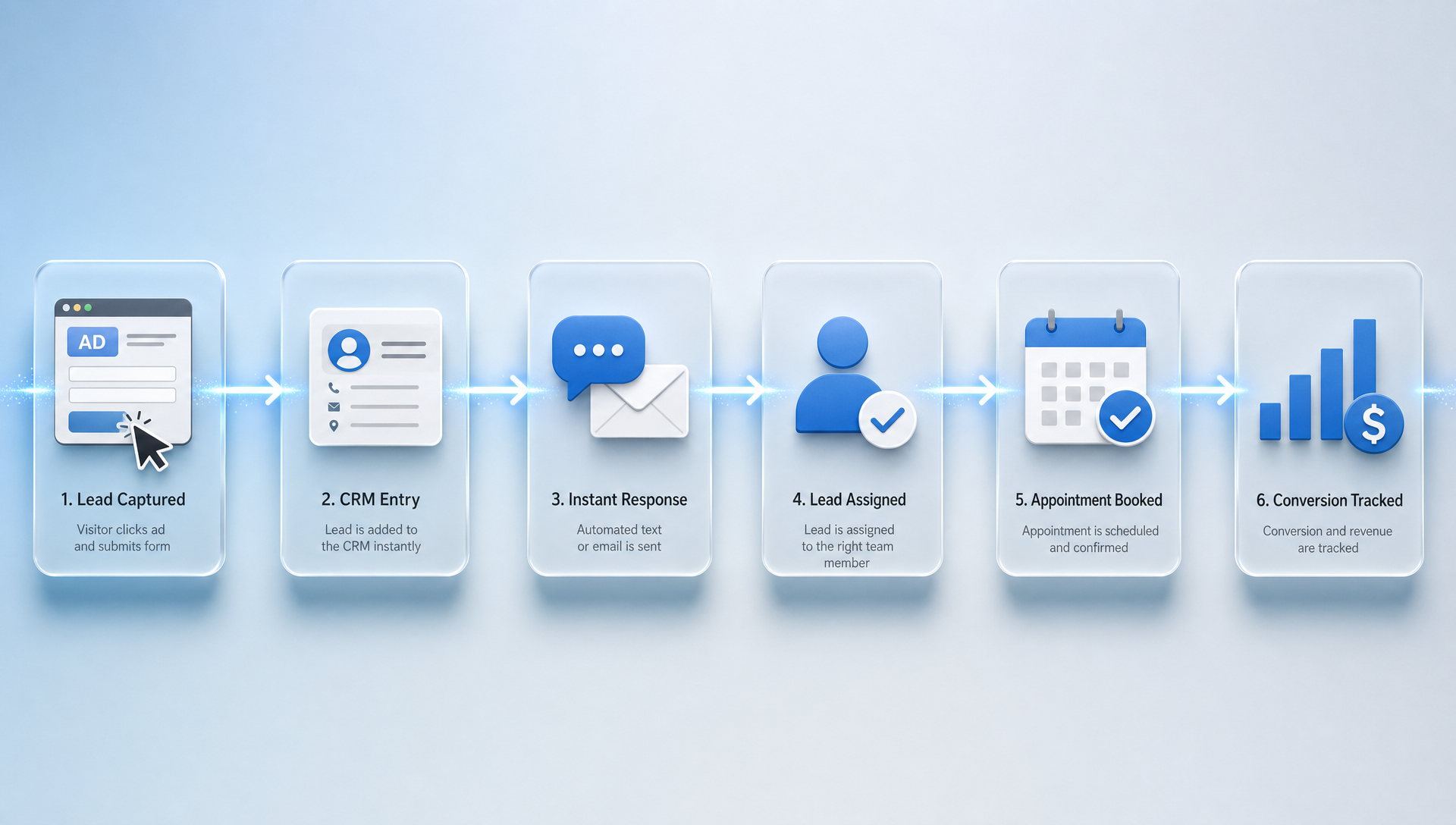
The alternative isn't more effort. It's a different structure entirely, one built around understanding the customer first, using data alongside actual empathy for what they need, and building systems that can scale without falling apart.
In practice, that means a lead's information flows automatically from the ad or form into a CRM. A follow-up sequence starts within minutes, not days. Every step gets tracked in one place instead of scattered across five different logins. Nothing depends on a single person remembering to check an inbox at the right moment. That's what functioning business automation systems actually look like day to day, not a single flashy tool, but a set of steps that all hand off to each other correctly.
This is the difference between hoping something works and building something that's designed to.
The GRO Process: Grok, Rebuild & Rewire, Optimize for Growth

This is the same three-step process we use with every client, because it applies regardless of industry.
Grok. Understand the business, the customers, and specifically what's currently holding growth back. This step alone usually surfaces the disconnected tools and manual gaps that are quietly costing leads.
Rebuild & Rewire. Realign messaging, marketing, and automation so they function as one connected system instead of a pile of separate tools. This is where a real AI and automation setup replaces the guesswork: workflows that route leads automatically, follow-up sequences that fire without anyone remembering to trigger them, and systems that hand off cleanly instead of dropping information along the way.
Optimize for Growth. Once the system is in place, the focus shifts to tracking, refining, and improving it continuously. Growth becomes something you can trace back to specific changes, not something that happens or doesn't for reasons nobody can quite explain.
Where a Marketing Automation Platform Fits In
A marketing automation platform is what makes all of this run without needing a person to manually manage every step. Instead of a CRM in one place, email in another, and reporting pulled together by hand at the end of the month, everything lives in a single connected system.
That's the idea behind GRO MAAP: CRM, automated workflows, and reporting all in one place, built so information flows between them instead of getting stuck. When a lead comes in, the system already knows what to do next. When it's time to see what's working, the reporting is already there instead of needing to be assembled from four different tools.
Quick Self-Check: Do You Have a Systems Problem?
A few signs tend to show up consistently in businesses dealing with a systems problem rather than a lead problem:
Leads sit unanswered for hours or days before anyone follows up
Your CRM, ad platform, and email tool don't share information automatically
Reporting has to be manually pulled together from multiple places
Follow-up depends on a specific person remembering to do it
You can't say with confidence which leads actually convert, and why
If two or more of these sound familiar, more leads won't solve the underlying issue. Stronger business automation systems will.
Frequently Asked Questions
What's the difference between a CRM and a marketing automation platform?
A CRM stores information about your leads and customers. A marketing automation platform goes further, actively moving leads through follow-up sequences, triggering actions automatically, and tying reporting back to the same system, without requiring someone to manage every step by hand.
How do I know if I need more leads or better systems?
Look at what happens to the leads you already have. If a meaningful number go quiet after the first contact, or follow-up is inconsistent, that's a systems issue. Adding more leads to a process that already isn't converting well just multiplies the same problem.
If any of this sounds familiar, the fix usually isn't a bigger ad budget. Book a strategy session with GrokOn and we'll walk through where your current systems are actually losing leads.

Find Out What This Looks Like for Your Industry
We help businesses simplify marketing, automation, and AI so they can grow with clarity — not chaos.


© 2026 GrokOn Marketing. All Rights Reserved.